
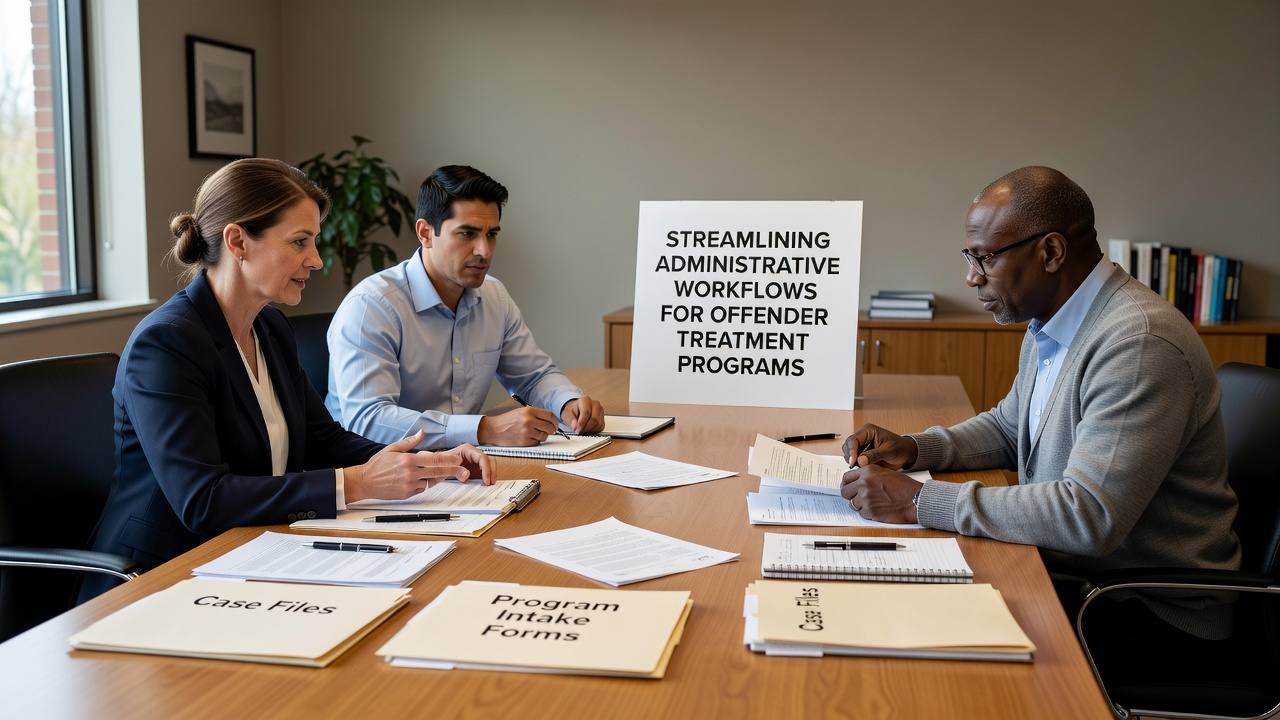
Managing administrative workflows for offender treatment programs is one of the most overlooked sources of operational risk in regulated supervision environments. When documentation is inconsistent, reporting is delayed, or billing records don’t align with treatment notes, agencies face audit findings, compliance gaps, and preventable rework. The good news is that most of these issues are process problems — and process problems can be fixed.
This guide walks through the most common workflow gaps in regulated programs and practical ways to address them.
Why Administrative Workflows Break Down in Regulated Programs
High-volume caseloads, multi-staff environments, and tight reporting deadlines create the conditions for administrative errors. Most breakdowns don’t happen because staff are careless — they happen because workflows aren’t standardized, handoffs are unclear, and documentation requirements aren’t embedded into daily routines.
Common signs of workflow breakdown include:
- Late or missing progress notes after sessions
- Attendance records that don’t match billing submissions
- Unsigned intake forms discovered during audits
- Inconsistent case note quality across different counselors or locations
- Reporting delays because data has to be pulled from multiple places
Once these patterns are identified, they’re much easier to fix systematically.
Documentation Habits That Prevent Compliance Gaps
Strong documentation isn’t just about compliance — it protects your staff, your clients, and your agency. Complete, timely, and consistent records are the foundation of every successful audit, court report, and billing cycle.
Set Clear Completion Deadlines for Case Notes
Many agencies have informal norms around when notes need to be completed, but informal norms don’t hold up under pressure. Establish written policies that define when notes must be entered after each session — commonly within 24 to 48 hours — and make those expectations part of staff onboarding and regular supervision.
Standardize Intake Documentation Across Locations
Agencies operating across multiple sites often end up with inconsistent intake packets, missing fields, and records that don’t meet program requirements. A standardized intake checklist used at every location ensures that required documentation is collected at enrollment, not chased down weeks later.
Align Attendance, Progress Notes, and Billing
One of the most common audit findings in regulated programs is a mismatch between attendance records, clinical notes, and billing submissions. These three data points should always agree. Building a routine review step — even a simple weekly reconciliation — catches mismatches before they become billing errors or compliance findings.
Building an Audit-Ready Workflow Year-Round
Audit readiness isn’t something you build in the week before an external review. It’s the result of consistent habits maintained over time. Agencies that stay audit-ready typically share a few common practices.
Organize compliance tasks by due date and risk level. Not every compliance item carries the same weight. Court reporting deadlines, billing submission windows, and required participant status updates all have consequences if missed. Tracking these by deadline — rather than relying on memory or informal reminders — reduces the chance that something critical falls through.
Conduct regular internal reviews before external ones. A quarterly internal audit using a structured checklist lets your team identify and correct issues on your own terms. This doesn’t need to be an elaborate process. A focused review of a sample of records — checking for completeness, signature requirements, and note quality — surfaces most common problems.
Create a reliable audit trail for program decisions. When a participant’s status changes, when a missed appointment is documented, or when a corrective action is issued, that decision should be recorded clearly and consistently. Auditors look for evidence that decisions were made deliberately and documented at the time, not reconstructed after the fact.
How Software Tools Support Better Workflows
Administrative workflow improvements don’t require a full technology overhaul. Even modest process changes — supported by the right tools — can significantly reduce documentation errors and reporting delays.
Purpose-built administrative workflow tools for court ordered programs are designed around the specific documentation and reporting requirements that regulated supervision agencies face. Rather than adapting a generic platform, agencies using purpose-built tools benefit from structured note templates, compliance task tracking, and reporting features that match the actual workflow of their programs.
Key capabilities worth looking for in any administrative or case management tool include:
- Structured documentation templates that guide staff through required fields
- Attendance and billing alignment features that flag discrepancies automatically
- Task and deadline tracking tied to individual participants or program milestones
- Audit trail logging that captures when records were created, edited, or signed
- Role-based access so staff, supervisors, and billing teams each see what they need
For agencies managing treatment verification, supervision reporting, and billing within the same program, compliance tracking for regulated programs helps reduce the manual effort required to keep those functions aligned.
Reducing Rework and Admin Friction Across Teams
A significant portion of administrative time in regulated programs goes toward fixing problems that should have been prevented — chasing missing signatures, correcting billing errors, re-entering data that was never captured properly the first time. This is rework, and it compounds quickly in high-volume programs.
The most effective way to reduce rework is to build quality checkpoints earlier in the process, not just at the point of submission or review. That means:
- Reviewing records for completeness at the point of entry, not at the end of the month
- Assigning clear ownership for documentation tasks so nothing falls between roles
- Using structured forms and templates that minimize free-form data entry errors
- Building handoff protocols between clinical, compliance, and billing staff so information moves cleanly through the workflow
Small improvements in process consistency have a compounding effect. When staff know exactly what’s expected, when it’s due, and how to document it, the overall quality of records improves — and the administrative burden of compliance decreases.
Takeaway
Administrative workflow problems in regulated supervision programs are common, but they’re also solvable. The most effective agencies treat documentation, audit readiness, and reporting consistency as ongoing operational disciplines rather than periodic compliance exercises. Standardized processes, clear deadlines, routine internal reviews, and software tools designed for regulated environments all contribute to better records, fewer errors, and less time spent on rework. The goal isn’t perfection — it’s building workflows that are reliable enough to hold up under scrutiny, every time.
Ready to improve your agency’s documentation and reporting workflows? Review how your current processes handle attendance tracking, case note completion, and billing alignment — and identify where the gaps are before an auditor does.