
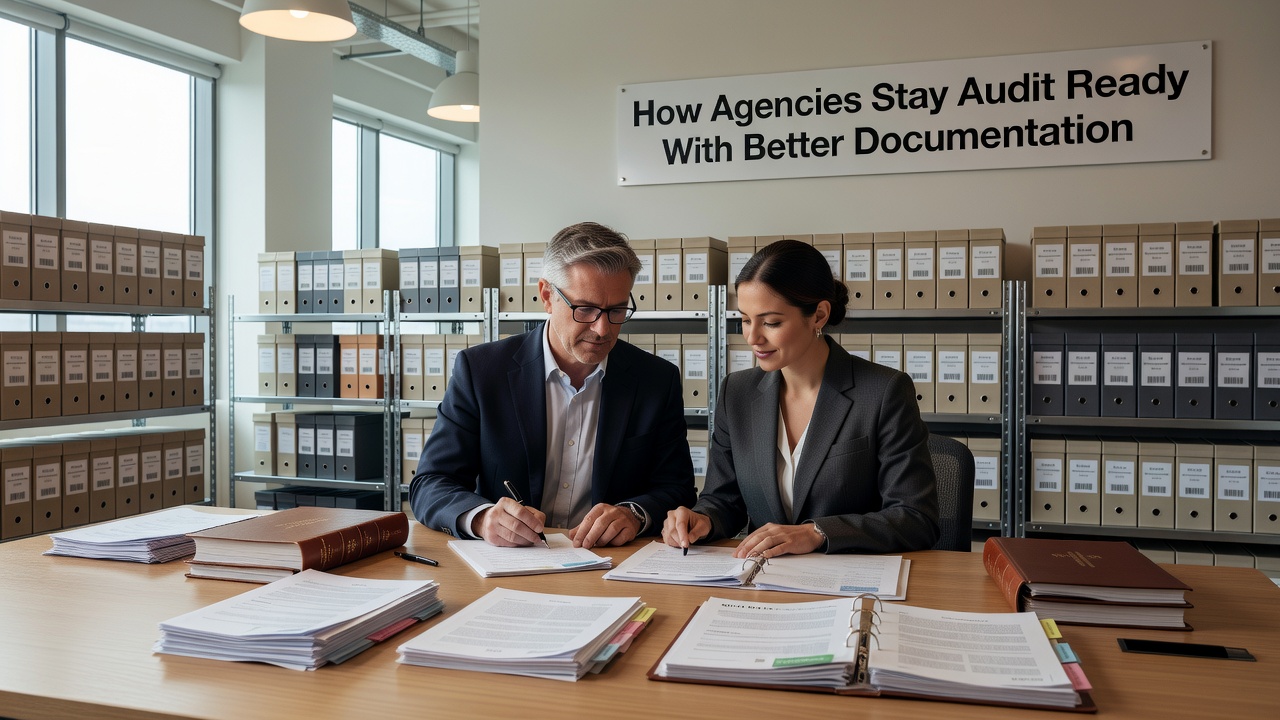
Knowing how agencies stay audit ready with better documentation is one of the most practical things a program administrator can invest time in. Whether you run a supervised treatment program, coordinate compliance reporting, or manage intake and billing workflows, the quality of your documentation directly affects your ability to pass audits, satisfy court requirements, and keep operations running without disruption. The good news is that most audit failures are preventable, and better systems make the difference.
Why Documentation Quality Determines Audit Outcomes
Auditors are not looking for perfection. They are looking for consistency, completeness, and accountability. When files are missing required signatures, attendance logs don’t match billing records, or progress notes are vague and undated, those gaps tell a story about how the program operates.
The most common file problems that surface during audits include:
- Missing or incomplete intake documentation
- Progress notes that don’t reflect services billed
- Attendance records that are handwritten and inconsistent
- No documented follow-up on missed sessions or violations
- Court reports that vary in format depending on which staff member wrote them
None of these are complicated problems. They are workflow problems, and they tend to multiply when agencies rely on paper-based systems or disconnected spreadsheets.
Common Documentation Mistakes That Create Audit Risk
Understanding where files typically break down helps agencies fix problems before an audit exposes them. These are the mistakes that come up repeatedly in regulated supervision environments.
Inconsistent progress notes
Progress notes should document what service was delivered, who delivered it, when it happened, and what the client’s response was. When staff use different formats, skip required fields, or write notes that are too brief to be meaningful, those records become unreliable. Standardized note templates reduce this risk significantly.
Attendance logs that don’t sync with billing
If a client is billed for a session that has no corresponding attendance record, that mismatch is a compliance problem. Agencies that track attendance separately from billing create unnecessary reconciliation work and introduce errors that are difficult to catch after the fact.
Missing court communication records
Interactions with probation officers, court staff, and referral sources need to be documented. When a client’s status changes or a violation is reported, the file should reflect what was communicated, to whom, and when. Agencies that don’t log these interactions consistently are exposed when courts or auditors ask for a timeline.
Incomplete or outdated client files
A complete client file typically includes intake paperwork, signed consent forms, assessment results, treatment or program plans, progress notes, attendance records, and court communications. Files that are missing any of these components are incomplete by most regulatory standards.
Building a Year-Round Audit Readiness Process
Audit readiness is not something you build in the two weeks before a review. It is a recurring operational practice that runs alongside your normal workflow. Agencies that stay consistently ready do a few things differently.
They review files on a schedule. Monthly or quarterly internal file reviews catch problems early. A simple checklist of required components for each file type gives staff a clear standard to meet and makes reviews faster to complete.
They standardize documentation across staff and locations. When every counselor uses the same note format and every intake coordinator follows the same intake checklist, file quality becomes predictable. Variation is the enemy of compliance.
They align billing with clinical records. Services billed should be directly traceable to documented service delivery. Agencies that build this alignment into their workflow rather than reconciling it at the end of the month reduce errors and make billing disputes easier to resolve.
They maintain a compliance calendar. Recurring deadlines, reporting windows, and required reviews should be tracked in one place. A compliance calendar makes it easier to assign responsibility, avoid missed deadlines, and demonstrate organized oversight to auditors.
How Software Tools Support Consistent Documentation
Many of the workflow problems that lead to audit failures are not caused by staff carelessness. They are caused by systems that make it too easy to skip steps and too hard to catch mistakes. Better software tools reduce that friction.
When documentation, attendance, billing, and court reporting are managed in a connected system rather than across separate spreadsheets or paper files, several things improve:
- Required fields can be enforced at the point of entry, so notes can’t be saved without required information
- Attendance and billing records stay aligned because they draw from the same data source
- Court report templates ensure consistency regardless of which staff member generates the report
- File completeness can be reviewed at a glance rather than through manual folder checks
- Audit trails are preserved automatically, showing when records were created, updated, or accessed
Agencies managing court reporting workflows, compliance tracking for regulated programs, or documentation for supervision providers can benefit from purpose-built tools that understand the specific requirements of their environment. Documentation tools for supervision agencies are designed with these compliance needs in mind rather than adapted from generic case management software.
For treatment-specific programs, software for offender treatment providers adds clinical documentation and monitoring features that align with the requirements of court-monitored services.
What a Strong Internal File Review Looks Like
If your agency doesn’t currently run internal file reviews, here is a practical starting point. A basic review checklist for a single client file should confirm:
- Intake forms are complete and signed
- Program or treatment plan is current and documented
- Progress notes exist for every billed session
- Attendance records match billing and clinical notes
- Any absences or violations are documented with follow-up
- Court communications are logged with dates and contact names
- All required consents and releases are on file
Reviewing a sample of files each month gives supervisors visibility into where documentation is slipping before it becomes an audit finding. Agencies that treat this as a routine quality check rather than an emergency response build stronger compliance cultures over time.
Takeaway
Staying audit ready year-round comes down to building consistent, documented workflows and using systems that support those workflows rather than work against them. Most audit failures trace back to the same small set of preventable problems: missing records, mismatched data, and inconsistent formats across staff. Agencies that standardize their documentation practices, schedule regular internal reviews, and use connected software tools reduce their exposure significantly. Modern compliance and documentation software helps regulated programs maintain accurate records, align billing with service delivery, and stay ready for oversight without building audit prep into a separate annual project.
Ready to see how better documentation workflows can support your compliance operations? Explore tools built for regulated supervision programs and learn how connected systems can reduce administrative burden across your team.