
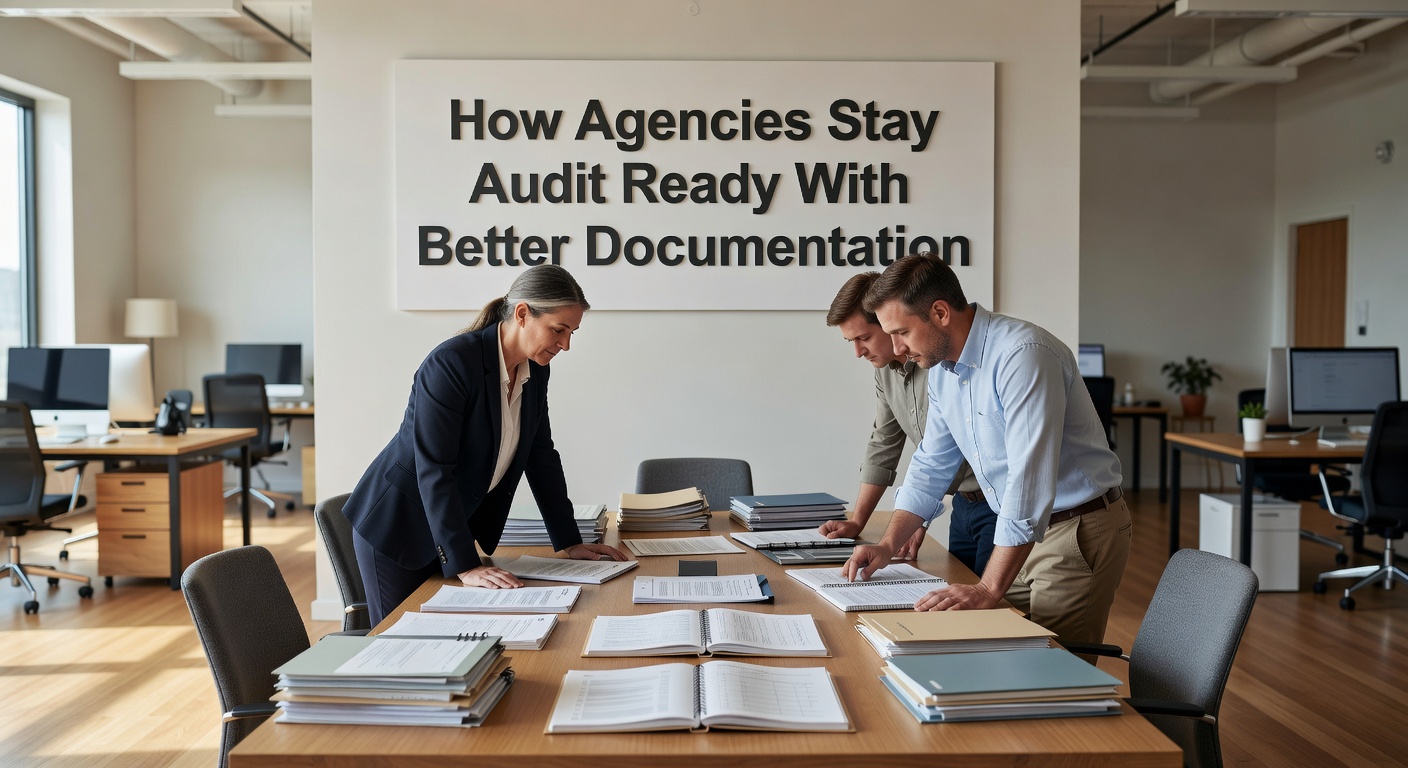
Staying audit-ready isn’t just about passing periodic reviews—it’s about building documentation practices that make compliance a natural part of daily operations. When agencies manage supervision programs effectively, they create systems that support both regulatory requirements and operational efficiency.
Building Your Documentation Foundation
Effective agencies organize their records around centralized systems that capture information at the point of service. This means having one platform where staff can access participant files, incident reports, training records, and compliance documentation without searching through multiple systems.
The most successful approaches include:
• Standardized categories that match what auditors expect to see—risk assessments, training logs, policy updates, and incident documentation • Clear naming conventions that make files easy to locate months or years later • Automated timestamps and signature capture that eliminate manual tracking errors • Role-based access controls that ensure only authorized staff can view or modify sensitive records
Agencies often discover that poor organization creates more work than the documentation itself. When records are scattered across different systems, staff spend valuable time hunting for information instead of focusing on program delivery.
Creating Reliable Audit Trails
Audit readiness depends on demonstrating who did what, when, and why for every significant action. This requires documentation systems that automatically capture these details rather than relying on staff to remember to log activities manually.
Key elements include:
• Immutable logs that show all changes, approvals, and access to sensitive records • Chain of custody documentation for assessment tools, incident reports, and compliance certificates • Regular data backups with off-site storage that protects against system failures • Version control that tracks policy updates, training materials, and procedural changes
Many agencies struggle with audit findings because they can’t demonstrate the timeline of important decisions or show that proper approvals were obtained. Modern documentation tools solve this by automatically creating audit trails as part of normal workflows.
Implementing Year-Round Compliance Checks
Agencies that avoid compliance surprises build verification into their regular operations rather than scrambling before audit deadlines. This means conducting monthly completeness checks and quarterly comprehensive reviews that identify and resolve issues before they become findings.
Effective monthly reviews focus on:
• Missing signatures or incomplete authorization forms • Expired training certificates or licensing requirements • Overdue assessments or required documentation updates • System access logs that show appropriate usage patterns
Quarterly reviews take a broader view:
• Policy alignment with current regulations and best practices • Training record accuracy across all staff categories • Incident response documentation and follow-up procedures • Data quality issues that could create compliance gaps
Agencies using documentation tools for supervision agencies report that automated reminders and dashboard alerts help them stay current with these requirements without adding administrative burden.
Managing Common Documentation Challenges
Most compliance findings stem from predictable issues that agencies can prevent through better systems and procedures. The most frequent problems include incomplete training records, outdated policies, missing participant authorizations, and inconsistent incident documentation.
Training and Credential Management
Staff qualification tracking creates ongoing compliance requirements that many agencies handle manually. Better approaches include:
• Automated credential monitoring that alerts supervisors before licenses expire • Training completion tracking that shows dates, facilitators, and assessment scores • Competency documentation that demonstrates staff understanding of key procedures • Continuing education logs that track professional development requirements
Incident and Risk Documentation
Programs must document how they identify, assess, and respond to compliance risks. This requires:
• Standardized incident reporting that captures required elements consistently • Risk assessment procedures that show decision-making rationale • Corrective action tracking that demonstrates follow-up and resolution • Environmental and safety documentation for program locations and activities
Leveraging Technology for Documentation Efficiency
Modern agencies use software to automate routine documentation tasks while maintaining the detailed records that auditors require. This includes automated report generation, compliance dashboards, and integrated workflows that capture information as part of normal operations.
Effective technology solutions provide:
• Real-time compliance monitoring that shows current status across all requirements • Automated evidence packages that compile audit-ready documentation quickly • Data validation tools that identify inconsistencies before they become problems • Secure document storage with appropriate access controls and retention policies
The goal isn’t to eliminate documentation requirements but to make compliance tracking efficient enough that staff can focus on program delivery while maintaining audit readiness.
Preparing for Different Audit Types
Different oversight bodies focus on different aspects of program operations, but all expect to see organized, complete documentation that demonstrates ongoing compliance. Financial audits emphasize billing accuracy and expense documentation. Program audits focus on service delivery, participant outcomes, and safety procedures. Compliance audits examine adherence to specific regulations and licensing requirements.
Regardless of audit type, agencies benefit from:
• Pre-audit organization that groups related documents together • Summary reports that provide overviews of program activities and outcomes • Exception documentation that explains any unusual circumstances or variances • Communication logs that show coordination with oversight bodies and other agencies
Takeaway
Staying audit-ready requires building documentation into daily operations rather than treating it as a separate compliance activity. Agencies that succeed focus on centralized systems, automated tracking, and regular verification procedures that identify and resolve issues before they become audit findings. Modern software tools can significantly reduce the administrative burden while improving documentation quality and accessibility, helping programs maintain compliance while focusing on their core mission of effective supervision and support services.