
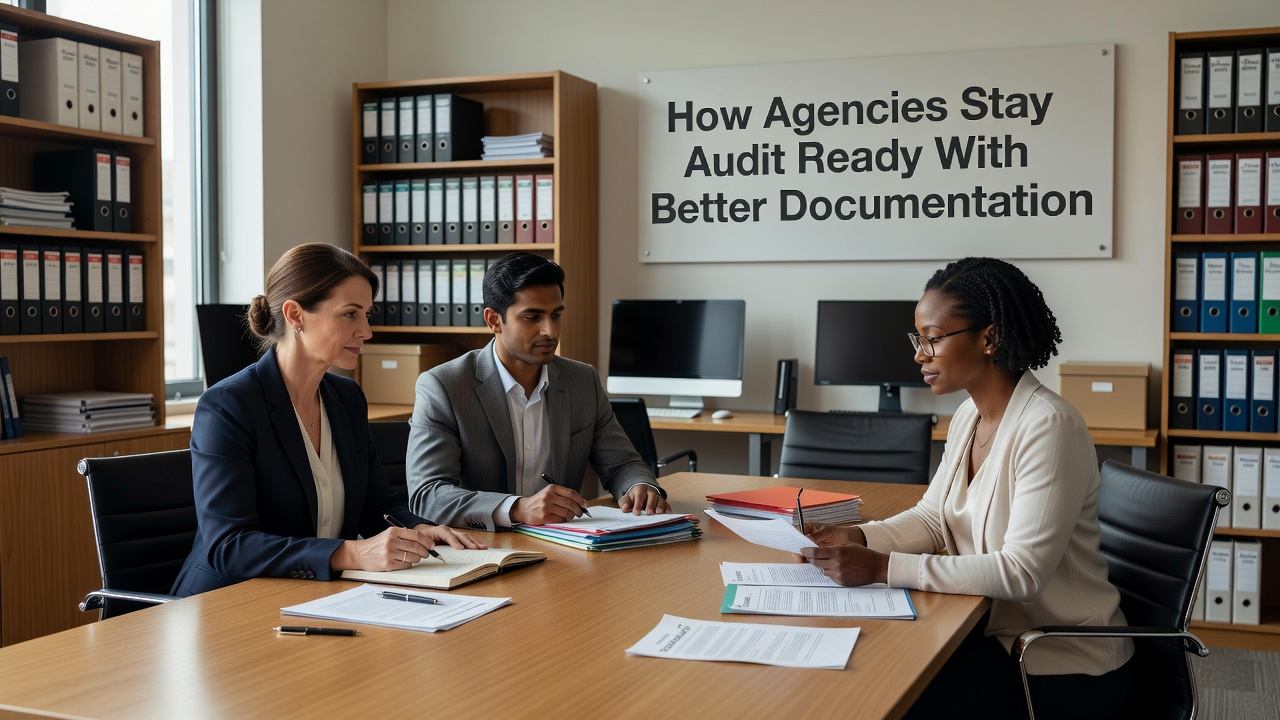
Staying audit ready is less about scrambling before a review and more about how agencies manage documentation every single day. For organizations operating under strict compliance requirements, better documentation habits and structured workflows are what separate programs that pass reviews confidently from those that spend weeks catching up. This guide covers practical steps for how agencies stay audit ready with better documentation — from file reviews to billing reconciliation to staff handoffs.
Why Documentation Gaps Create Audit Risk
Most audit findings don’t come from serious violations. They come from small, preventable documentation errors that accumulate over time — a late session note here, a missing client signature there, attendance records that don’t match billing submissions.
Common documentation mistakes in supervised treatment and compliance programs include:
- Late progress notes that fall outside required timeframes
- Incomplete or missing client signatures on required forms
- Inconsistent attendance records across staff members or locations
- Missing or outdated progress updates for active cases
- Unsigned or undated corrections to existing records
The problem isn’t always that staff don’t know the requirements. Often it’s that there’s no reliable system to catch gaps before they become findings. A structured workflow — supported by the right tools — makes early detection possible.
Building a Monthly File Review Routine
One of the most effective practices for staying audit ready year-round is conducting monthly file reviews rather than waiting for an external review to identify problems. Agencies that build this into their regular schedule rarely face the last-minute scramble that makes audits stressful.
What a Monthly File Review Should Cover
A reliable monthly review checklist should include:
- Note timeliness — are session notes completed within required timeframes?
- Billing consistency — do attendance logs match what has been submitted for payment?
- Client signatures — are required authorizations and acknowledgments in place?
- Sanctions and incident documentation — are required reports filed correctly?
- Progress reports — are updates completed on schedule for each active case?
- Corrections tracking — are all record changes logged with who made them and when?
Monthly reviews don’t need to be exhaustive audits. A targeted checklist review of a sample of files each month creates a corrections log and a clear record of ongoing compliance effort — which itself demonstrates program integrity during a formal review.
Reporting Workflows That Reduce Last-Minute Stress
Late or incomplete court reports are one of the most common sources of compliance pressure for supervised programs. The fix isn’t working faster under deadline — it’s building internal deadlines and review steps that sit well ahead of external due dates.
A practical reporting workflow includes:
- Internal deadlines set several days before actual submission deadlines
- A review and approval step where a supervisor checks the report before it goes out
- Submission confirmation tracking so there’s a record that a report was sent and received
- Standardized report templates that ensure required fields are never accidentally left blank
This kind of structure also makes it easier to maintain consistency across multiple staff members. When everyone uses the same template and follows the same review steps, variation in report quality drops significantly.
Keeping Reporting Consistent Across Staff and Locations
For agencies operating across multiple sites or with rotating staff, documentation consistency is a real challenge. The most effective approach combines standardized templates, clear version control, and regular training on documentation expectations.
Software that centralizes documentation — rather than relying on individual staff files or paper records — is particularly helpful here. When session notes, attendance data, and case updates all live in one system, it’s much easier to identify who entered what, when it was entered, and whether it meets required standards.
Compliance Tracking and Attendance Reconciliation
Attendance tracking is where billing errors most commonly begin. When attendance logs and billing records aren’t reconciled regularly, discrepancies build up and become much harder to correct after the fact.
Best practices for keeping these aligned include:
- Maintaining a single source of truth for attendance — one system that all staff use, rather than separate logs
- Running weekly reconciliation to match attendance records to services billed
- Flagging partial sessions, makeup services, and no-shows in a consistent, documented way
- Reviewing for incomplete service records before billing is submitted, not after
For compliance tracking in regulated programs, real-time issue flagging is especially valuable. When a missed note or unreconciled attendance record is surfaced immediately rather than discovered weeks later, corrections are faster and cleaner.
Managing Record Corrections Without Creating Risk
Record corrections are a normal part of documentation work, but how they’re handled matters enormously during an audit. Corrections that lack a clear log of who made the change, when, and why can look like record manipulation — even when the change was completely appropriate.
A defensible corrections process includes:
- A corrections log that captures the original entry, the updated entry, the date of change, and the staff member responsible
- Clear policy on who is authorized to make corrections to different types of records
- Regular review of the corrections log as part of monthly file reviews
- Software tools that automatically track changes and create a timestamped audit trail
This kind of change documentation protects agencies during supervisory reviews and demonstrates that program staff are managing records responsibly.
Handoffs Between Clinical, Supervision, and Billing Staff
Documentation gaps often happen during transitions — when a case moves between a clinician, a supervision coordinator, and a billing team member. Without a clear handoff process, required documentation can fall through the cracks or sit incomplete because everyone assumes someone else handled it.
A reliable handoff process defines:
- What documentation must be complete before a case transfers between teams
- Who owns each step of the transfer
- A required format or checklist for transfer documentation
- A confirmation step so that the receiving staff member acknowledges what they’ve received
For programs using documentation tools designed for supervision agencies, handoff workflows can be built directly into the system — reducing the chance that something important gets missed during a transition.
Takeaway
Audit readiness isn’t a one-time effort. It’s the result of consistent documentation habits, structured review routines, and workflows that catch problems early rather than late. Agencies that stay audit ready year-round do it by building monthly file reviews into their schedule, standardizing their reporting templates, reconciling attendance and billing regularly, and maintaining defensible corrections logs.
Modern software tools support each of these practices by centralizing records, automating reconciliation checks, flagging incomplete documentation in real time, and creating the audit trails that reviewers look for. The goal isn’t perfection — it’s a system that makes compliance manageable, reduces administrative burden, and keeps your program ready for review at any time.
Want to see how better documentation workflows could work for your agency? Reach out to our team for a walkthrough of how our tools support compliance, reporting, and audit readiness for regulated supervision programs.