
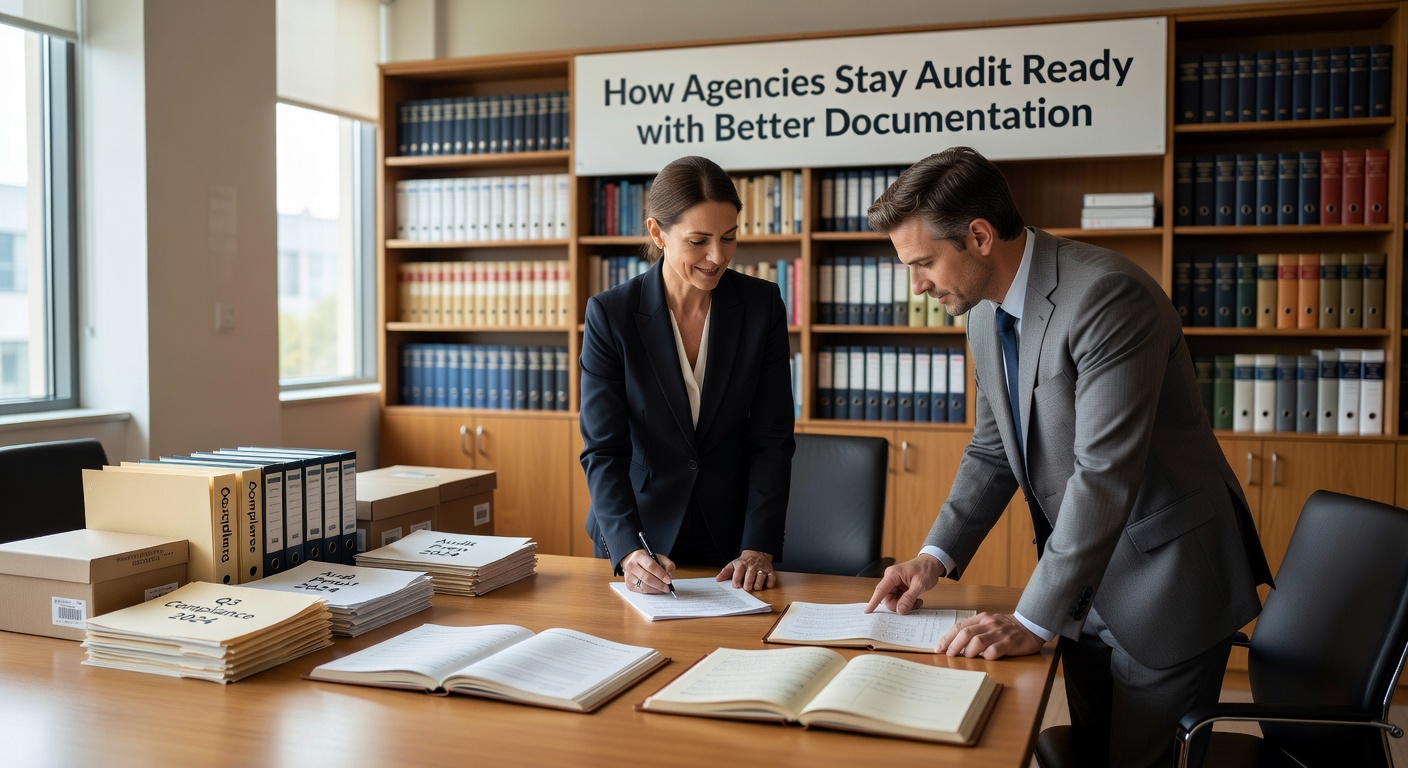
Staying prepared for regulatory audits requires more than good intentions—it demands systematic documentation practices, regular monitoring protocols, and efficient workflows that keep critical records organized and accessible. For agencies managing compliance in regulated environments, the difference between passing and failing an audit often comes down to how well they maintain their documentation systems.
Build a Foundation with Standardized Documentation
Establishing consistent documentation standards creates a reliable framework that auditors can easily navigate. When every staff member follows the same protocols, your records become more accurate, complete, and defensible.
Start with these core documentation requirements:
• Timeliness standards: Complete all entries within 24-72 hours to ensure accuracy and legal defensibility • Standardized formats: Use structured approaches like SOAP (Subjective, Objective, Assessment, Plan) or DAP (Data, Assessment, Plan) for consistency • Complete records: Include assessments, treatment plans, progress notes, and all required supporting documentation • Clear signatures and dates: Ensure all entries are properly attributed and timestamped
Many agencies struggle with inconsistent record-keeping because they lack written procedures. Standard Operating Procedures (SOPs) should cover everything from initial client intake to final case closure, giving staff clear guidance on what to document and when.
Implement Regular Self-Assessment Protocols
Waiting for an external audit to discover gaps in your documentation is a costly mistake. Proactive internal reviews help identify and correct issues before they become compliance problems.
Effective self-assessment includes:
• Monthly internal audits using checklists to review completeness, accuracy, and consistency • Multidisciplinary team reviews that examine cases from different perspectives • Trend tracking to identify patterns in documentation quality or common gaps • Regular training refreshers for staff on documentation requirements and best practices
Focus Areas for Internal Reviews
When conducting self-assessments, pay special attention to high-risk areas:
• Client eligibility verification and supporting documentation • Progress tracking that clearly shows treatment outcomes • Billing documentation that supports all claimed services • Staff qualification records including licenses and training certificates • Incident reports and how they were addressed
Regular reviews should happen more frequently than annually—quarterly or even monthly assessments help catch problems early when they’re easier to fix.
Leverage Technology for Better Compliance
Modern documentation management systems can significantly reduce administrative burden while improving audit readiness. Electronic systems offer advantages that paper-based records simply cannot match.
Key technology benefits include:
• Automated compliance checks that flag missing or incomplete information • Audit trails that track all changes and access to records • Centralized storage making records easily accessible during audits • Backup and recovery systems protecting against data loss • Real-time reporting capabilities for ongoing monitoring
Electronic Health Records (EHR) Advantages
EHR systems designed for regulated environments provide structure that supports compliance efforts. They can enforce required fields, maintain version control, and generate reports that demonstrate adherence to regulations.
For agencies handling multiple compliance requirements, comprehensive administrative workflow tools can integrate documentation, monitoring, and reporting functions into a single system.
Maintain Continuous Monitoring Systems
Ongoing verification processes help agencies stay current with changing regulations and staff qualifications. Rather than relying on periodic manual checks, automated monitoring systems provide real-time alerts when issues arise.
Effective monitoring covers:
• Professional license status with quarterly verification • Federal exclusion lists checked monthly at minimum • Training certification expiration dates tracked automatically • Compliance deadline reminders sent to responsible staff • Documentation completion rates monitored across all programs
Risk-Stratified Approaches
Not every position requires the same level of monitoring. Risk-based protocols allow agencies to focus intensive oversight on high-risk roles while maintaining appropriate monitoring for all positions.
For example, staff with direct client contact may need monthly license verification and annual criminal background updates, while administrative staff might require less frequent checks.
Prepare for Audit Success
When audit time arrives, well-documented agencies can respond quickly and confidently. Audit readiness means having systems in place that make information easily accessible and clearly organized.
Pre-audit preparation should include:
• Document inventory ensuring all required records are complete and current • Staff training on audit procedures and appropriate responses to auditor requests • Backup documentation for any gaps or unusual circumstances • Timeline preparation showing how the agency has addressed previous audit findings
Many agencies find that maintaining audit-ready status year-round is more efficient than scrambling to prepare when an audit is announced. This approach reduces stress and ensures consistent compliance.
Takeaway
Staying audit-ready requires systematic documentation practices, regular self-assessment, and efficient monitoring workflows. Modern software tools can automate many compliance tasks, reduce administrative burden, and provide the real-time oversight needed to maintain regulatory standards. Agencies that invest in proper documentation systems and ongoing monitoring find that audits become routine processes rather than stressful events.
Ready to improve your agency’s compliance documentation and monitoring systems? Contact our team to learn how integrated workflow solutions can help streamline your audit preparation and ongoing compliance efforts.