
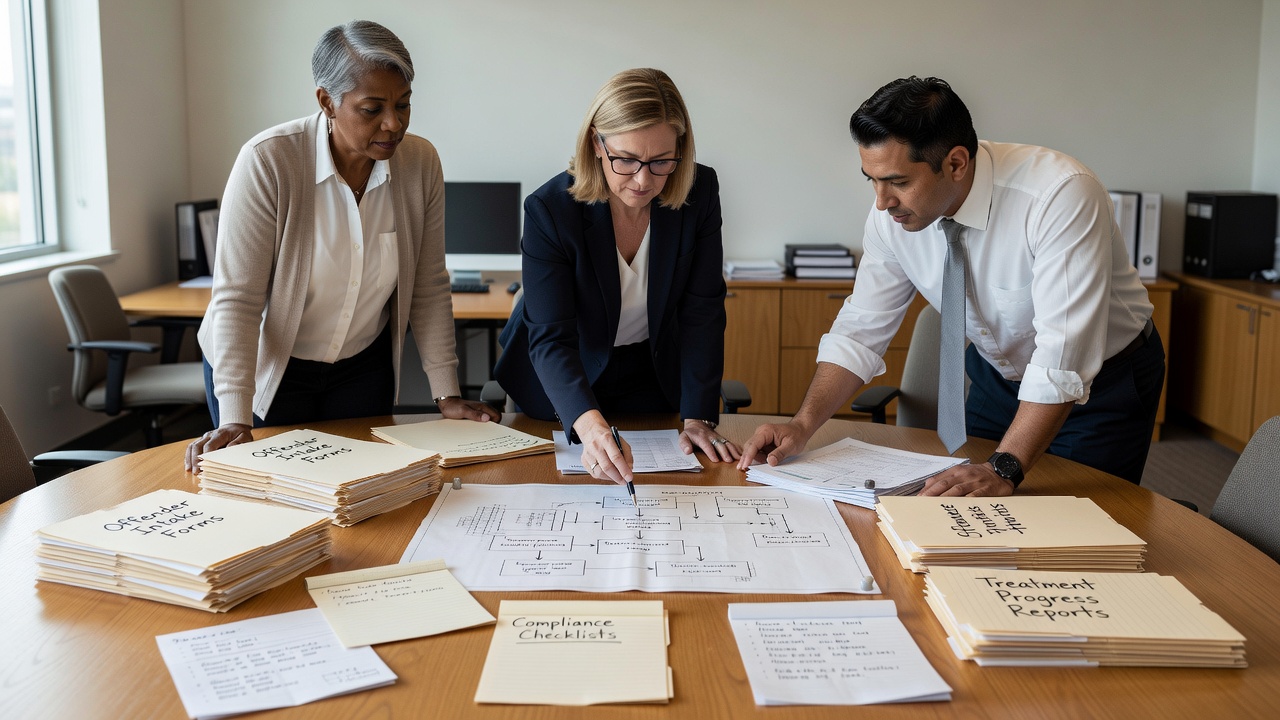
Improving administrative workflows for offender treatment programs is one of the most practical steps an agency can take to reduce errors, stay audit-ready, and protect revenue. Yet many programs continue to rely on fragmented systems, inconsistent documentation practices, and manual processes that create unnecessary risk. This guide breaks down the most common operational pain points and offers concrete best practices to address them.
Why Documentation Bottlenecks Happen
Most documentation problems in regulated supervision programs are not caused by careless staff. They happen because processes were never clearly defined, tools were not designed for the work, or responsibilities were never formally assigned.
Common causes include:
- No standardized note format across staff or locations
- Manual data entry duplicated across multiple systems
- No structured review step before files go to court or billing
- Alerts and deadlines tracked informally, such as in spreadsheets or email threads
When these gaps exist, errors accumulate quietly. A missing signature, a mismatched attendance log, or a late progress report can create serious problems during an audit or billing review.
Common Mistakes That Create Audit Risk
Understanding where documentation tends to break down helps agencies build better prevention habits. These are the mistakes that show up most often during file reviews and audits.
Missing or Incomplete Signatures
Signatures on intake forms, consent documents, and progress notes are often required for both compliance and billing. When staff are not prompted to collect them at the right moment, they frequently get missed. Catching these gaps after the fact is time-consuming and sometimes impossible.
Mismatched Attendance and Billing Records
One of the most common billing problems occurs when attendance logs and billing records do not align. If a client is billed for a session that is not documented in the attendance record, or if attendance is logged but the service was never billed, both situations create compliance exposure. Reconciling these records regularly is essential.
Late or Missing Progress Reports
Progress reports submitted to courts or referral agencies after a deadline reflect poorly on a program and can affect client outcomes. Without a centralized deadline calendar and clear ownership, due dates are easy to miss — especially when caseloads are high.
Inconsistent Case Note Formatting
When each staff member documents sessions differently, file reviews become inconsistent and time-consuming. Courts and auditors expect documentation to meet a recognizable standard. Standardizing note templates across staff and locations reduces this risk significantly.
Building Administrative Workflows That Actually Work
The goal of better administrative workflows is not to add paperwork. It is to reduce the rework, confusion, and compliance risk that comes from doing things inconsistently.
Here are the foundational workflow practices that make the biggest difference:
Create a Single Source of Truth
When case data, attendance records, billing information, and compliance notes live in separate places, cross-referencing them is slow and error-prone. Consolidating records into one system — or at minimum, establishing a clear integration between systems — makes audits faster and reduces duplication.
A single source of truth means every staff member, supervisor, and reviewer is working from the same information at the same time.
Use Structured Intake Checklists
Intake is the first point where documentation errors enter the system. A structured intake checklist ensures that every required document is collected before a case moves forward. This includes consent forms, referral paperwork, assessment documents, and any court-required materials.
When intake is done correctly, the rest of the case file is easier to manage.
Schedule Regular File Reviews
A monthly file review process gives supervisors the opportunity to catch documentation gaps before they become audit findings. A basic monthly checklist might include:
- Confirming all required signatures are present
- Verifying that attendance logs match billing records
- Checking that progress notes are complete and formatted correctly
- Reviewing upcoming court deadlines and report due dates
- Flagging any missing documents or incomplete intake packets
File reviews should be assigned to a specific person or role, with a clear expectation for when and how they are completed.
Track Deadlines in a Centralized Calendar
Court deadlines, progress report due dates, and required check-ins should not be tracked in individual inboxes. A shared, centralized deadline calendar — ideally connected to case records — gives supervisors visibility across the caseload and allows for advance planning.
When a deadline is approaching and no corresponding document has been started, an alert or flag should surface automatically rather than relying on someone to remember.
How Software Tools Support These Workflows
The practices described above are achievable with better process design alone. But software tools built for regulated supervision programs make them significantly easier to maintain at scale.
Administrative workflow tools for court ordered programs can automate deadline tracking, prompt staff to complete documentation at the right stage, and flag missing items before files move to review or billing. This reduces the manual checking that supervisors would otherwise need to do by hand.
For agencies managing billing alongside documentation, software for offender treatment providers can link attendance records directly to billing entries, making reconciliation faster and reducing the risk of claims being denied due to documentation mismatches.
The key is not the software itself — it is the consistency that structured tools enforce across staff, locations, and time.
What to Verify During a File or Chart Audit
Whether an audit is conducted internally or by an external reviewer, knowing what to look for in advance saves significant time. Supervisors conducting chart audits should verify:
- Intake packet completeness — all required documents collected and signed
- Progress note consistency — notes follow a standard format and are completed on time
- Attendance and billing alignment — records match across both systems
- Court report submission dates — reports were submitted on or before the required deadline
- Signature completion — all consent and authorization forms are signed by the appropriate parties
- Exception documentation — any missed sessions, rescheduled appointments, or client absences are properly logged
Programs that conduct regular internal audits using a consistent checklist rarely face surprises when external reviews occur.
Takeaway
Administrative workflows for offender treatment programs do not need to be complicated to be effective. The agencies that manage documentation, billing, and compliance reporting most successfully are the ones that have standardized their processes, assigned clear ownership, and built in regular review steps.
Modern software tools support these practices by automating reminders, consolidating records, and surfacing gaps before they become problems. But the foundation is always the same: clear processes, consistent documentation, and regular review.
If your program is still managing these workflows manually — through spreadsheets, shared drives, and email threads — now is a practical time to evaluate what a more structured approach would look like.
Ready to see how structured workflow tools can reduce your administrative burden? Explore how purpose-built platforms support compliance tracking, documentation, and reporting for regulated supervision programs.