
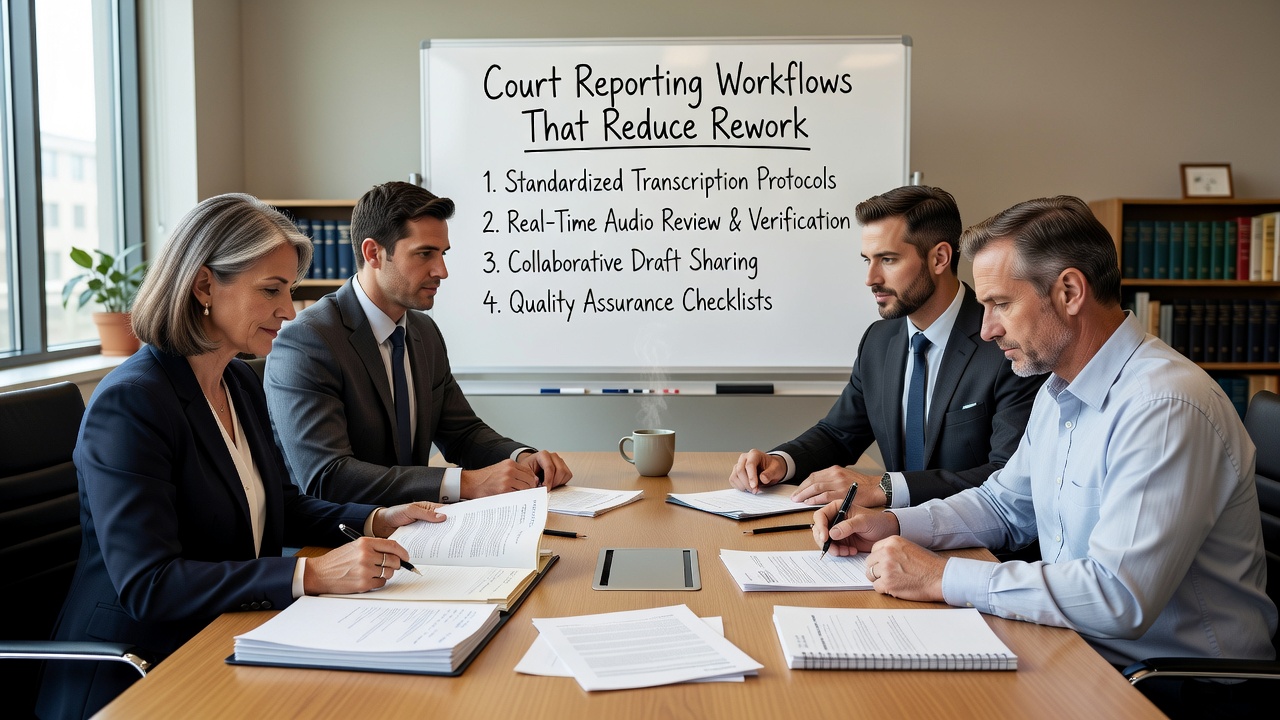
Managing court reporting workflows for supervision programs is one of the most administratively demanding responsibilities an agency faces. When reports are delayed, documentation is missing, or handoffs between staff roles break down, the result is last-minute scrambling, compliance risk, and avoidable rework. Building a structured, repeatable workflow is not about adding more steps — it is about making each step clear so nothing slips through.
Why Court Reporting Workflows Break Down
Most reporting problems do not start the day a report is due. They start weeks earlier when documentation is incomplete, attendance records are unreconciled, or billing has moved forward without a corresponding session note.
Common breakdown points include:
- Delayed note entry — when counselors wait more than 24 hours to document sessions, reconstruction errors accumulate
- Unresolved intake flags — missing court case numbers, consent forms, or fee agreements create gaps that surface during reporting
- Mismatched attendance and billing records — if a session is billed but the note is missing or vice versa, reconciliation becomes a manual investigation
- Fragmented communication — when counselors, admin staff, and billing operate in silos, each role makes assumptions the others have not confirmed
None of these are unusual. They are standard operational friction that structured workflows and the right documentation tools for supervision agencies can significantly reduce.
The Multi-Step Workflow Model
A practical court reporting workflow assigns clear responsibilities to each role at each stage. Think of it as a handoff chain, not a single person’s task.
Stage 1: Counselor Responsibilities
Counselors are the first line of documentation. Their role in the reporting workflow includes:
- Entering session notes within 24 hours of each contact
- Logging attendance accurately, including no-shows with reason codes
- Flagging any compliance events — violations, missed payments, attendance holds — at the time they occur
- Documenting make-up session approvals and any exceptions in writing
When counselors complete these steps consistently, the downstream workload shrinks considerably.
Stage 2: Administrative Review
Once documentation is entered, an admin review step catches errors before they reach billing or court reports. This review should confirm:
- Attendance records match session notes for the reporting period
- No-shows are logged with reason codes, not left blank
- Any compliance status changes — active, non-compliant, completed, or terminated — are reflected in the file
- Outstanding intake flags are resolved before the file moves forward
Stage 3: Billing Reconciliation
Billing should only process services that have completed documentation. A “no documentation, no billing” policy is one of the clearest ways to prevent both compliance findings and claim denials. During reconciliation:
- Each billed session should link to a completed and dated note
- Fee waivers or write-offs should have supporting rationale documented in the file
- Attendance holds should prevent billing from processing incomplete services
Stage 4: Compliance Review and Report Preparation
The final stage brings together documentation, attendance, and billing into the court report. A compliance reviewer — whether a supervisor or dedicated role — checks that:
- The reporting period is complete with no undocumented gaps
- Violation notes are clearly dated and written in neutral, factual language
- Progress summaries tie back to specific compliance events
- The report is filed within the required timeframe and a copy is retained in the client file
Exception Handling: No-Shows, Make-Ups, and Attendance Holds
Exceptions are where reporting workflows often fail. Agencies that do not have a clear policy for handling no-shows, make-up sessions, and attendance holds end up making case-by-case decisions that are inconsistent and difficult to explain during an audit.
Strong exception-handling practices include:
- Logging every no-show immediately with a reason code and date, even when the reason is unknown
- Documenting make-up approvals in writing before the session occurs, not after
- Using attendance holds to pause billing when a client’s service delivery is interrupted pending review
- Notifying the referring court or agency when a client reaches a defined absence threshold, with documentation of when and how the notification was sent
Building these policies into your standard workflow — rather than leaving them to staff discretion — makes reporting more consistent and defensible.
Terminology Consistency Across Staff and Reports
One underestimated source of reporting confusion is inconsistent terminology. When one staff member documents a status as “non-compliant,” another writes “missed sessions,” and a third uses “inactive,” courts and auditors are left to interpret what each term means in context.
Standardizing terminology across your program means:
- Defining and using consistent labels for compliance status (active, non-compliant, completed, terminated)
- Using the same terms for attendance types (present, excused absence, unexcused absence, make-up)
- Applying consistent language to fee events (payment received, fee waiver approved, balance outstanding)
- Training all staff to use the same vocabulary in notes, reports, and client communications
This kind of standardization does not require new software to implement, though compliance tracking tools for regulated programs can enforce consistency through structured data fields and dropdown selections.
Monthly Reviews That Keep You Continuously Audit-Ready
The most audit-ready agencies are not the ones that scramble before an inspection — they are the ones that conduct routine file reviews throughout the year. A monthly file review routine creates a built-in quality check that catches problems while they are still easy to correct.
A practical monthly review covers:
- Active client files: confirm agreements are signed, progress notes are current, and attendance matches billing
- Upcoming court deadlines: flag any reports due within 30 days and confirm documentation is complete
- Fee waivers and write-offs: verify each has documented rationale
- Compliance status changes: confirm any status changes from the prior month are accurately reflected
- Exception documentation: confirm no-shows, make-ups, and holds are resolved and documented
Building this review into a standing monthly task — rather than an annual pre-audit scramble — keeps the administrative workload manageable and keeps your program in a position to respond to any request with confidence.
Takeaway
Structured court reporting workflows are not about bureaucracy — they are about making sure the work your staff does every day translates into accurate, defensible records when it matters most. Clear role assignments, consistent terminology, exception-handling policies, and routine file reviews all reduce the rework and last-minute pressure that drain administrative capacity. Modern software tools can support each stage of this workflow by enforcing documentation standards, linking billing to completed services, and surfacing compliance exceptions before they become reporting problems. The goal is a process that runs consistently in the background, so your team can focus on delivering the services your clients need.
Ready to simplify your reporting and compliance workflows? Explore administrative workflow tools for court ordered programs built for supervision and treatment agencies.