
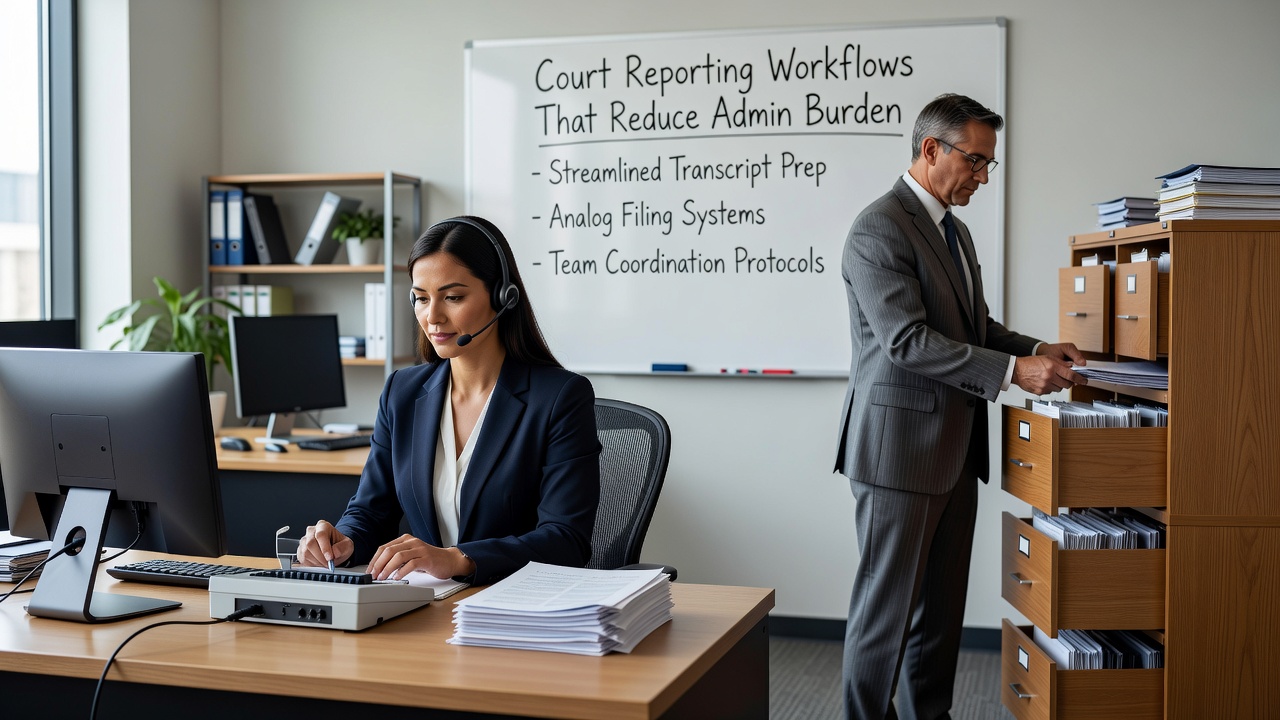
Managing court reporting workflows for supervision programs is one of the most time-consuming parts of running a regulated agency. Between tracking attendance, submitting compliance reports, maintaining case files, and preparing for audits, the administrative load can quickly overwhelm even experienced staff. The good news is that most of these burdens come from preventable process gaps — and fixing them does not require a technology overhaul. It requires a clearer workflow.
Why Reporting Workflows Break Down in Supervised Programs
Most agencies do not struggle with reporting because their staff are careless. They struggle because their processes were built reactively — one form added here, one spreadsheet created there — until the whole system became fragile and hard to maintain.
Common root causes include:
- No single source of truth for case records, leading to duplicate data entry across systems
- Unclear role assignments for who is responsible for which reporting tasks and when
- Manual handoffs between intake, compliance tracking, and billing that create gaps and errors
- Inconsistent documentation standards across staff or program types
When these issues compound, they create audit risk, billing errors, and delays in reporting to courts or referral agencies. Addressing them starts with mapping the actual workflow — not the ideal one, but the one staff are actually using.
How to Standardize Your Court Reporting Workflow
Standardization does not mean rigidity. It means creating consistent procedures that any qualified staff member can follow, even during turnover or high-volume periods.
Define what needs to be documented and when
Every supervised program has reporting milestones: intake completion, session attendance, progress notes, phase transitions, and case closure. The problem is that these milestones often exist in staff memory rather than in a documented process.
Start by building a reporting checklist for each program type you operate. Include:
- Required fields at intake
- Attendance and participation records per session
- Progress or compliance notes and their required frequency
- Notification triggers (missed sessions, violations, phase changes)
- Closure documentation and final report requirements
Having this in writing — and reviewing it with staff regularly — reduces the chance that something gets missed simply because it was assumed.
Assign clear ownership to each step
One of the most common sources of documentation gaps is shared responsibility with no clear owner. When two people both assume the other submitted a report, nothing gets submitted.
Role-based accountability means each step in the reporting workflow is assigned to a specific role, not just a specific person. That way, when staff changes happen, the responsibility transfers with the role rather than disappearing.
Reducing Duplicate Entry and Manual Errors
Duplicate data entry is one of the biggest time wasters in compliance-heavy programs. When staff enter the same client information into an intake form, a billing system, and a court reporting template separately, the risk of inconsistency multiplies with every step.
The most effective fix is centralized case records — one place where client data lives and from which reports, billing records, and compliance summaries are generated. This is where purpose-built documentation tools for supervision agencies provide real operational value. Rather than rebuilding data across formats, staff update a single record and the relevant outputs are drawn from it.
Even without specialized software, agencies can reduce duplication by:
- Using a master client record as the primary source for all reports
- Creating templates that pull from shared data rather than requiring re-entry
- Scheduling regular reconciliation checks between billing records and case file notes
Staying Audit-Ready Without Extra Administrative Work
Audit preparation should not be a scramble. If your documentation workflow is functioning correctly throughout the year, preparing for a review should mostly mean organizing records that already exist — not reconstructing them.
Agencies that maintain strong audit readiness typically share a few common practices:
- Version-controlled documentation: When forms or procedures change, prior versions are retained and dated so reviewers can see what was in effect at any given time
- Tracked completion records: Staff training, client acknowledgments, and compliance milestones are logged with dates and signatures rather than stored as assumptions
- Access controls: Sensitive case records are accessible only to authorized roles, with a log of who accessed or modified records and when
- Regular internal reviews: Rather than waiting for an external audit, supervisors conduct periodic file checks to catch gaps before they become findings
These practices are not complicated, but they do require intention. Building them into the weekly routine — rather than treating them as audit-only tasks — is what keeps agencies consistently prepared.
Billing and Paperwork Bottlenecks Worth Fixing Now
Billing errors in regulated programs often trace back to documentation problems, not billing problems. When session notes are incomplete, attendance records are missing, or authorization dates are not tracked, billing staff either cannot submit claims or submit them incorrectly.
The most common billing bottlenecks in supervised treatment and compliance programs include:
- Missing or unsigned session notes at the time of billing
- Authorization gaps where services were rendered outside an approved period
- Discrepancies between attendance logs and billing records
- Delayed submissions caused by manual review processes that create backlogs
Addressing these usually requires connecting the documentation workflow to the billing workflow earlier in the process. If case notes are completed and reviewed before a billing cycle closes, most of these errors can be caught and corrected in time. Software for offender treatment providers that integrates documentation and billing in one environment can close this gap more reliably than patching two separate systems together.
Takeaway
The administrative weight of running a supervised program does not have to come from the complexity of the work itself. Much of it comes from process gaps that have built up over time — unclear ownership, duplicate entry, inconsistent documentation, and reactive audit preparation. The agencies that manage this most effectively are not necessarily larger or better resourced. They have built deliberate workflows that make documentation consistent, billing traceable, and audit readiness a byproduct of normal operations rather than a separate project.
If your team is spending significant time correcting errors, tracking down missing records, or preparing for reviews at the last minute, that is a workflow signal worth acting on. Modern tools built for supervision and compliance environments can help — but so can a structured review of the process you already have.
Ready to see how a purpose-built platform can support your reporting and compliance operations? Explore our compliance tracking and reporting tools to learn how agencies like yours are reducing administrative burden without adding complexity.