
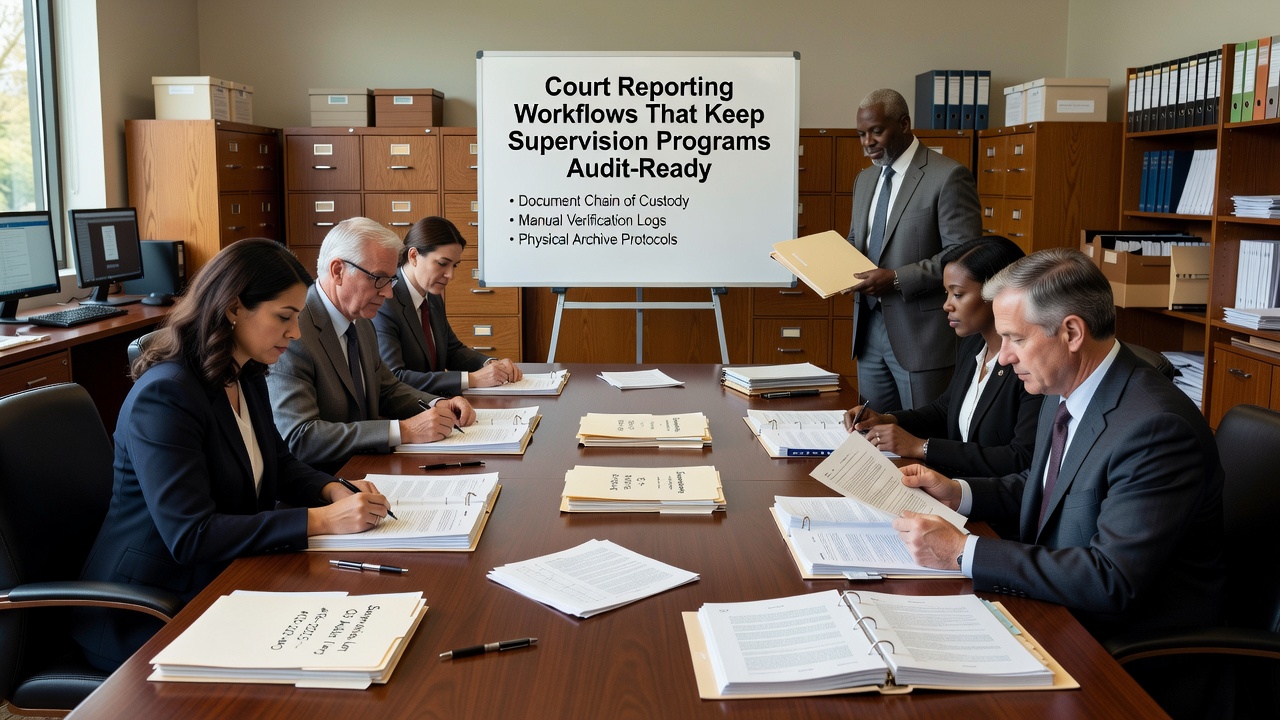
Improving court reporting workflows for supervision programs is one of the most practical steps an agency can take to reduce administrative burden, improve documentation quality, and stay audit-ready year-round. Whether your team manages attendance tracking, compliance reporting, or case file documentation, having clearly structured workflows in place protects your agency and the people you serve.
This guide walks through the most common workflow challenges in regulated supervision environments and offers concrete, operational steps to address them.
Why Documentation Workflows Break Down
Most compliance problems in supervision programs don’t start with bad intentions. They start with inconsistent habits, unclear responsibilities, and documentation practices that weren’t designed to scale.
Some of the most common breakdown points include:
- Late progress notes completed days after service delivery, reducing accuracy and making records harder to defend during audits
- Missing client identifiers on individual pages of case files, creating both privacy risks and continuity gaps
- Inconsistent use of status categories such as Active, At Risk, or Non-Compliant, which leads to miscommunication between staff and confuses reporting outputs
- Batching documentation in ways that mix time-sensitive records (like incident reports) with routine records (like attendance logs), when each type requires a different turnaround standard
These aren’t just administrative inconveniences. In regulated environments, they can create real compliance exposure during audits, contract reviews, or court inquiries.
Building Reporting Workflows That Reduce Rework
Effective reporting workflows share a few key characteristics: clearly defined inputs, assigned responsibilities, and realistic deadlines that staff can actually follow.
One practical approach is to separate high-frequency reports from exception reports. High-frequency reports, like attendance and participation logs, can follow a regular submission cycle. Exception reports, such as violations or critical incidents, need to be documented immediately and routed through a defined escalation process.
A Practical Review Cycle for Supervision Agencies
Building a structured review rhythm helps agencies catch gaps before auditors do:
- Weekly: Review recently closed notes for completeness and timeliness
- Monthly: Pull a random sample of charts to check for documentation gaps, billing alignment, and status accuracy
- Quarterly: Analyze trends to identify recurring errors, high-risk programs, or staff training needs
- Annually: Review all templates and documentation policies against current regulatory requirements
This kind of scheduled review reduces last-minute scrambles and creates a culture of ongoing compliance rather than reactive cleanup.
What Audit-Ready Case Files Actually Look Like
An audit-ready case file isn’t just complete. It’s organized, chronological, and traceable.
Every file should include:
- Intake and enrollment records with dates and signatures
- Treatment plans that are current and signed
- Progress notes completed within a defined window (typically 24 to 48 hours after service)
- Status history showing when and why a participant moved between compliance categories
- Incident reports documented in real time with clear notation of who was notified and when
- A clear audit trail that shows who documented each entry, when it was entered, and any corrections made
Software tools built for regulated programs, such as compliance tracking for regulated programs, can automate much of this structure by timestamping entries, flagging incomplete records, and maintaining access logs that satisfy audit requirements without additional manual effort.
Compliance Tracking: From Status Categories to Escalation
One of the most valuable things a supervision agency can standardize is its compliance status framework. When every staff member uses the same definitions for Active, At Risk, and Non-Compliant, and when clear rules govern how participants move between those categories, reporting becomes more consistent and defensible.
Risk-based monitoring adds another layer of structure:
- High-risk participants receive more frequent check-ins and documentation review
- Monthly sampling ensures lower-risk cases don’t slip through the cracks
- Quarterly pattern analysis helps leadership identify systemic issues rather than reacting only to individual cases
When a participant does become non-compliant, a written escalation checklist ensures the response is consistent, documented, and proportionate. A basic escalation framework might include:
1. Initial warning with documented rationale 2. Case review with supervisor 3. Modification of program conditions if applicable 4. Notification to referring authority or court 5. Documentation of each step, including response timelines and decision rationale
This kind of structured response protects both the participant and the agency, and it’s far easier to demonstrate in an audit when every step is recorded in a centralized system.
How Software Tools Support Better Workflows
Manual documentation systems, whether paper-based or built on generic spreadsheets, struggle to keep up with the reporting demands of regulated supervision programs. Purpose-built administrative workflow tools for court ordered programs address these gaps in practical ways:
- Structured templates for progress notes, incident reports, and summaries reduce omissions and keep documentation consistent across staff
- Automated timestamps and access logs create the audit trail that compliance reviewers expect
- Status tracking dashboards make it easier to see which participants are at risk without manually reviewing every file
- Billing alignment features help agencies verify that submitted billing matches documented service delivery, reducing the risk of claim errors or audit findings
- Retrieval speed is improved significantly when records are centralized and searchable, which matters when courts or auditors request documentation on short notice
These aren’t luxury features. For programs operating under licensing requirements, contract oversight, or court reporting obligations, they’re operational necessities.
Takeaway
Strong court reporting workflows for supervision programs come down to three things: consistent documentation habits, structured review cycles, and clear escalation protocols. When these are in place, agencies spend less time catching up and more time focusing on the work that matters.
Modern software tools make it significantly easier to build and maintain these workflows without adding administrative overhead. Automated audit trails, status tracking, structured templates, and billing alignment features reduce the manual burden on staff while keeping agencies prepared for audits, contract reviews, and court inquiries at any time.
If your agency is working to improve its documentation and reporting processes, evaluating purpose-built tools designed for regulated supervision environments is a practical next step. The right system should fit your existing workflows and make compliance easier to maintain, not harder.
Ready to see how purpose-built software can improve your agency’s reporting and compliance workflows? Explore tools designed for supervision and treatment programs and find out what better documentation can look like for your team.