
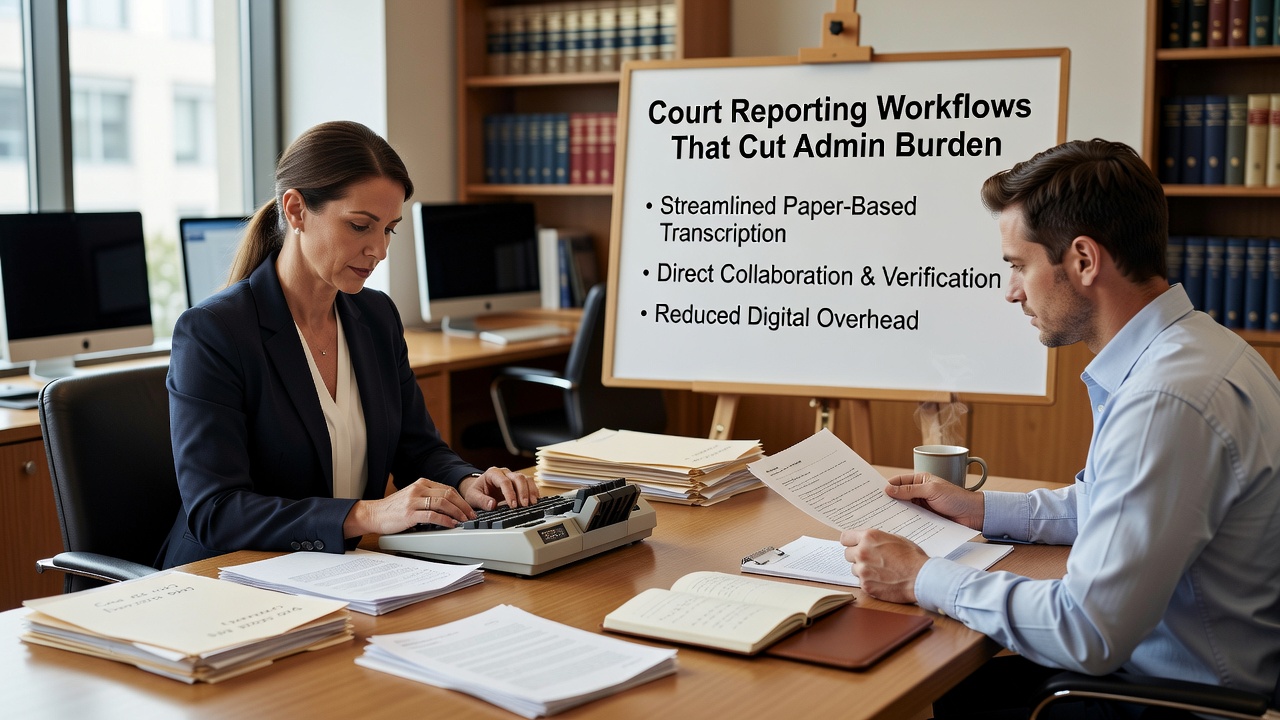
Managing court reporting workflows for supervision programs is one of the most time-consuming administrative responsibilities agencies face. Between case notes, attendance logs, treatment updates, and court summaries, staff are often duplicating work across multiple formats — losing hours that could go toward direct services. The good news is that better workflow design, standardized templates, and purpose-built tools can reduce that burden significantly without sacrificing the detail or accuracy that courts and auditors require.
Why Court Reporting Workflows Break Down
Most reporting problems don’t start when a report is due — they start weeks earlier, in how documentation is collected and organized day to day. When case notes are vague, inconsistent, or incomplete, staff end up reconstructing information at the last minute. That creates pressure, errors, and reports that don’t hold up to scrutiny.
Common breakdown points include:
- Vague session notes that don’t connect interventions to goals or outcomes
- Missing or inconsistent dates that make timelines difficult to verify
- Attendance logs stored separately from treatment records, requiring manual reconciliation
- No standard format for court summaries, so each report is built from scratch
- Supervisor sign-off bottlenecks that delay submission at the end of the process
Understanding where the workflow breaks down is the first step to fixing it.
Designing a Workflow That Goes From Notes to Reports Cleanly
The most efficient court reporting workflows follow a clear path: case notes → structured data → court summary. Each step should feed naturally into the next, with minimal duplication and clear role assignments.
Step 1: Standardize How Notes Are Captured
If every clinician documents sessions differently, court summaries will always require extra interpretation. Standardized note templates — with required fields for date, session type, interventions used, client response, and next steps — ensure that the information needed for court reports is already captured at the source.
Templates don’t need to be restrictive. They can allow narrative flexibility while still requiring the structured data points that matter for compliance and reporting.
Step 2: Build Reporting Intervals Into the Calendar
Rather than preparing court reports reactively, agencies benefit from scheduled reporting cycles tied to court dates or supervision requirements. This means:
- Assigning staff to batch-prepare reports on a set schedule (weekly, biweekly, or monthly depending on caseload)
- Flagging upcoming court dates in advance so documentation can be reviewed before the deadline
- Completing supervisor review as a routine step, not an emergency one
Batch preparation reduces the cognitive load of context-switching and makes the review process faster and more consistent.
Step 3: Separate Clinical Language From Court Language
One of the most practical improvements agencies can make is developing clear guidelines for translating clinical documentation into court-ready language. Judges and probation officers need concise, plain-language summaries — not clinical jargon or lengthy progress note excerpts.
A useful court summary typically includes:
- Current compliance status (attendance, program participation, any violations)
- Progress toward goals stated in measurable terms
- Significant events or changes since the last report
- Recommended next steps or adjustments, if applicable
When staff know exactly what a court report needs to contain, they can pull that information directly from structured case notes rather than rewriting everything from scratch.
Compliance Tracking That Supports Reporting — Not Just Audits
Good court reporting workflows depend on good compliance tracking. If attendance, session completion, sanctions, and incentives aren’t being tracked in a consistent, organized way, court summaries become educated guesses rather than accurate records.
Effective compliance tracking for reporting purposes includes:
- Standardized data fields for attendance, absences, and reasons
- Clear role assignments — who is responsible for entering which data, and when
- Routine data quality checks (weekly or biweekly review of records for gaps or inconsistencies)
- A single source of truth for case information rather than data spread across spreadsheets, paper files, and email threads
When compliance data is accurate and current, generating court reports becomes a matter of pulling and formatting existing information — not hunting it down.
How Software Tools Support Better Reporting Workflows
Organizing these workflows manually is possible, but it requires significant discipline and coordination across staff. Purpose-built documentation tools for supervision agencies reduce the coordination burden by centralizing case notes, attendance records, treatment plans, and reporting functions in one place.
Practically, this means:
- Staff enter information once, and it’s accessible across notes, reports, and billing records
- Templates prompt staff for required fields at the point of documentation
- Supervisors can review and approve reports without chasing down paper files
- Agencies can generate consistent, formatted court summaries without rebuilding them each time
For agencies managing large caseloads or multiple program types, administrative workflow tools for regulated treatment programs can also help reduce billing bottlenecks by keeping service documentation aligned with claims submission — an area where disconnected records frequently cause denials or audit findings.
Staying Audit-Ready Without Last-Minute Scrambles
One of the side benefits of a clean court reporting workflow is that it also keeps agencies audit-ready year-round. When documentation is current, structured, and easy to locate, internal and external reviews become far less stressful.
Agencies that maintain continuous readiness typically:
- Conduct routine internal file reviews to catch missing signatures, incomplete notes, or outdated treatment plans before auditors do
- Use standardized checklists to verify that required forms, consents, and progress notes are present and complete
- Review policies regularly to ensure that written procedures match what staff are actually doing
This kind of ongoing attention to documentation quality prevents the gap between written policy and real-world practice — a common source of audit findings.
Takeaway
Court reporting workflows for supervision programs don’t have to be a source of constant stress or duplicated effort. The key is designing the workflow intentionally: standardize how notes are captured, build reporting intervals into the schedule, translate clinical language clearly for courts, and track compliance data in a consistent, accessible way. When these steps are in place, reports are faster to prepare, more accurate, and easier to defend. Modern software tools support this by centralizing documentation, automating routine prompts, and reducing the administrative coordination burden on staff — so your team can focus on what matters most.
Ready to streamline your agency’s reporting and documentation workflows? Explore how purpose-built tools can help your team stay organized, compliant, and court-ready — without the administrative overload.