
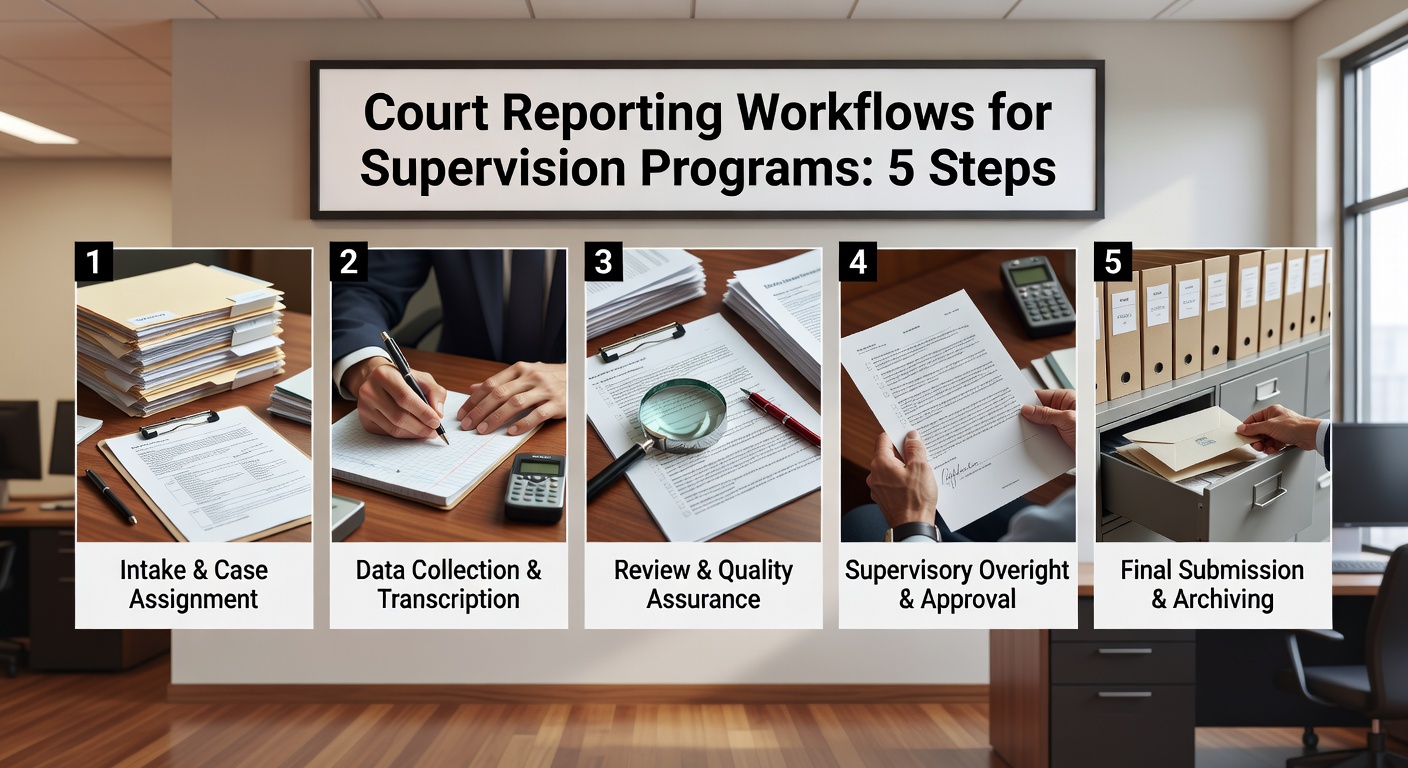
Effective court reporting workflows for supervision programs require careful coordination of deadlines, documentation standards, and compliance requirements. Agencies managing supervision cases face mounting pressure to deliver accurate reports on time while maintaining proper documentation trails for audits and reviews.
Modern supervision environments involve complex reporting cycles with multiple stakeholders. Treatment providers, probation offices, and administrative staff must work together to ensure court submissions meet legal standards and deadlines. Without structured workflows, agencies risk missed deadlines, incomplete documentation, and compliance violations.
Essential Components of Effective Reporting Workflows
Successful reporting systems start with clear processes that everyone can follow consistently. The foundation includes standardized templates, defined roles, and automated reminders for critical deadlines.
Key workflow elements include:
- Centralized case tracking with real-time status updates
- Automated deadline notifications for staff
- Template libraries for consistent report formatting
- Quality review checkpoints before submission
- Backup procedures for urgent situations
Agencies benefit from establishing regular review cycles rather than scrambling to meet individual deadlines. Monthly statistical reports typically require submission by the 15th of the following month, while quarterly progress assessments need completion within 30 days of quarter end.
Documentation Standards That Support Court Requirements
Court reporting demands specific documentation practices that differ from general case management. Every interaction, assessment, and treatment milestone needs proper recording with timestamps and staff attribution.
Proper documentation includes participant consent status, treatment progress measurements, attendance records, and any compliance issues. Staff must understand which information courts require versus what stays confidential under privacy regulations.
Streamlining Data Collection and Report Generation
Efficient workflows eliminate duplicate data entry and reduce administrative burden. Staff should enter information once and use it across multiple reports rather than recreating the same details repeatedly.
Effective data management strategies:
- Use dropdown menus and standardized fields to ensure consistency
- Implement role-based access so staff see only relevant information
- Create automated calculations for metrics like attendance percentages
- Generate multiple report formats from the same data source
- Maintain audit trails showing who accessed or modified records
Agencies often struggle with siloed information systems where treatment data exists separately from administrative records. Integrated platforms allow staff to pull comprehensive reports without switching between multiple databases.
Managing Multiple Reporting Cycles
Supervision programs typically handle various reporting requirements with different deadlines and audiences. Court reports, state compliance submissions, and internal management reports all require different information formats and timing.
Successful agencies create master calendars showing all reporting deadlines and assign specific staff responsibilities for each type. This prevents last-minute rushes and ensures adequate review time before submission.
Quality Control and Review Processes
Reporting accuracy directly impacts participant outcomes and agency credibility. Establishing review checkpoints helps catch errors before reports reach courts or regulatory bodies.
Multi-layer review processes include:
- Initial completeness check by report preparer
- Supervisor review for accuracy and compliance
- Final administrative review for formatting and deadlines
- Spot audits of submitted reports for continuous improvement
Quality control becomes more manageable when staff use standardized checklists for each report type. These checklists should cover required data elements, formatting standards, and compliance requirements specific to each reporting audience.
Technology Integration for Workflow Efficiency
Modern compliance tracking for regulated programs significantly reduces manual work while improving accuracy. Automated systems handle routine tasks like deadline reminders, data validation, and report formatting.
Technology benefits include real-time collaboration between staff members, automatic backup of critical information, and integration with court electronic filing systems. Staff spend less time on administrative tasks and more time on direct participant services.
Building Sustainable Reporting Practices
Long-term success requires workflows that adapt to staff changes and evolving requirements. Agencies should document their processes clearly and provide comprehensive training for new staff members.
Sustainable practices include:
- Written procedures for each report type with step-by-step instructions
- Cross-training multiple staff members on critical reporting functions
- Regular workflow reviews to identify improvement opportunities
- Backup plans for staff absences during critical reporting periods
- Continuous monitoring of regulatory changes that affect reporting requirements
Agencies benefit from treating workflow development as an ongoing process rather than a one-time setup. Regular staff feedback helps identify bottlenecks and improvement opportunities that may not be obvious to supervisors.
Emergency Procedures and Backup Plans
Even well-designed workflows need contingency plans for unexpected situations. Staff illnesses, system outages, or urgent court requests require alternative procedures that maintain reporting quality under pressure.
Emergency protocols should identify which staff members can handle different report types, how to access critical information when primary systems are unavailable, and expedited review processes for time-sensitive submissions.
Takeaway
Effective court reporting workflows for supervision programs combine structured processes, quality controls, and appropriate technology to meet demanding deadlines while maintaining accuracy. Agencies that invest in standardized procedures, staff training, and integrated systems reduce administrative burden and improve compliance outcomes. The key is building workflows that support both immediate reporting needs and long-term operational sustainability, allowing staff to focus on participant services rather than administrative crises.