
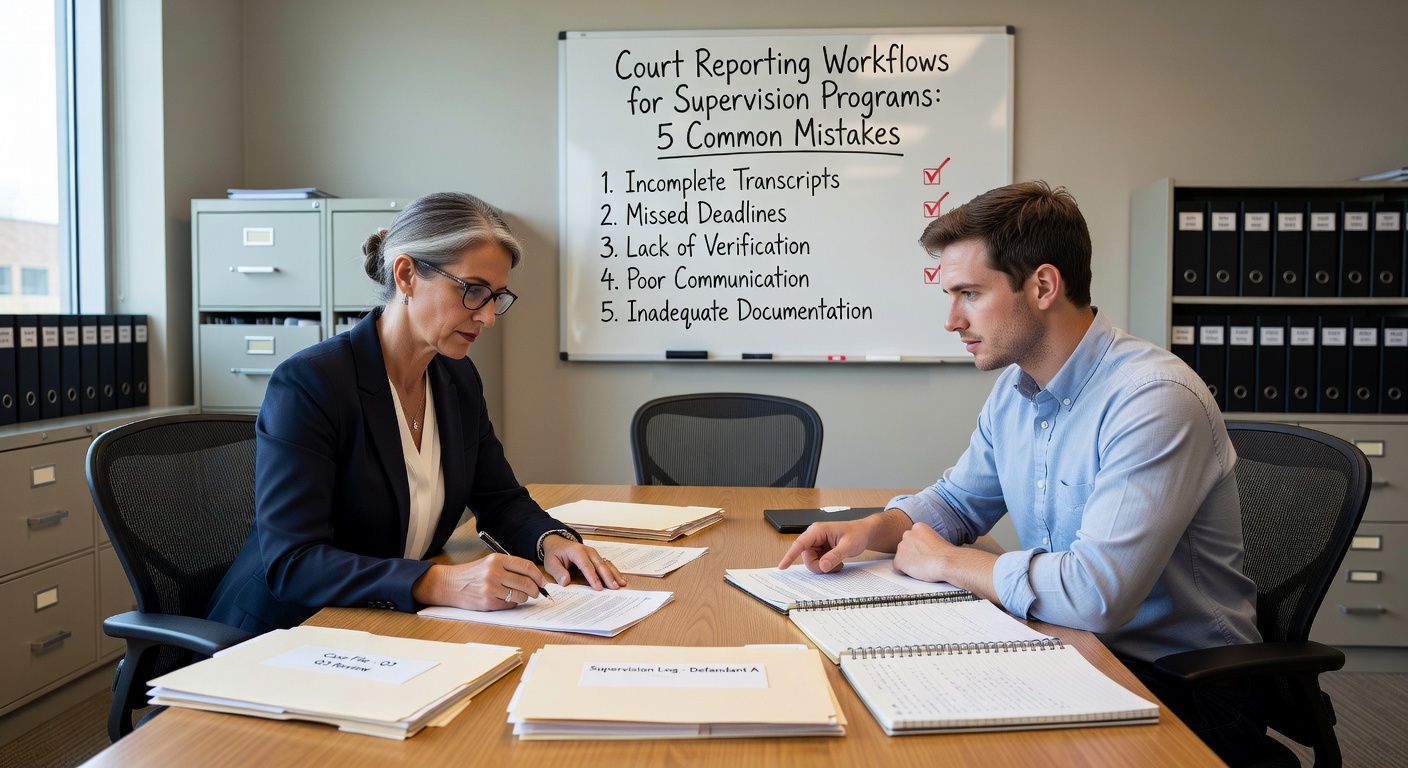
Effective court reporting workflows for supervision programs require systematic documentation, clear protocols, and consistent tracking to meet compliance requirements and maintain audit readiness. Many agencies struggle with documentation errors that expose them to legal challenges and operational inefficiencies.
Missing Documentation Standards Create Compliance Gaps
Inconsistent documentation practices undermine compliance efforts and create audit vulnerabilities. Standardized documentation formats like SOAP (Subjective, Objective, Assessment, Plan) or BIRP (Behavior, Intervention, Response, Plan) ensure consistency across all case files.
Common documentation gaps include:
- Missing timestamps and signatures on progress notes
- Incomplete treatment plans without specific goals
- Absent consent forms for information sharing
- Unclear violation notifications lacking objective details
Implementing template-based progress notes with required fields prevents these oversights. Staff should document session details, clinical responses, and compliance status using objective language suitable for court review.
Poor Tracking Systems Lead to Missed Deadlines
Manual tracking methods often result in missed court dates, incomplete assessments, and compliance violations. Automated tracking systems with built-in reminders help agencies stay current with reporting requirements.
Effective tracking includes:
- Automated flags for upcoming deadlines and missed appointments
- Integration with assessment and treatment schedules
- Real-time dashboards showing case status and compliance metrics
- Exception reporting for immediate attention to urgent matters
These systems reduce administrative burden while ensuring nothing falls through the cracks. Staff can focus on client services instead of manual deadline tracking.
Inadequate Multi-Agency Coordination Causes Information Gaps
Supervision programs often involve multiple stakeholders including probation officers, treatment providers, and court personnel. Poor coordination leads to duplicated efforts and information gaps.
Establishing Clear Communication Protocols
Standardized communication formats ensure all parties receive consistent, complete information. This includes:
- Unified progress reports accessible to authorized personnel
- Secure information sharing protocols that protect privacy
- Role-based access controls limiting information to relevant staff
- Regular status updates on compliance and treatment progress
Effective coordination reduces miscommunication while maintaining necessary confidentiality protections.
Inefficient Billing and Administrative Processes
Manual billing processes and redundant data entry create administrative inefficiencies and increase error rates. Integrated billing systems that connect to case management reduce these problems.
Streamlined administrative workflows include:
- Automated billing based on documented services
- Digital signatures for faster processing
- Mail-merged notifications and reports
- Unified data entry reducing duplicate work
These improvements can reduce processing time by 30-40% while improving accuracy.
Lack of Quality Assurance and Audit Preparation
Many agencies lack systematic quality assurance processes, leaving them unprepared for audits and compliance reviews. Audit-ready systems include regular file reviews and validation processes.
Building Audit-Ready Documentation
Quality assurance best practices include:
- Regular file completeness checks using standardized checklists
- Staff training on documentation requirements and compliance standards
- Periodic internal audits to identify improvement areas
- Secure data storage with appropriate access controls
Proper documentation tools for supervision agencies help maintain consistent standards and reduce compliance risks.
Takeaway
Effective court reporting workflows for supervision programs depend on standardized documentation, automated tracking systems, and clear communication protocols. Modern software solutions address common mistakes by providing structured templates, automated reminders, and integrated reporting capabilities. Agencies that implement these improvements see reduced administrative burden, better compliance outcomes, and improved audit readiness while allowing staff to focus more time on client services.
Ready to streamline your agency’s documentation workflows? Contact us to learn how specialized software can improve your compliance tracking and reduce administrative overhead.