
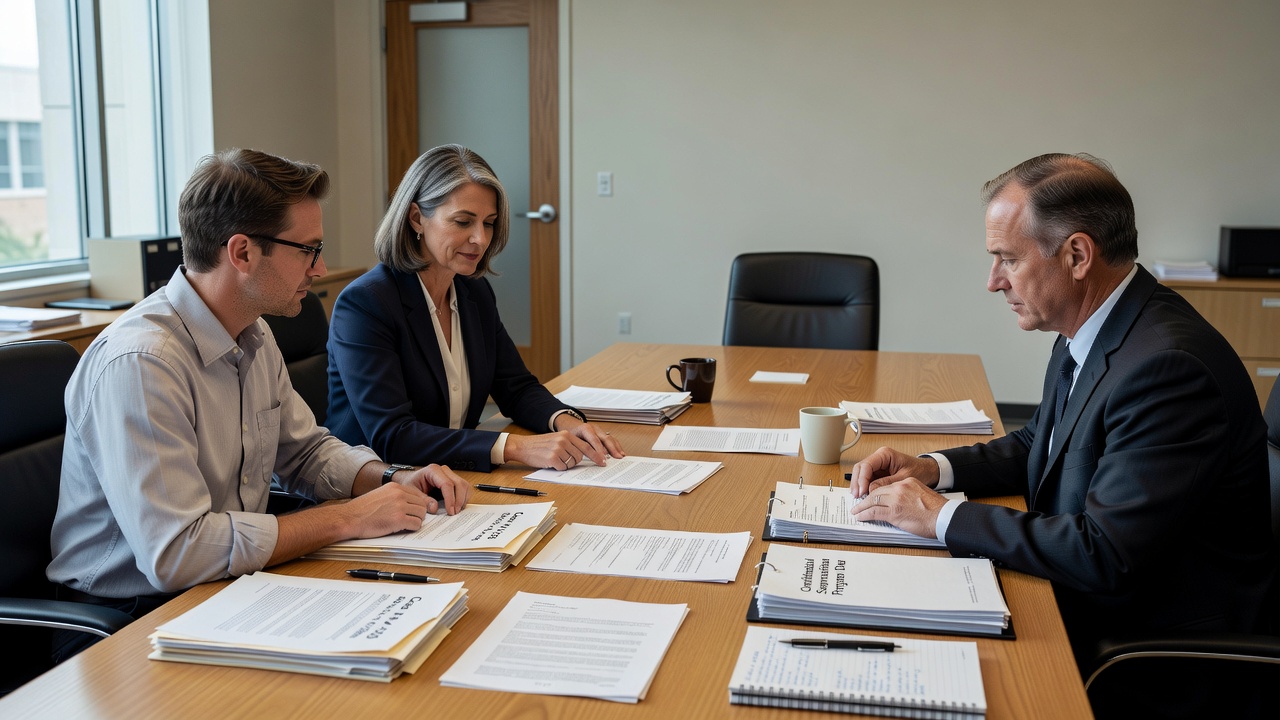
Managing court reporting workflows for supervision programs is one of the most operationally demanding responsibilities in regulated treatment and supervision environments. When reporting processes are unclear, documentation is inconsistent, or handoffs between teams are poorly defined, the consequences show up quickly — in audit findings, billing denials, and strained relationships with courts and referral agencies. The good news is that most of these problems are solvable with better workflow design, clear accountability structures, and the right tools.
Why Reporting Workflows Break Down
Most reporting problems in supervision programs don’t start with bad intentions. They start with unclear processes. When staff aren’t sure who drafts a report, who reviews it, or when it’s due, work piles up at the last minute — and last-minute work means errors.
Some of the most common breakdowns include:
- Missing required elements in session notes, such as signatures, timeframes, sanctions, or progress updates
- Inconsistent attendance records that don’t match billing entries, creating audit risk
- Unlogged corrections and silent edits that trigger surveyor findings
- No formal submission log, making it impossible to confirm what was sent, when, and to whom
These aren’t isolated mistakes. They’re signs of a workflow gap — a place where the process isn’t clearly defined or consistently followed.
Building a Structured Reporting Process
The most effective reporting workflows are built around clear handoffs and internal deadlines that precede the actual court or agency due dates. If a report is due to the court on Friday, your internal deadline should be Wednesday. That buffer allows time for review, corrections, and approval without scrambling.
Define Who Does What
A well-structured reporting workflow assigns specific roles at every stage:
- Who drafts the report
- Who reviews it for completeness and accuracy
- Who approves it before submission
- Who submits it and through what channel
- Who logs the submission, including date, method, recipient, and any confirmation received
This structure removes ambiguity, distributes accountability, and creates an audit trail that can be referenced if a submission is ever disputed.
Use Standardized Report Checklists
Before any report leaves your organization, staff should run through a checklist of required elements. This is especially important for high-volume programs where staff are completing multiple reports across different clients and courts.
A basic pre-submission checklist might include:
- All required attendance data is present and reconciled with session notes
- Sanctions, program changes, or missed sessions are documented
- The report is signed by the appropriate staff member
- The submission method and recipient are confirmed
- The submission is logged in your tracking system
Standardized checklists reduce variation, speed up supervisor review, and make it easier to onboard new staff into compliant workflows.
Compliance Tracking That Supports Reporting
Accurate reporting depends on accurate ongoing tracking. When attendance data, billing records, and clinical notes are maintained in separate systems or updated inconsistently, the risk of conflicting records grows — and conflicting records are a red flag in any audit.
Reconciling attendance with billing on a weekly basis — rather than monthly — catches discrepancies early, when they’re easier to correct. Waiting until month-end to reconcile means errors compound, and corrections become more time-consuming.
Practical compliance tracking habits that support stronger reporting include:
- Using a single source of truth for attendance and participation data across clinical, billing, and compliance teams
- Flagging partial attendance, missed sessions, and sanctions in real time rather than retroactively
- Building simple review lists or dashboards that supervisors can check regularly to monitor compliance indicators
- Keeping corrections logs and report submission logs current so audit trails are always clear
These practices reduce the amount of emergency cleanup work that happens before surveys or audits — and they make routine reporting significantly faster.
Keeping Case Files Audit-Ready Year-Round
Audit readiness shouldn’t be a scramble. Programs that treat it as a year-round routine rather than a pre-survey event are consistently better positioned when a review happens.
Monthly File Review as a Standard Practice
A monthly file review routine — even a lightweight one — catches documentation gaps before they become findings. An effective monthly file review covers:
- Note timeliness: Are session notes completed within your internal timeline (e.g., within 24 to 48 hours of the session)?
- Attendance accuracy: Do attendance records match what’s documented in session notes?
- Signatures and required elements: Are all required signatures and fields present?
- Progress reporting: Are treatment plan updates and progress reports completed on schedule?
- Corrections log review: Are all corrections documented with dates, staff initials, and reasons?
Assigning role-based responsibilities — who reviews which files, and how often — turns this from an ad hoc task into a reliable quality assurance routine. When checklist findings reveal recurring gaps, those gaps become training topics.
Aligning Templates With Regulatory Standards
Documentation templates should be designed to capture the elements required by your governing standards — whether that’s a state licensing body, an accreditation organization, or a specific court program contract. When templates don’t align with requirements, staff fill in what seems right rather than what’s required, and gaps appear at the worst possible times.
Reviewing your templates against current standards at least annually — and updating them when regulations change — keeps your documentation practices defensible. Compliance tracking for regulated programs works best when the tools and templates staff use every day are already built around the standards they’re expected to meet.
Managing Documentation in High-Volume Programs
High caseloads create documentation pressure. When staff are managing dozens of active clients, documentation backlogs can build quickly — and backlogs lead to late notes, incomplete records, and delayed billing.
A few practical strategies help:
- Set internal note completion timelines and hold them consistently. A 24 to 48-hour standard for session notes keeps records current and reduces the cognitive load of trying to recall session details later.
- Standardize session note templates so staff aren’t making formatting decisions from scratch every time. Standardization also speeds up supervisor review.
- Build documentation into the session flow rather than treating it as an after-the-fact administrative task. Brief structured note-taking habits at the end of each session are faster and more accurate than reconstructing notes at the end of the week.
- Smooth the handoff between clinical and billing teams so that incomplete documentation doesn’t sit as a bottleneck before billing can be submitted. Late or incomplete documentation is one of the most direct causes of billing delays and claim denials.
Software designed for administrative workflow tools for court ordered programs can support these practices by centralizing documentation, automating deadline reminders, and giving supervisors visibility into outstanding items across the caseload.
Takeaway
Stronger court reporting workflows for supervision programs don’t require a complete operational overhaul. They require clear process design: defined roles, internal deadlines, standardized templates, and consistent tracking habits. When these pieces are in place, reporting becomes a routine function rather than a recurring crisis — and audit readiness becomes a natural byproduct of how work gets done every day.
Modern software tools built for regulated supervision and treatment environments can support these workflows by centralizing data, reducing manual reconciliation, and keeping documentation, billing, and compliance information aligned across teams. The result is less administrative burden, fewer errors, and more time for the work that actually matters.
Ready to see how better workflow tools can support your reporting and compliance processes? Explore how our platform supports supervision and treatment programs.