
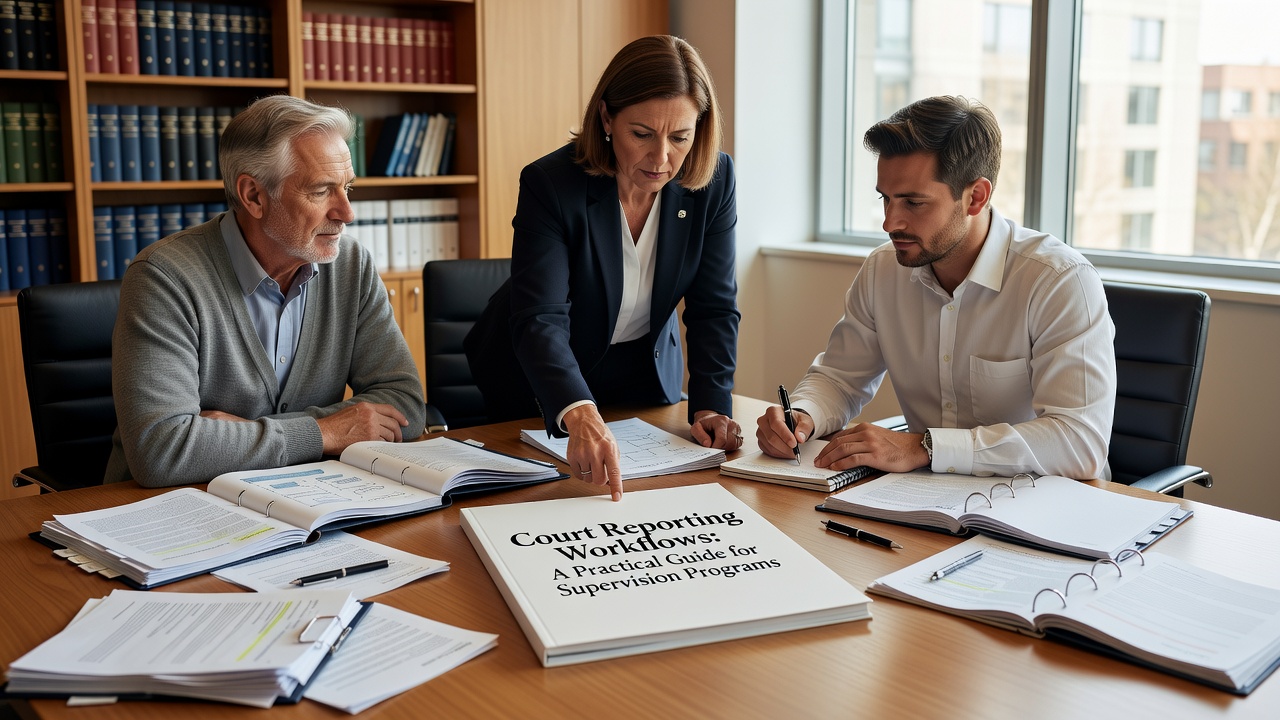
Keeping court reporting workflows for supervision programs consistent and accurate is one of the most persistent operational challenges agencies face. Whether your team manages attendance tracking, progress notes, non-compliance events, or billing reconciliation, gaps in documentation can create real problems — from failed audits to delayed payments to strained relationships with referring courts. This guide walks through the most common breakdowns and how structured processes and the right tools can help your agency stay organized, compliant, and audit-ready year-round.
Why Documentation Gaps Create Bigger Problems Downstream
Most compliance issues don’t start with bad intentions. They start with inconsistent processes — a progress note that gets written two weeks late, an attendance record that doesn’t match a billing line item, or a non-compliance event that was flagged verbally but never formally documented.
These small gaps compound over time. When an auditor or court reviewer pulls a client file, they’re looking for a complete, consistent picture of what happened and when. Missing dates, unsigned forms, or notes that contradict billing records raise immediate questions — even if the underlying care was provided appropriately.
Common documentation problems in regulated programs include:
- Progress notes written after the fact without clear timestamps
- Attendance records that don’t align with billing submissions
- Non-compliance events logged inconsistently across staff members
- Discharge summaries missing key completion criteria
- Client files that lack required intake documentation
Addressing these issues requires more than reminders. It requires a structured workflow.
Building a Consistent Court Reporting Process
A reliable court reporting process doesn’t happen by accident. It’s built on clear expectations, standardized templates, and defined handoff points between clinical and administrative staff.
Define What Goes in Every Client File
Every compliant client file should contain the same core elements, regardless of which staff member manages the case. At minimum, this typically includes:
- Signed intake and consent documentation
- Session attendance records with dates and times
- Progress notes tied to each session or contact
- Any non-compliance events with dates and actions taken
- Court communication logs
- Discharge summary or completion certificate upon exit
Standardizing the file structure across your program means auditors and court reviewers can find what they need quickly — and your team knows exactly what’s expected at every stage of a case.
Standardize Progress Notes Across Staff
One of the most common sources of inconsistency is progress note format. When different staff members use different language, detail levels, or structures, it becomes difficult to defend documentation in a review.
Consider adopting a shared template that includes: the session date, attendees, topics covered, client response or participation, any concerns flagged, and the next scheduled contact. A consistent note format across all staff reduces ambiguity and makes internal file reviews far more straightforward.
Improve Handoffs Between Clinical and Administrative Staff
Documentation problems often live in the space between treatment staff and the people handling billing and reporting. A clinician closes a session and moves on. The billing team submits a claim. But if the progress note wasn’t finalized, or attendance wasn’t confirmed, the two records don’t match.
Building a clear handoff process — where clinical documentation is reviewed and confirmed before billing is submitted — can eliminate a significant share of compliance problems before they ever reach a reviewer.
How to Stay Audit-Ready Without Extra Overhead
Audit readiness doesn’t mean scrambling every time a review is announced. It means maintaining files throughout the year so that any case can be pulled and reviewed at any time without preparation.
Run Monthly Internal File Reviews
A monthly file review process doesn’t have to be exhaustive. Even reviewing a sample of active cases each month — checking for missing signatures, incomplete notes, or unresolved non-compliance flags — keeps your team accountable and surfaces problems while there’s still time to correct them.
A basic internal review checklist might include:
- Are all sessions documented with matching attendance and notes?
- Are non-compliance events logged with dates and staff actions?
- Do billing records align with documented services?
- Are court communication logs current and complete?
- Are any required forms missing or unsigned?
Running this process monthly, rather than only before a scheduled audit, makes compliance a routine part of operations rather than a crisis response.
Correct Incomplete Records the Right Way
When a record is incomplete or needs correction, how you fix it matters as much as fixing it. Backdating notes, overwriting entries, or leaving unexplained gaps can create more problems than the original error.
Best practices for correcting records include documenting the reason for the late entry, noting the actual date the entry was made (not the date of the service only), and having a supervisor review and cosign any significant corrections. Transparency in corrections protects your agency and demonstrates that your team has control over its documentation processes.
Aligning Billing Records with Program Documentation
Billing and documentation are two sides of the same compliance picture. When they don’t align, it signals either a documentation problem or a billing problem — and in either case, the agency carries the risk.
The most common misalignments include:
- Billing for sessions with no corresponding progress note
- Sessions documented but not billed due to administrative oversight
- Attendance marked present but no signed confirmation on file
- Discharge billing submitted without a completed discharge summary
Using documentation tools for supervision agencies that connect service records directly to billing workflows can significantly reduce these gaps. When attendance, notes, and billing are tracked in the same system, discrepancies are easier to catch before they become compliance issues.
Keeping Court Communication Logs Organized
Communication with courts, probation officers, and referring agencies needs to be documented as carefully as clinical records. A verbal update that isn’t logged doesn’t exist from a compliance standpoint.
Maintain a log that captures: the date of communication, the party contacted, the method (call, email, written report), the content of the update, and the name of the staff member who made the contact. Organized communication logs are often what distinguishes a defensible file from one that raises questions during a review.
Takeaway
Consistent court reporting workflows are the backbone of a compliant, well-run supervision or treatment program. The agencies that stay audit-ready aren’t doing more paperwork — they’re doing it more systematically. Clear file structures, standardized notes, aligned billing records, and monthly internal reviews turn compliance from a reactive scramble into a manageable part of daily operations.
Modern administrative workflow tools for court ordered programs are designed to support exactly this kind of structured approach — connecting documentation, attendance, billing, and reporting into a single trackable process. If your agency is still managing these workflows across separate spreadsheets, email threads, or paper files, there’s a significant opportunity to reduce errors and administrative burden by bringing them together.
If you’d like to see how a more connected documentation workflow could work for your program, reach out to our team for a walkthrough.