
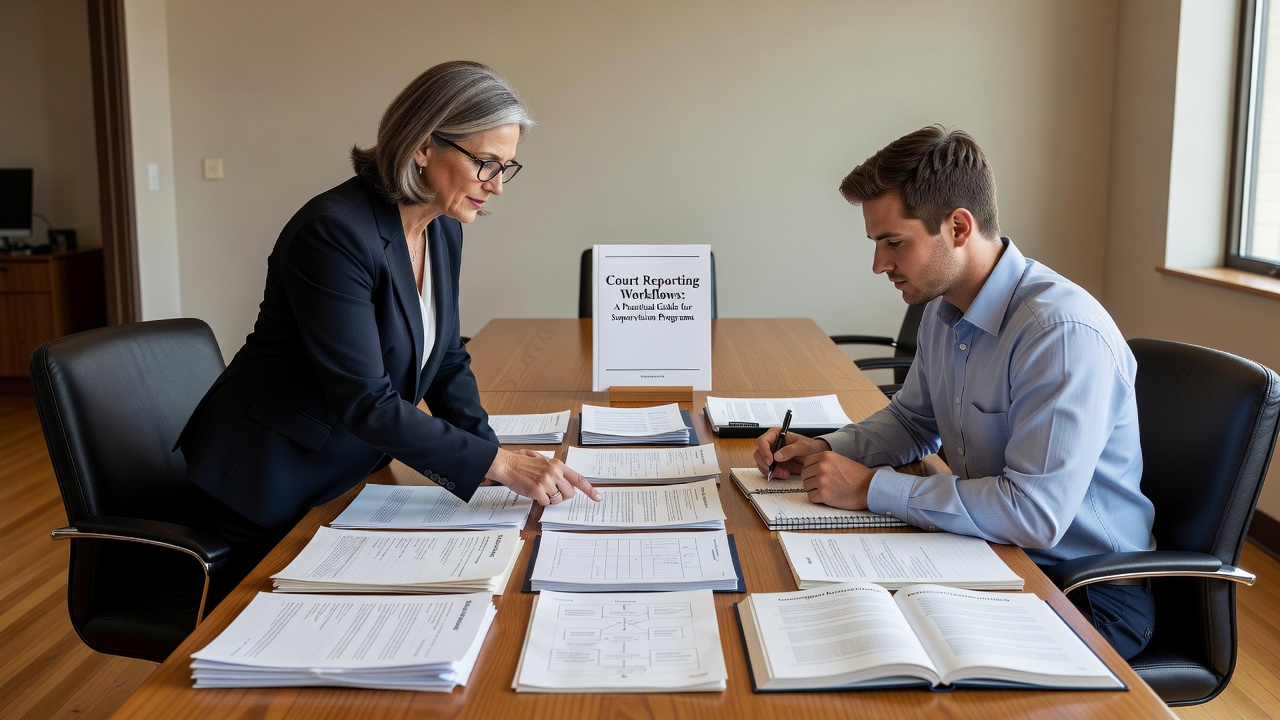
Managing court reporting workflows for supervision programs is one of the most time-intensive administrative responsibilities for agencies operating in regulated environments. When documentation, compliance tracking, and reporting processes are not clearly structured, staff spend more time correcting errors and chasing records than they do serving clients. A well-designed workflow reduces that burden and keeps your agency prepared for audits, payer reviews, and court-required reporting at any time.
This guide breaks down the core workflow areas that matter most and offers practical steps your team can implement without a technical background.
—
Why Reporting Workflows Break Down in Supervision Programs
Most reporting problems do not start at the reporting stage. They start earlier, during intake, session documentation, or status change recording. By the time a court report is due, the documentation gaps are already baked in.
Common breakdown points include:
- Incomplete intake documentation — missing consent forms, assessments, or original court orders
- Inconsistent case notes — notes that lack a date, contact type, session summary, or documented follow-up
- Undocumented status changes — no record of when a client’s compliance status changed, why, or who reviewed it
- Missing co-signatures — supervisory reviews that happened but were never formally recorded
- Manual report assembly — staff pulling information from multiple sources to compile a single court report
Each of these gaps adds time and risk. Fixing them requires a clearer workflow, not just more effort.
—
Building a Compliant Documentation Workflow from Intake to Discharge
A reliable reporting workflow begins with a consistent intake-to-discharge documentation structure. When each stage of a client’s record is documented with the same fields and standards, generating reports at any point becomes significantly faster.
Intake Stage
At intake, your documentation should capture:
- Signed consent forms and authorization records
- Completed assessments relevant to the program requirements
- A copy of the referring court order or supervision conditions
- An initial compliance baseline or treatment plan
Ongoing Documentation
For each client contact, staff should record:
- Date and type of contact (in-person, phone, group session)
- Summary of what occurred during the session
- Current compliance status and any changes since the last contact
- Follow-up actions assigned, with responsible parties noted
When case notes follow a consistent structure, they become the source material for court reports rather than a separate administrative task.
Status Changes and Supervisory Review
Any change in a client’s compliance status should be documented with the date of the change, the reason, and evidence of supervisory review. This protects your agency in audits and ensures courts receive accurate, timely updates.
Discharge Summary
Discharge documentation should tie directly back to the original court-ordered requirements, showing what was completed, what was not, and why.
—
Compliance Tracking That Supports Reporting
Compliance tracking and reporting are closely linked. If your tracking is inconsistent, your reports will reflect that. Reliable tracking does not have to be complicated, but it does need to be consistent.
A practical compliance tracking routine includes:
- Defining what to track — attendance, session completion, fee payments, progress benchmarks, and program violations
- Logging at the point of service — staff recording information immediately rather than reconstructing it later
- Weekly review — a designated person or team reviewing flagged cases, missing documentation, and upcoming court deadlines
- Sharing findings — brief summary reports shared with supervisors and, where required, with courts or referring agencies
Using a tool specifically designed for compliance tracking for regulated programs can replace manual spreadsheets and reduce the risk of missing critical data points.
—
Staying Audit-Ready Year-Round
Audit readiness is not something you achieve the week before a review. It is an ongoing state maintained through consistent documentation habits and regular internal oversight.
What Auditors and Reviewers Typically Look For
- Complete supervision logs with no unexplained gaps
- Co-signed or supervisory-reviewed case notes where required
- Current policies and evidence of staff acknowledgment
- Training logs that match active personnel lists
- Verified professional licenses for credentialed staff
- Records of internal compliance review meetings
- Documentation of corrective actions taken after prior findings
Simple Internal Audit Practices
You do not need a formal compliance department to maintain basic audit readiness. A small agency can build a practical oversight structure by:
- Assigning one person to review a sample of case files each month
- Tracking documentation completeness rates by staff member
- Reviewing billing codes against session documentation quarterly
- Keeping a running log of any identified issues and how they were resolved
Regular internal checks catch problems before external reviewers do.
—
Reducing Manual Work in Court and Payer Reporting
One of the most significant workflow improvements agencies can make is reducing the manual effort required to produce court and payer reports. When documentation is structured consistently from intake forward, reports can pull from existing records rather than requiring staff to compile information from scratch.
Practical steps to reduce manual reporting work:
- Standardize your case note format so every note contains the fields needed for a report
- Use structured status fields rather than free-text entries where possible
- Build reporting templates that map directly to what courts or payers request
- Set calendar-based reminders for recurring report deadlines tied to each client’s supervision schedule
- Store all documents in one place so staff are not searching across paper files, emails, and spreadsheets
Agencies that work with administrative workflow tools for court ordered programs often find that report generation time drops significantly once documentation is consistently structured in the system.
—
Takeaway
The foundation of any effective court reporting workflow is consistent documentation, not a last-minute scramble before a deadline. When intake records, case notes, status changes, and discharge summaries follow a clear and reliable structure, reporting becomes an organized process rather than a reactive one. Agencies that invest in building these workflows, whether through better internal practices or software tools designed for supervised program environments, reduce administrative burden, stay audit-ready, and produce more accurate reports for courts and payers.
If your team is managing these processes manually and finding it difficult to keep up, it may be time to evaluate whether your current tools and workflows are designed for the complexity of regulated supervision work.
Ready to simplify your documentation and reporting workflows? Explore how purpose-built software can support your agency’s compliance and reporting needs.