
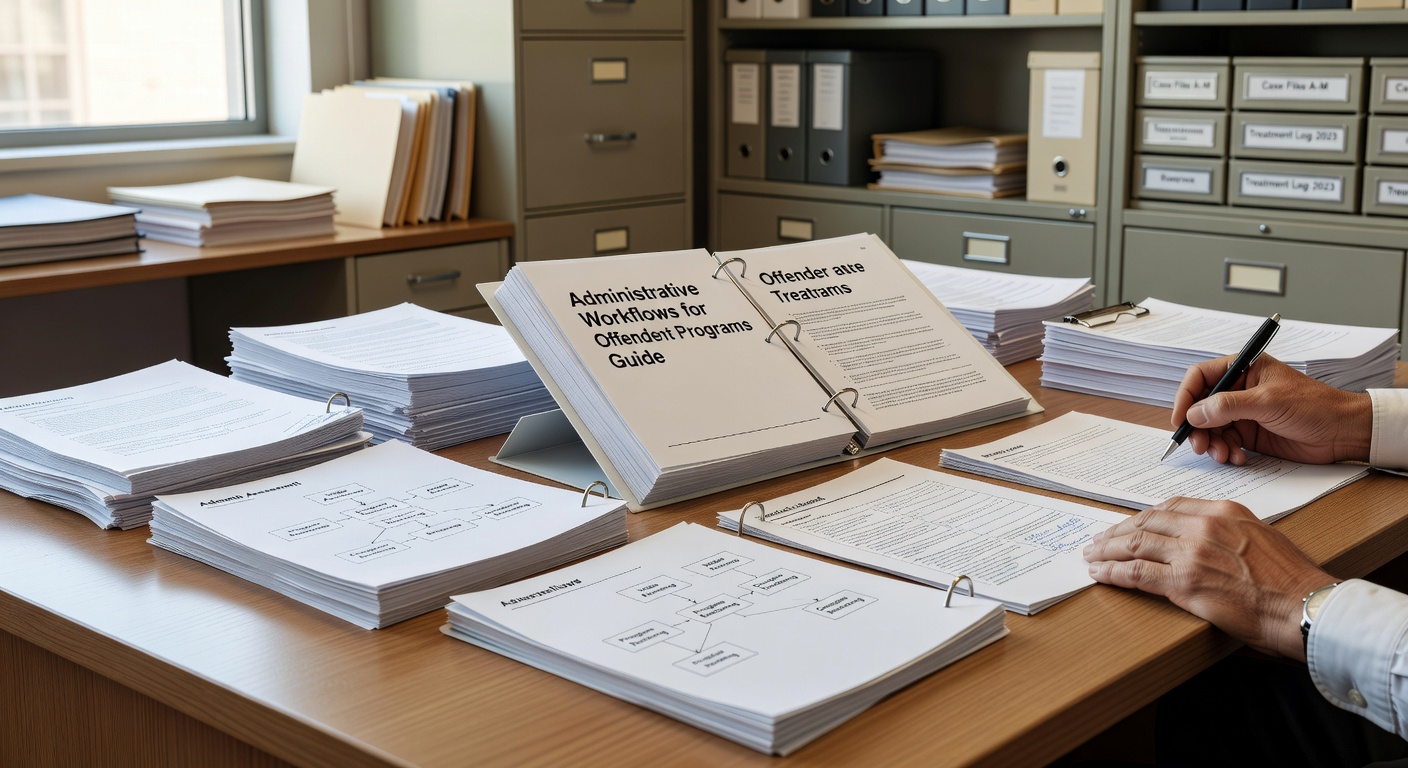
Managing effective administrative workflows for offender treatment programs requires balancing compliance demands with operational efficiency. Treatment providers face increasing documentation requirements while managing limited staff resources and tight budgets. Modern workflow improvements help agencies streamline processes, reduce errors, and maintain audit readiness without compromising care quality.
Understanding Common Workflow Bottlenecks
Most administrative challenges in treatment programs stem from manual processes and disconnected systems. Research shows clinicians spend approximately 35% of their time on repetitive documentation instead of direct client care, while 77% report feeling overwhelmed by administrative tasks.
Primary bottlenecks include:
- Duplicate data entry across multiple systems for intake, progress tracking, and reporting
- Missing or incomplete documentation that creates compliance gaps during audits
- Billing documentation mismatches where clinical records don’t align with service codes
- Manual attendance tracking and progress monitoring that delays intervention decisions
- Paper-based consent management that slows information sharing with oversight agencies
These inefficiencies cost programs both time and revenue. Billing errors alone can result in denial rates up to 79%, while manual tracking delays often violate reporting deadlines required by funding sources.
Building Standardized Documentation Processes
Successful programs implement consistent documentation standards that support both clinical care and regulatory compliance. Standardization reduces errors while making staff training more efficient.
Core Documentation Elements
Uniform templates ensure all required information gets captured consistently. Essential forms include:
- Intake assessments with validated participant identifiers
- Progress notes using structured formats (SOAP, DAP, or BIRP)
- Treatment plan updates with measurable goals and timelines
- Incident reports with clear escalation procedures
- Completion summaries that support successful case closure
Required field validation prevents incomplete records by flagging missing information before staff can save entries. This simple step eliminates most documentation gaps that create audit findings.
Clear completion timelines establish expectations for documentation deadlines. Best practices include 24-hour intake documentation and 48-hour progress note requirements, aligning with mental health industry standards.
Quality Assurance Protocols
Regular quality checks catch errors before they become compliance issues. Effective programs conduct:
- Weekly sampling of documentation for completeness and accuracy
- Monthly compliance audits focusing on high-risk areas like consent management
- Quarterly staff training updates on documentation standards and regulatory changes
Streamlining Attendance and Progress Tracking
Digital tracking systems replace time-consuming manual processes while providing real-time visibility into client progress. Modern approaches focus on exception-based reporting that highlights issues requiring immediate attention.
Automated attendance systems capture check-ins, absences, and late arrivals without staff intervention. Exception reports flag clients who miss multiple sessions, enabling early intervention before violations occur.
Progress dashboards provide visual indicators of goal achievement, setbacks, and advancement readiness. Staff can quickly identify clients who need additional support or are ready to move to less intensive services.
Integration capabilities allow attendance data to flow directly into progress reports and billing systems, eliminating duplicate entry and reducing errors.
Maintaining Compliance with Documentation Requirements
Treatment programs must navigate complex regulatory environments while maintaining operational efficiency. Recent changes to 42 CFR Part 2 (effective February 2026) require enhanced coordination between substance abuse records and general healthcare information.
Consent and Disclosure Management
Centralized consent tracking maintains logs of all patient consents, court orders, and information disclosures. Automated expiration alerts prevent sharing information with expired authorizations.
Audit trail maintenance documents who accessed what information and when. These logs must be retained for at least six years and should be easily searchable during compliance reviews.
Breach response protocols provide clear steps for handling any unauthorized disclosures, including notification requirements and corrective actions.
Regular Compliance Monitoring
Daily compliance checks verify that required documentation is complete and consent authorizations are current. Weekly reviews identify patterns that might indicate training needs or system issues.
Policy update notifications ensure staff stay current with changing regulations. Many programs designate compliance officers to monitor regulatory changes and update procedures accordingly.
Improving Coordination with External Agencies
Treatment programs rarely operate in isolation. Effective workflows support collaboration with probation offices, courts, and other service providers while maintaining appropriate confidentiality protections.
Centralized Information Hubs
Shared platforms enable authorized providers to access current client information without requiring separate data entry. Role-based access controls ensure each agency sees only information relevant to their responsibilities.
Scheduled reporting protocols automate routine updates to oversight agencies, reducing last-minute scrambling to meet court deadlines.
Multi-provider coordination through shared treatment plans helps ensure all services work toward common goals without duplication or conflicts.
Financial and Audit Preparation
Budget dashboards track expenses by funding source, supporting grant compliance and financial reporting requirements. Automated categorization reduces the time needed for quarterly reports.
Digital file organization with consistent naming conventions enables fast document retrieval during audits. Cloud-based storage provides secure access while maintaining required backup procedures.
Technology Solutions for Workflow Optimization
Modern case management systems address many traditional workflow challenges through automation and integration capabilities. Key features include:
Mobile-friendly interfaces that allow field staff to update records in real-time, reducing delays between service delivery and documentation.
Exception-based workflows that focus staff attention on high-risk cases while maintaining routine oversight of stable clients.
Automated reporting that generates required submissions to funding sources and oversight agencies with minimal manual intervention.
Integration capabilities that connect case management with billing, scheduling, and communication systems.
When evaluating documentation tools for supervision agencies, prioritize solutions with built-in compliance features and audit trail capabilities.
Implementation Best Practices
Successful workflow improvements require careful planning and staff buy-in. Start with pilot programs that address the most time-consuming manual processes.
Change management strategies should include:
- Clear communication about how new workflows will reduce administrative burden
- Comprehensive training with hands-on practice time
- Ongoing support during the transition period
- Regular feedback sessions to identify and address implementation challenges
Measurement and monitoring track key metrics like:
- Documentation completion rates
- Time spent on administrative tasks
- Audit findings and compliance scores
- Staff satisfaction with workflow efficiency
Programs that adopt systematic workflow improvements typically see 20-30% reductions in administrative errors and significant improvements in staff satisfaction.
Takeaway
Effective administrative workflows for offender treatment programs balance regulatory compliance with operational efficiency. By standardizing documentation processes, implementing digital tracking systems, and maintaining robust compliance protocols, programs can reduce administrative burden while improving service quality. Modern software tools support these improvements through automation, integration, and exception-based reporting that focuses staff attention where it’s needed most. Success requires careful implementation planning, comprehensive staff training, and ongoing monitoring to ensure workflows continue meeting both regulatory requirements and operational needs.