
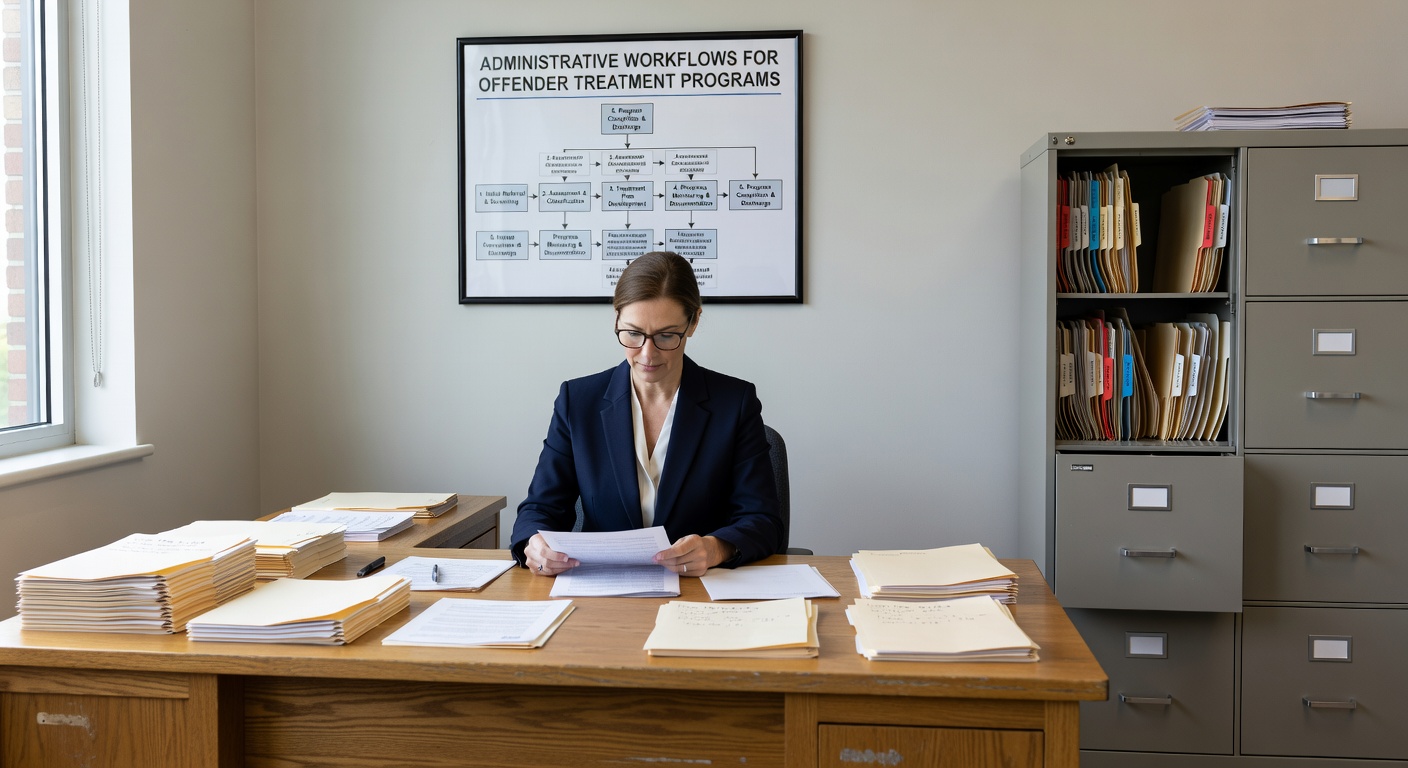
Effective administrative workflows for offender treatment programs form the backbone of successful compliance and quality care. When programs streamline their documentation, tracking, and reporting processes, they reduce staff burnout while maintaining the detailed records that courts, licensing bodies, and funders require.
Many programs struggle with fragmented systems where staff spend more time on paperwork than participant care. The solution lies in building workflows that capture information once and use it multiple ways—for treatment planning, compliance monitoring, court reporting, and audit preparation.
Standardizing Documentation Across All Program Areas
Consistent documentation practices create the foundation for efficient workflows. Programs that implement uniform templates for intake forms, progress notes, incident reports, and discharge summaries see immediate improvements in record quality and staff efficiency.
Key documentation standards include:
- Required fields on every form: participant ID, date, staff signature, and core observations
- Standardized terminology for common situations (missed appointments, behavioral concerns, treatment milestones)
- Clear timelines for when different types of documentation must be completed
- Consistent file organization so any staff member can quickly locate needed information
Programs often discover that standardization actually saves time rather than adding bureaucracy. When everyone uses the same formats, staff spend less time figuring out what to document and more time on meaningful participant interactions.
Building Risk-Based Compliance Tracking Systems
Not every participant requires the same level of administrative oversight. Risk-based monitoring allows programs to allocate their documentation resources where they’re most needed while maintaining compliance for all participants.
Effective risk-based workflows typically include:
- High-risk participants: Daily attendance tracking, detailed progress notes, real-time alerts for missed requirements
- Moderate-risk participants: Weekly check-ins, standardized assessment forms, scheduled compliance reviews
- Low-risk participants: Exception-based monitoring, minimal documentation requirements, automated progress tracking
This approach reduces administrative burden while ensuring that participants who need closer supervision receive appropriate attention. Staff can focus their energy on complex cases rather than routine documentation for stable participants.
Implementing Exception-Based Monitoring
Exception-based monitoring means the system only alerts staff when something requires attention—a missed appointment, an overdue assessment, or an approaching court deadline. This prevents information overload while ensuring nothing falls through the cracks.
Programs using exception-based workflows report significant reductions in time spent on routine record reviews, allowing staff to concentrate on intervention and treatment activities.
Creating Audit-Ready Records Through Systematic Organization
Audit readiness shouldn’t be a last-minute scramble. Programs with strong administrative workflows maintain audit-ready records year-round through systematic organization and regular quality checks.
Key components of audit-ready systems include:
- Centralized storage with clear naming conventions and folder structures
- Complete audit trails showing who made changes and when
- Separate organization for consent forms, court orders, and reporting documents
- Regular internal reviews to identify and correct documentation gaps before external audits
Many programs find that organizing records for audit readiness also improves day-to-day operations. When files are well-organized and complete, staff can quickly find information for treatment planning, court reports, or participant questions.
Streamlining Court Reporting and External Communication
Efficient court reporting workflows reduce last-minute stress while ensuring accurate, timely communication with referring agencies. Programs benefit from establishing standard procedures for different types of reports and communications.
Effective reporting workflows include:
- Standard report templates for enrollment notifications, progress updates, non-compliance alerts, and completion summaries
- Regular review schedules to prepare reports before deadlines rather than rushing at the last minute
- Clear communication protocols defining when and how to contact courts about significant events
- Quality control processes to review reports for accuracy before submission
Programs that implement systematic reporting workflows often see improvements in their relationships with courts and referring agencies, as consistent, professional communication builds trust and credibility.
Integrating Technology for Workflow Efficiency
Modern administrative workflow tools for court ordered programs can significantly reduce manual work while improving accuracy and compliance. The key is choosing solutions that fit the program’s specific needs rather than trying to adapt workflows to overly complex systems.
Beneficial technology features include:
- Mobile-friendly interfaces that allow real-time documentation during sessions
- Automated reminders for staff tasks, participant appointments, and compliance deadlines
- Dashboard views that provide quick overviews of program status and pending tasks
- Integration capabilities that eliminate duplicate data entry across different systems
Programs should focus on technology that enhances existing workflows rather than completely replacing established processes. The most successful implementations involve gradual adoption with thorough staff training and ongoing support.
Measuring and Improving Workflow Performance
Continuous improvement requires measuring how well administrative workflows support program goals. Key performance indicators help programs identify bottlenecks and optimize their processes over time.
Important metrics include:
- Documentation completeness rates to ensure all required information is captured
- Time spent on administrative tasks versus direct participant care
- Compliance rates for various program requirements
- Staff satisfaction with administrative processes and tools
- Audit findings and the time required to address them
Regular workflow reviews allow programs to adapt their processes as requirements change or as they identify more efficient approaches.
Takeaway
Streamlined administrative workflows enable treatment programs to focus on what matters most: helping participants succeed while maintaining the detailed documentation that regulatory bodies require. By standardizing documentation, implementing risk-based monitoring, organizing records systematically, and leveraging appropriate technology, programs can reduce administrative burden while improving compliance outcomes.
The most effective workflows are those that capture information once and use it multiple ways—for treatment planning, compliance tracking, court reporting, and quality improvement. When administrative processes support rather than compete with clinical goals, both staff and participants benefit from the improved efficiency and reduced stress.
Ready to streamline your program’s administrative workflows? Contact us to learn how modern compliance and case management tools can reduce paperwork while keeping your program audit-ready and focused on participant success.