
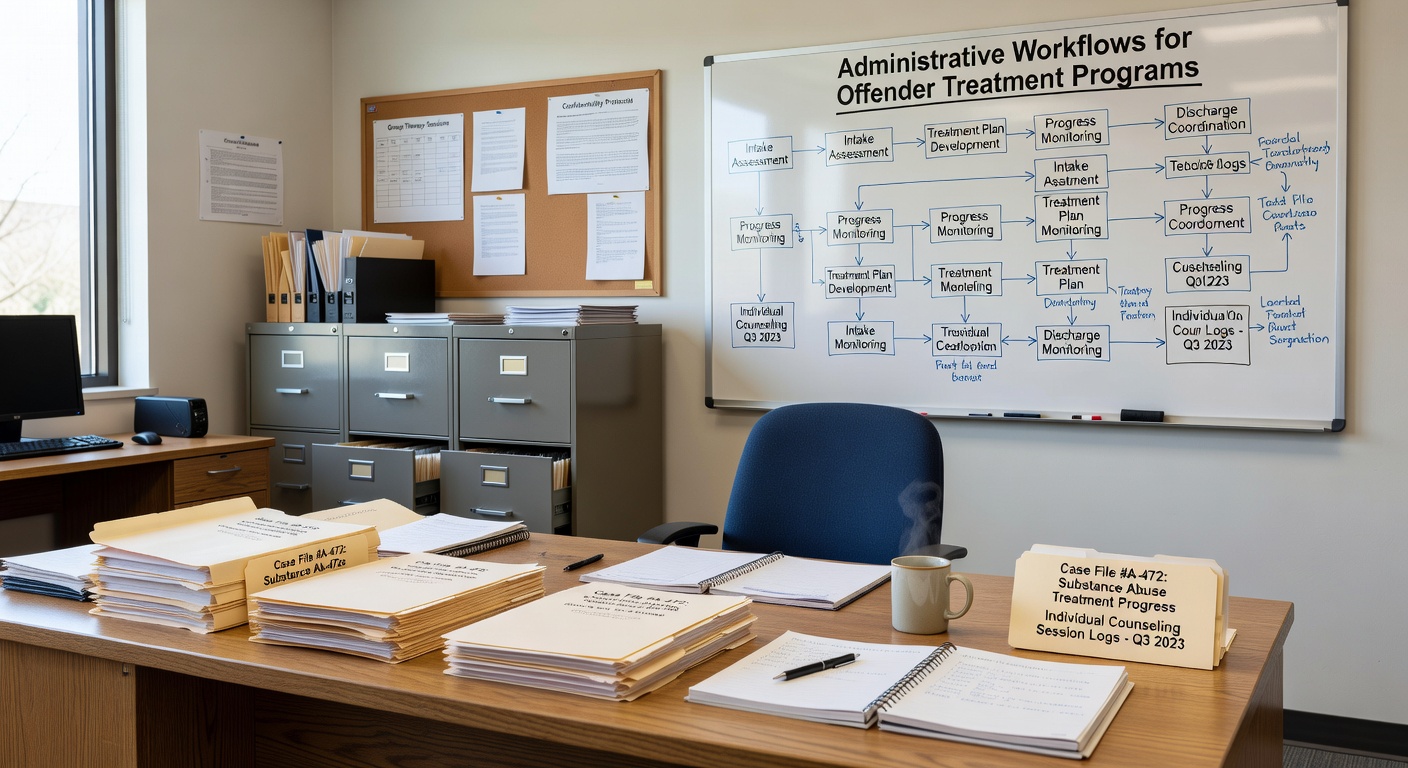
Managing administrative workflows for offender treatment programs requires balancing compliance demands, documentation requirements, and operational efficiency. Treatment providers face unique challenges in tracking participant progress, maintaining accurate records, and ensuring program integrity while managing heavy caseloads and complex reporting requirements.
Effective administrative workflows can transform how agencies handle these responsibilities, reducing staff burden while improving program outcomes and audit readiness.
Common Administrative Bottlenecks in Treatment Programs
Most treatment providers struggle with similar workflow challenges that create unnecessary administrative burden:
Documentation gaps occur when staff use inconsistent formats or miss critical updates. Without standardized templates, case notes vary wildly between staff members, making it difficult to track participant progress or demonstrate program effectiveness during reviews.
Manual tracking processes force staff to chase attendance records, drug test results, and provider updates across multiple systems. This reactive approach wastes time and creates gaps in participant oversight.
Billing complexities arise when programs must coordinate between insurance providers, grant requirements, and participant fee structures. Staff often spend hours reconciling payments and preparing financial reports instead of focusing on participant care.
Compliance reporting stress peaks during audit periods when agencies scramble to compile scattered records and demonstrate regulatory adherence. This reactive approach increases errors and staff burnout.
Streamlining Documentation Workflows
Consistent documentation practices form the backbone of effective treatment programs. Well-designed workflows ensure complete records while minimizing staff time investment.
Creating Documentation Standards
Establish uniform templates for all common documentation types:
- Initial assessments and intake forms
- Progress notes and treatment plan updates
- Incident reports and disciplinary actions
- Completion certificates and program summaries
Implement required field validation to prevent incomplete records. Staff should not be able to save forms without completing essential information like participant ID, date, staff signature, and key observations.
Set documentation timelines that balance thoroughness with efficiency. For example, require intake documentation within 24 hours and progress notes within 48 hours of sessions.
Reducing Redundant Data Entry
Design workflows that auto-populate participant information across forms. When staff enter basic details once, this information should automatically appear on related documents to prevent repetitive typing.
Use dropdown menus and checkboxes for common entries like attendance status, compliance levels, and standard observations. This approach speeds data entry while ensuring consistent terminology across all records.
Create template libraries for frequently used text like treatment recommendations, referral instructions, and program requirements. Staff can quickly insert standard language while still customizing content for individual participants.
Building Effective Tracking Systems
Comprehensive tracking systems help agencies monitor participant progress, identify intervention needs, and demonstrate program effectiveness without overwhelming staff.
Attendance and Participation Monitoring
Automated attendance tracking eliminates manual roll-call processes. Digital check-in systems can record arrival times, session participation, and completion status while generating attendance reports for supervisors.
Exception reporting highlights participants who miss sessions, fail drug tests, or show concerning behavior patterns. Instead of reviewing every case daily, staff can focus attention on participants who need immediate intervention.
Progress milestone tracking helps staff identify participants who are falling behind or excelling in their treatment journey. Clear visual indicators show which participants are meeting goals, struggling with specific requirements, or ready for program advancement.
Integration with External Providers
Many participants receive services from multiple providers, requiring coordination between treatment programs, mental health services, medical providers, and community organizations.
Provider communication workflows should establish regular update schedules and standardized information sharing protocols. Instead of making phone calls or sending individual emails, staff can use shared platforms that automatically distribute updates to relevant parties.
Centralized information hubs give authorized staff access to participant records from multiple sources. This approach reduces duplication while ensuring everyone works with current information.
Optimizing Billing and Financial Workflows
Financial management often consumes disproportionate administrative time in treatment programs. Streamlined billing workflows free up resources for participant services.
Automated Billing Processes
Service delivery tracking should automatically generate billable events when participants attend sessions, complete assessments, or receive services. This eliminates manual billing entry and reduces errors.
Insurance verification workflows can check participant coverage status before services are provided, preventing payment delays and denied claims.
Payment processing automation handles routine tasks like payment reminders, late fees, and receipt generation without staff intervention.
Financial Reporting and Grant Compliance
Treatment programs often juggle funding from multiple sources, each with specific reporting requirements.
Integrated expense tracking connects program activities to funding sources, making it easier to demonstrate grant compliance and prepare financial reports.
Budget monitoring dashboards provide real-time visibility into spending patterns, helping administrators identify potential overruns before they become problems.
Audit trail maintenance automatically logs all financial transactions and changes, creating the documentation trail needed for grant audits and regulatory reviews.
Compliance and Quality Assurance Workflows
Staying audit-ready requires ongoing attention to compliance requirements rather than last-minute scrambling before inspections.
Continuous Compliance Monitoring
Regular compliance checks should be built into daily workflows rather than handled as separate tasks. Staff can complete brief compliance verification steps as part of routine documentation.
Quality assurance sampling involves reviewing a small percentage of cases each week to identify trends and training needs before problems affect large numbers of participants.
Policy update workflows ensure all staff receive notifications about regulatory changes and complete required training within specified timeframes.
Preparing for Audits and Reviews
Document organization systems should allow staff to quickly locate specific records during audits. Well-organized digital filing with consistent naming conventions makes this process much faster.
Report generation capabilities let administrators quickly compile statistics and summaries for different audiences, from regulatory agencies to funding organizations.
Staff preparation protocols ensure team members understand their roles during audits and know how to present program information effectively.
Technology Tools for Administrative Efficiency
Modern software for offender treatment providers can automate many routine tasks while providing the oversight capabilities administrators need.
Cloud-based systems allow staff to access participant records and complete documentation from any location, supporting flexible work arrangements and reducing delays.
Mobile-friendly interfaces enable field staff to update records immediately rather than waiting to return to the office, improving data accuracy and timeliness.
Integration capabilities connect treatment program management with other systems used by courts, probation departments, and partner organizations.
Reporting and analytics tools help administrators identify trends, measure program effectiveness, and make data-driven decisions about resource allocation.
Takeaway
Effective administrative workflows for offender treatment programs balance thorough documentation with staff efficiency. By standardizing processes, automating routine tasks, and implementing comprehensive tracking systems, agencies can reduce administrative burden while improving program quality and compliance readiness.
Modern software solutions can streamline many of these processes, but success ultimately depends on establishing clear procedures and ensuring consistent implementation across all staff members. Organizations that invest time in designing efficient workflows often find they can serve more participants with existing resources while maintaining higher quality standards.
Ready to streamline your program’s administrative workflows? Contact us to learn how purpose-built software solutions can reduce paperwork burden while improving compliance tracking and participant outcomes.