
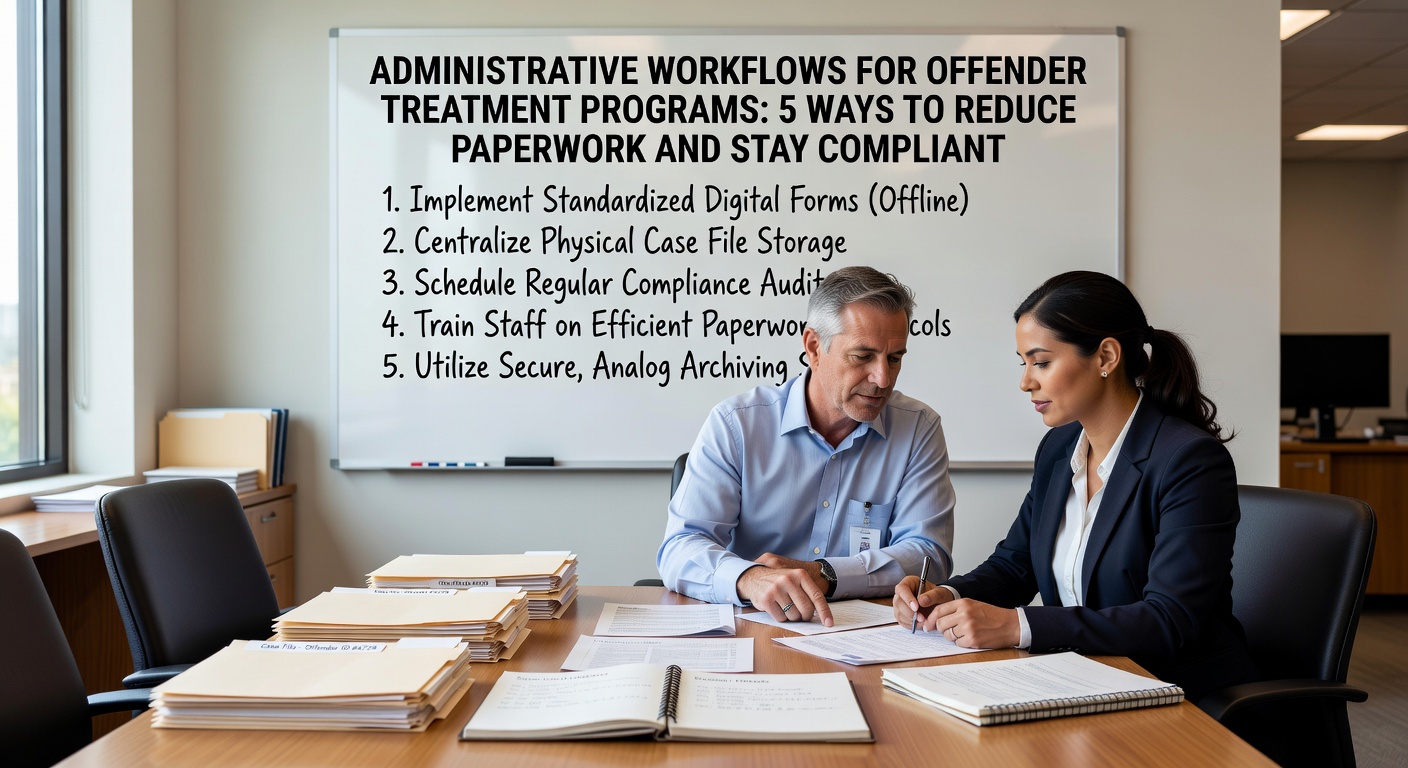
Managing administrative workflows for offender treatment programs requires balancing thorough documentation with realistic staff capacity. Many supervision agencies struggle with heavy caseloads, complex reporting requirements, and time-consuming paperwork that pulls resources away from client services. The key is implementing systematic approaches that maintain compliance while reducing administrative burden.
Risk-Based Client Categorization Reduces Daily Workload
The most effective administrative workflow improvement starts with tiered supervision based on client risk levels. Instead of treating all clients the same, agencies can dramatically reduce paperwork by matching documentation intensity to actual risk.
High-risk clients require detailed tracking:
- Weekly check-ins with comprehensive notes
- Documentation of all violations and milestones
- Frequent testing records and court coordination
- Detailed treatment plan updates
Moderate and low-risk clients need simpler tracking:
- Checkbox compliance indicators
- Exception-based reporting (document only significant events)
- Monthly status reviews instead of weekly detailed notes
- Standardized template responses
This approach allows agencies managing 200-400 cases to focus intensive documentation efforts where they matter most. Research shows that over-supervising low-risk clients can actually increase recidivism, making this tiered approach both more efficient and more effective.
Exception-Based Documentation Cuts Administrative Time
Traditional case management often requires detailed notes for every client interaction, creating unnecessary administrative burden. Exception-based reporting focuses documentation on what actually matters:
Document in detail:
- Violations and sanctions
- Significant behavioral changes
- Court appearances and decisions
- Treatment milestones or setbacks
- Safety concerns or crisis interventions
Use simple templates for:
- Routine compliance check-ins
- Standard appointment attendance
- Regular testing with negative results
- Scheduled court appearances without issues
This approach can reduce documentation time by 40-60% while maintaining audit readiness. Staff spend less time on routine paperwork and more time on meaningful client interventions.
Standardized Templates Speed Up Routine Tasks
Consistent templates eliminate guesswork and reduce documentation errors. Essential template elements include:
- Client identification fields (case number, program phase, risk level)
- Compliance indicators (attendance, testing, payments)
- Action items (next steps, follow-up required)
- Escalation triggers (when to notify supervisors or courts)
Batch Processing Eliminates Context Switching
Constant task switching wastes significant time in busy agencies. Batching similar administrative tasks creates more efficient workflows:
Weekly batching:
- File reviews and updates
- Compliance status checks
- Violation processing
- Court report preparation
Monthly batching:
- Billing and payment processing
- Statistical reporting
- Case closure documentation
- Staff supervision reviews
Quarterly batching:
- Audit preparation
- Policy review and updates
- Training documentation
- Outcome reporting
Agencies using batch processing report 25-30% improvements in administrative efficiency, allowing staff to complete similar tasks more quickly and with fewer errors.
Technology Integration Without System Overhaul
Many agencies avoid technology improvements thinking they require expensive system replacements. Simple administrative workflow tools for court ordered programs can provide immediate benefits:
Basic digital improvements:
- Shared calendars for appointment scheduling
- Simple databases for client status tracking
- Automated reminder systems for testing and payments
- Electronic forms for routine documentation
Communication tools:
- Secure messaging between staff members
- Client portal for appointment scheduling
- Automated court notification systems
- Digital file sharing with partner agencies
These incremental improvements often provide better return on investment than comprehensive system replacements, especially for smaller agencies.
Multi-Agency Coordination Prevents Duplicate Work
Poor coordination between courts, probation, treatment providers, and DMV creates unnecessary administrative burden. Standardized communication protocols eliminate duplicate documentation:
- Shared intake forms reduce repetitive data collection
- Common violation reporting prevents multiple agencies from documenting the same incidents
- Coordinated scheduling reduces conflicts and missed appointments
- Joint case conferences replace multiple separate meetings
Built-In Quality Control Maintains Compliance
Effective administrative workflows include systematic review processes that catch problems early:
Supervisor reviews:
- Random file audits (10-15% monthly)
- New staff mentoring and documentation review
- Exception report verification
- Compliance trend analysis
Peer reviews:
- Case consultation for complex situations
- Documentation standard checks
- Best practice sharing
- Error pattern identification
Automated flags:
- Missed appointments requiring follow-up
- Overdue payments or fees
- Approaching case closure deadlines
- Required court notifications
These quality control measures prevent small documentation issues from becoming major compliance problems during audits.
Takeaway
Streamlining administrative workflows for offender treatment programs requires systematic approaches that balance thorough documentation with realistic staff capacity. Risk-based client categorization, exception-based reporting, batch processing, and simple technology improvements can reduce administrative burden by 40-50% while maintaining compliance standards. The key is implementing these changes gradually, starting with the highest-impact improvements like tiered supervision and standardized templates. Modern software tools can automate routine tasks and provide built-in quality controls, allowing staff to focus on client services rather than paperwork.
Ready to reduce your administrative workload while staying audit-ready? Contact us to learn how purpose-built compliance tracking software can streamline your agency’s workflows without disrupting your current processes.