
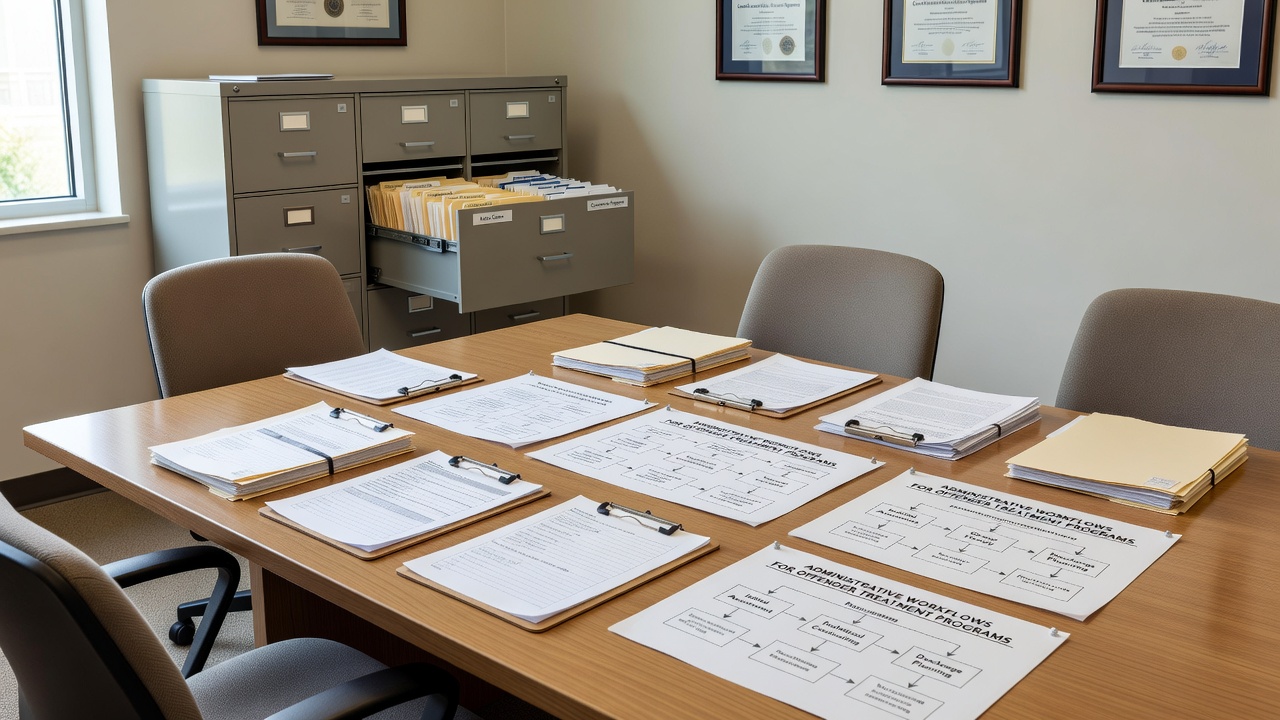
Managing the day-to-day administrative workflows for offender treatment programs is one of the most demanding operational challenges in regulated supervision environments. From intake documentation to court reporting and billing, every step in the process carries compliance weight. When workflows are unclear or inconsistently applied, programs risk audit findings, delayed payments, and missed court reporting obligations. The good news is that most of these problems are preventable with structured processes and the right documentation tools.
Common Documentation Mistakes That Create Compliance Risk
Poor documentation is one of the leading causes of audit findings in regulated supervision programs. Many issues are preventable with better workflow design rather than simply asking staff to be more careful.
The most common mistakes include:
- Missed signatures on intake forms, consent documents, or session notes
- Incomplete progress notes that leave out required elements like date, time, service type, or participant response
- Inconsistent language when documenting no-shows, late arrivals, or violations
- Missing or incorrect timestamps that make it impossible to verify service delivery against billing records
- Unclear documentation of sanctions or corrective actions that auditors and courts need to see in plain, consistent language
Using standardized note templates is one of the most practical ways to reduce these errors. Templates prompt staff to capture all required fields rather than writing from memory. A good session note template, for example, should include fields for date, time, service type, interventions used, participant response, any identified risk factors, and planned next steps. When staff fill in a structured form, important elements are much less likely to be left out.
Building Intake Workflows That Set Programs Up for Compliance
Compliance problems often begin at intake. If required documents are not collected before services start, programs can find themselves scrambling to backfill records later — which creates both audit risk and documentation integrity concerns.
A strong intake workflow should:
- Include a standardized checklist of all required documents, including court orders, signed authorizations, program conditions, and referral documentation
- Flag missing paperwork before the first service is delivered, not after
- Clearly capture enrollment conditions and any special requirements tied to the referring court or probation officer
- Assign clear responsibility for who verifies and approves intake documentation before enrollment is considered complete
When intake is treated as a structured, checklist-driven process rather than an informal onboarding conversation, programs start each case with a clean and complete file. That discipline pays off significantly when audits occur.
Structuring Attendance, Compliance Tracking, and Handoffs
Attendance and compliance tracking are two of the highest-risk workflow areas for supervised treatment programs. Auditors and courts rely on this data to understand whether participants are meeting program requirements, and gaps or inconsistencies can raise serious questions about program oversight.
Attendance Tracking Best Practices
- Define who records attendance, within what timeframe after a session, and how absences are categorized
- Use consistent language to distinguish excused versus unexcused absences, and document the rationale when an absence is excused
- Record violations, sanctions, and corrective actions in language that is clear to both legal stakeholders and auditors
Multi-Staff Handoff Protocols
When multiple staff members — including case managers, treatment providers, and probation-related contacts — are all documenting on the same case, conflicting or duplicate entries become a real risk. Role-based ownership of notes helps clarify who is responsible for which documentation. Supervisor review queues ensure that cross-disciplinary notes are checked before they become part of the permanent record.
Administrative workflow tools for court ordered programs can support these handoffs by structuring who can add or edit entries and creating clear accountability trails.
Staying Audit-Ready Year-Round
Most compliance problems surface during audits because programs only review their records under inspection pressure. Programs that stay audit-ready year-round build internal review habits that catch problems before they become formal findings.
Practical audit-readiness practices include:
- Weekly file audits using completion checklists for intake, mid-program, and discharge stages
- Periodic signature sweeps to identify unsigned forms before they accumulate
- Correction logs that document when and why any entry was amended, with version history that auditors can follow
- Evidence retention policies that define how long records must be kept and how they are stored
- Ongoing internal chart reviews rather than one-time record pulls before a scheduled inspection
Auditors look for specific things: clear dates, legible notes, complete signatures, documented justification for services, and time records that align with billed services. Deficiencies in attendance tracking, missing consent forms, or vague progress notes are common triggers for formal findings. Building regular internal review cycles means these issues get caught and corrected before they escalate.
Reporting, Billing, and Reducing Administrative Bottlenecks
Two of the most time-consuming administrative areas for regulated programs are court reporting and billing — and both are heavily dependent on the quality of underlying documentation.
Court Reporting Workflows
Effective reporting workflows define standard formats for progress updates, violation notices, and program completion summaries. They also set clear timelines for when attendance or incident data must be entered so that reports always reflect current information. Supervisor review checkpoints before reports are sent to courts or probation officers help catch gaps before they become problems.
When writing reports for legal stakeholders, it also helps to translate clinical or treatment language into clear, non-technical terms. Judges and probation officers need to understand participation levels, risk changes, and responses to interventions — not clinical shorthand.
Billing Bottlenecks and How to Prevent Them
Billing delays in regulated programs almost always trace back to documentation issues: unsigned notes, missing time records, unclear service types, or unverified authorizations. The fix is linking documentation completion directly to the billing workflow — claims should only move forward when records are fully complete and reviewed.
Establishing a clear escalation path for missing documentation also helps. When a note is incomplete or a signature is missing, staff need to know who to contact, within what timeframe, and what the resolution process looks like. Compliance tracking for regulated programs can support this by surfacing incomplete records before they create billing delays.
Outcome tracking is another underused tool in regulated environments. Programs that track completion rates, violation trends, and referral follow-through have better data for quality improvement reporting — and for demonstrating program effectiveness to oversight bodies and courts.
Takeaway
Administrative workflows for offender treatment programs are not just a back-office concern — they directly affect compliance standing, audit outcomes, billing accuracy, and court relationships. The most effective programs treat documentation, attendance tracking, reporting, and billing as structured, process-driven work rather than informal tasks. When workflows are standardized and consistently applied, staff spend less time correcting errors and more time delivering services. Modern software tools can reinforce these workflows by prompting required documentation fields, surfacing incomplete records, managing review queues, and keeping reporting timelines on track — making it easier for programs to stay compliant and audit-ready every day of the year.
—
Ready to improve your program’s administrative workflows? Explore how purpose-built tools can help your team stay organized, document consistently, and meet reporting requirements without the last-minute scramble.