
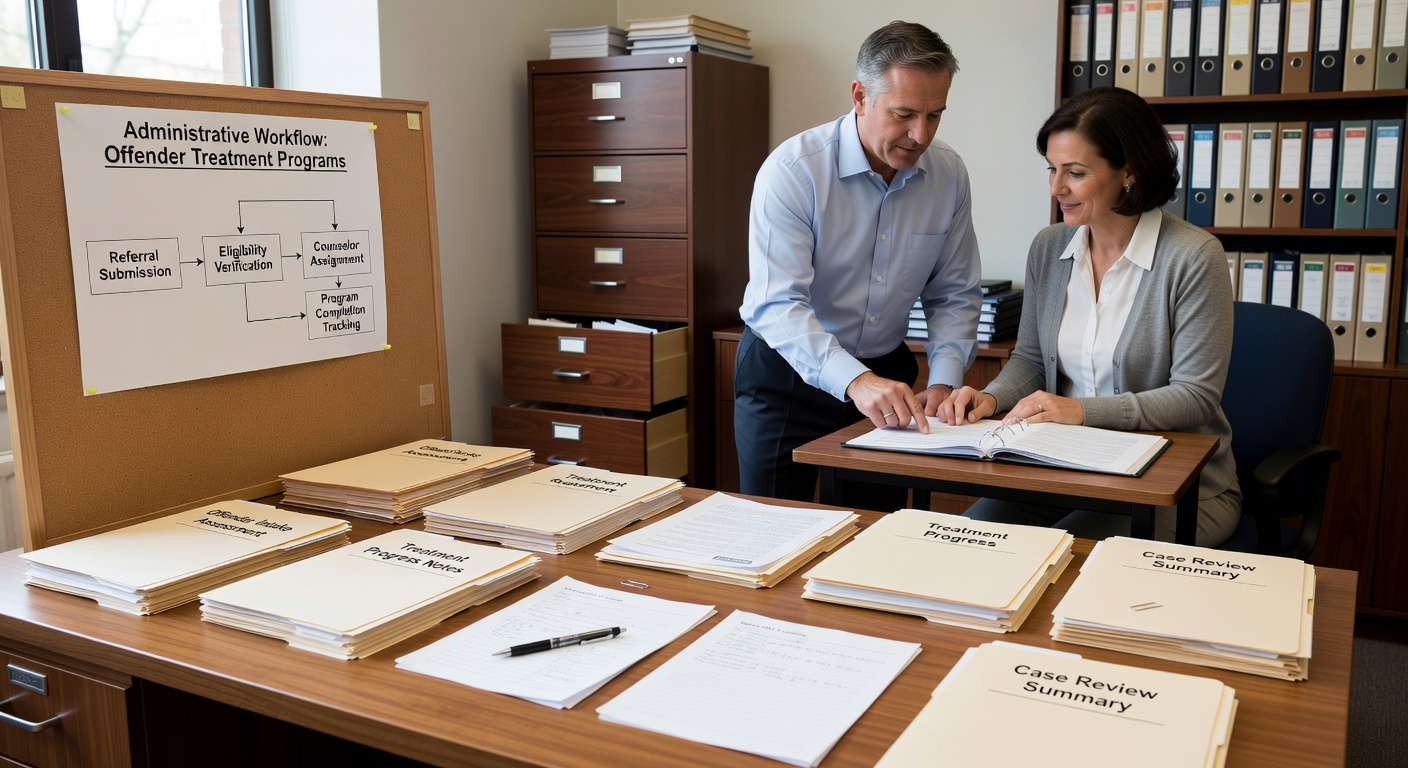
Effective administrative workflows for offender treatment programs form the backbone of successful compliance, accurate documentation, and sustainable operations. Programs that streamline these processes see fewer audit findings, faster billing cycles, and more time for direct client care.
Regulated supervision environments face unique challenges: multiple reporting requirements, strict documentation standards, and the need to balance clinical care with legal compliance. When administrative workflows are well-designed, staff spend less time on paperwork and more time helping clients succeed.
Essential Components of Effective Program Administration
Successful administrative workflows for treatment programs start with standardized documentation templates and clearly defined staff responsibilities. Without these foundational elements, even the best intentions lead to inconsistent records and compliance gaps.
Standardized Documentation Templates
Every client file should follow the same structure, making it easy for any staff member to locate critical information. Essential templates include:
• Intake assessments with required fields for demographics, legal status, referral source, and risk factors • Treatment plans with standardized goal categories and mandatory review dates • Progress notes using consistent formatting for service type, interventions, and client response • Court reports designed to meet the strictest stakeholder requirements • Incident reports with objective language fields and follow-up tracking
These templates ensure that documentation meets both clinical standards and legal requirements from day one.
Clear Role Assignments
Defining who handles specific tasks prevents important steps from falling through the cracks:
• Front office staff manage demographics, insurance verification, and initial scheduling • Clinical staff complete assessments, treatment plans, and therapeutic notes • Case managers coordinate with courts and probation while tracking compliance requirements • Billing staff handle charge capture and claims processing with built-in accuracy checks
When responsibilities are clearly assigned, files stay complete and stakeholders receive timely communication.
Compliance Tracking That Actually Works
Effective compliance tracking goes beyond basic attendance records. Programs need systematic approaches that catch potential issues before they become audit findings or court violations.
Daily Compliance Activities
Building compliance checks into daily routines prevents small oversights from becoming major problems:
• Attendance verification using multiple methods (sign-in sheets, digital check-ins, telehealth logs) • Real-time documentation of no-shows, late arrivals, and early departures with clear excused/unexcused designations • Same-day incident reporting for safety events, violations, or concerning behaviors • End-of-day file reviews to ensure all required documentation is complete and signed
These daily practices create an audit trail that demonstrates consistent attention to compliance requirements.
Automated Reminder Systems
Technology can help manage compliance deadlines without overwhelming staff. Effective reminder systems include:
• Automated alerts for upcoming court report deadlines • Client appointment reminders via text or phone calls • Staff notifications when treatment plan reviews are due • Flags for clients approaching program completion or facing potential violations
Automation reduces administrative burden while ensuring nothing important gets missed.
Streamlined Reporting Workflows
Court and stakeholder reporting often represents the most time-intensive administrative task. Efficient reporting workflows can reduce this burden significantly while improving accuracy.
Batch Processing Approach
Instead of preparing reports individually as needed, successful programs use batch processing:
• Set specific days each week for report preparation • Group similar report types together (progress reports, completion certificates, violation notices) • Use templates that auto-populate client information from the main database • Implement two-person review for complex or high-risk cases
Batch processing creates predictable schedules and reduces the stress of last-minute report preparation.
Quality Control Checkpoints
Every report should pass through standard quality checks before leaving the office:
• Identity verification to ensure the right information goes to the right recipient • Date alignment between attendance records and reported participation • Content review for appropriate tone and required elements • Stakeholder verification to confirm the correct report type for each agency
These checkpoints prevent errors that can damage relationships with courts and probation departments.
Financial Workflow Integration
Successful programs link their clinical workflows directly to their billing processes. This integration prevents revenue delays and ensures accurate financial reporting.
Documentation-to-Billing Connection
Every billable service must have matching, compliant documentation. Effective programs ensure:
• All billed services have signed, complete progress notes • Service codes match the actual interventions provided • Attendance records support the claimed number of sessions • Insurance authorizations cover the services being billed
This systematic approach reduces claim denials and audit risks while maintaining accurate revenue tracking.
Multiple Funding Source Management
Many programs handle various funding streams simultaneously (Medicaid, grants, court fees, private pay). Clear separation of these funding sources prevents compliance issues:
• Separate tracking systems for different payer requirements • Client-specific ledgers showing all financial obligations • Monthly reconciliation of payments with service records • Regular audits to ensure correct coding and documentation for each funding source
Proper financial workflow design protects programs from accidental violations of payer-specific requirements.
Technology Tools That Support Human Judgment
Modern practice management systems can significantly improve administrative efficiency when properly integrated into existing workflows. The key is choosing tools that enhance rather than complicate current processes.
Essential System Features
Effective technology platforms for regulated programs typically include:
• Integrated documentation and billing so notes automatically link to charges • Role-based access controls that protect sensitive information while enabling necessary sharing • Automated reporting capabilities for routine compliance reports • Audit trail functionality that tracks every access and change to client records • Secure communication tools for sharing information with courts and probation
These features reduce manual work while maintaining the oversight and control that regulated environments require.
Implementation Without Disruption
Successful technology adoption requires careful planning:
• Start with pilot programs using volunteer staff members • Provide thorough training before full implementation • Maintain backup procedures during the transition period • Gather regular feedback and adjust workflows as needed
Technology should make administrative tasks easier, not create additional complexity for already busy staff.
Quality Assurance and Continuous Improvement
The most effective administrative workflows include built-in quality assurance that identifies and addresses problems before they affect client care or compliance status.
Regular Internal Audits
Monthly mini-audits help programs stay audit-ready year-round:
• Sample chart reviews using external audit criteria • Documentation timeliness tracking (percentage of notes signed within 24 hours) • Billing accuracy analysis comparing claims to supporting documentation • Policy compliance checks to ensure staff follow current procedures
These internal audits reveal trends and training needs before external reviewers arrive.
Feedback Loops and Process Refinement
Administrative workflows should evolve based on staff experience and changing requirements:
• Monthly staff meetings to discuss workflow challenges and suggestions • Annual review of forms and templates to ensure they still meet current needs • Regular communication with courts and probation to confirm reporting requirements • Update training materials when policies or procedures change
Continuous improvement keeps workflows relevant and effective as programs grow and regulations evolve.
Takeaway
Well-designed administrative workflows for offender treatment programs create a foundation for both clinical excellence and regulatory compliance. When documentation templates are standardized, roles are clearly defined, and quality checks are built into daily routines, programs spend less time on administrative tasks and more time helping clients achieve lasting change. Modern software tools can enhance these processes by automating routine tasks, improving accuracy, and providing better oversight—but only when they’re integrated thoughtfully into workflows that already make sense. Programs that invest time in designing efficient administrative processes find they can serve more clients effectively while maintaining the documentation and reporting standards that courts, probation departments, and funding agencies require.