
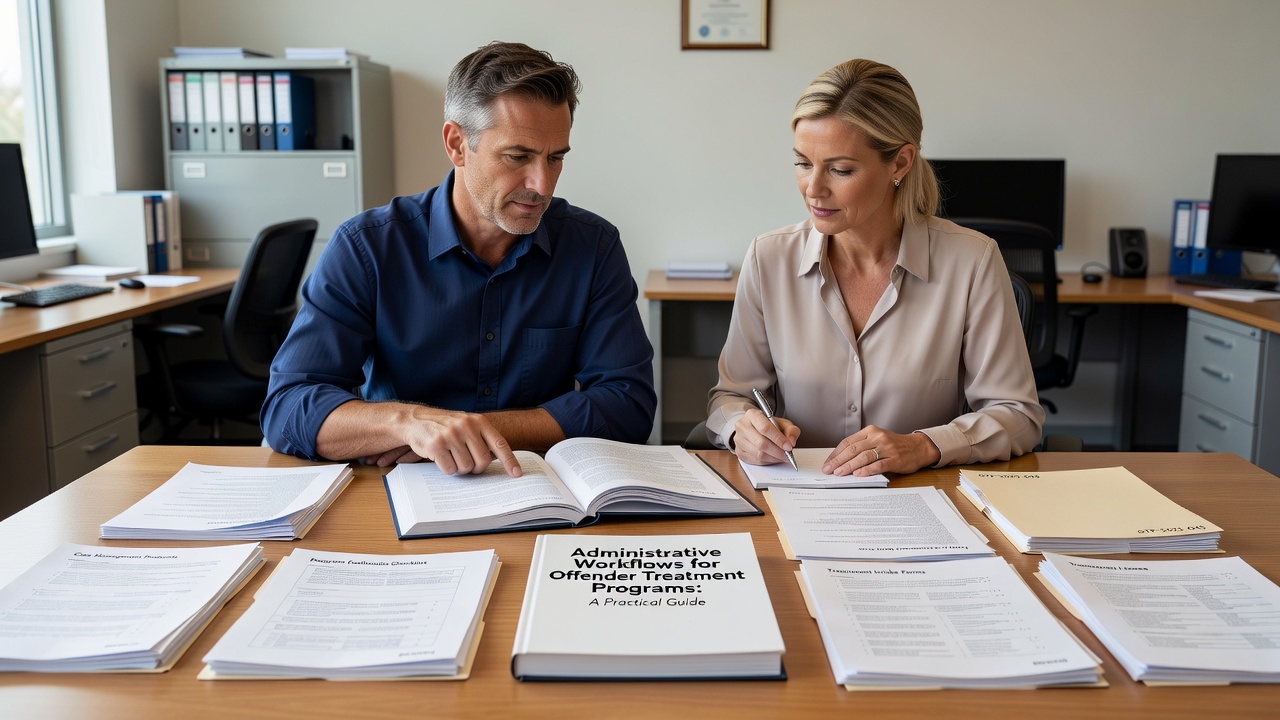
Managing administrative workflows for offender treatment programs is one of the most demanding operational challenges agencies face. Between court reporting deadlines, attendance reconciliation, billing accuracy, and audit readiness, the administrative burden on staff can become significant — especially without standardized processes in place. This guide breaks down the core workflow areas where agencies commonly struggle and offers practical guidance on how to build more consistent, defensible documentation practices.
Why Documentation Consistency Is a Daily Operational Problem
Inconsistent documentation is one of the most common findings in regulated program audits. When case notes, attendance logs, billing records, and court reports are maintained in separate systems — or by different staff members without clear ownership — discrepancies are almost inevitable.
Common documentation problems include:
- Attendance logs that don’t match billed sessions
- Progress notes completed days after the service date
- Missed sessions recorded inconsistently across staff members
- Fee waivers and partial payments not documented with proper justification
- Court reporting packets submitted without a pre-submission review
These aren’t just administrative inconveniences. In regulated programs, documentation inconsistencies can create compliance exposure, delay court reporting, and complicate audits. The good news is that most of these problems are preventable with the right workflows and tools in place.
How to Build Reporting Workflows That Reduce Admin Burden
A well-structured reporting workflow removes ambiguity and distributes accountability clearly across your team. Rather than relying on individual staff to remember every step, standardized workflows create a repeatable process that holds up under scrutiny.
Assign Documentation Ownership by Role
One of the most effective things an agency can do is define exactly who is responsible for each documentation task. For example:
- Intake coordinators own initial enrollment documentation and consent forms
- Program facilitators own session attendance logs and case notes
- Billing staff own payment records, fee waiver documentation, and write-offs
- Supervisors own report review, sign-off, and exception approvals
When everyone knows their documentation lane, backlogs are easier to spot and easier to address before they become audit problems.
Standardize Intake and Session Templates
Standardized templates reduce the time staff spend formatting documents and significantly lower the risk of missing required fields. Every intake packet should capture the same core data points. Every session note should follow the same structure. This consistency makes file reviews faster and makes it far easier to locate specific records during an audit.
Reconcile Attendance and Case Notes Before Reporting
Before any court report is submitted, attendance logs and case notes should be cross-checked. A session that appears in the attendance log should have a corresponding case note — and the details should align. Dates, session type, duration, and client status should all be consistent across both records. This reconciliation step is one of the most impactful quality checks an agency can build into its workflow.
Maintaining Audit-Ready Records Year-Round
Audit readiness isn’t something that should only be addressed when a review is scheduled. Agencies that maintain clean, organized records year-round experience far less disruption when oversight reviews occur.
Conduct Monthly File Reviews
A monthly file review checklist gives supervisors a structured way to catch documentation gaps before they accumulate. A basic monthly review should check for:
- Missing or late case notes for active clients
- Attendance records that haven’t been reconciled with billing
- Incomplete intake documentation for recently enrolled clients
- Unresolved exceptions such as undocumented missed sessions or unapproved make-ups
- Fee waiver and write-off records that lack proper authorization documentation
- Court reports that are due within the next 30 days
Running this review monthly — rather than quarterly or only before audits — makes the process manageable and keeps the team consistently aligned.
Document Exceptions Correctly
Missed sessions, make-ups, and program exceptions require more documentation, not less. Every exception should include:
- The reason for the exception
- Who authorized it
- How it was communicated to the referring authority if required
- How it was reflected in attendance and billing records
Undocumented exceptions are one of the most common audit findings in regulated supervision programs. A clear exception documentation protocol protects your agency and gives oversight bodies confidence in your record-keeping practices.
Organize Client Records for Fast Retrieval
During an audit, the ability to pull a complete client file quickly matters. Organize records so that every client file contains, in order:
- Enrollment and intake documentation
- Signed consent and authorization forms
- Session attendance logs
- Progress and case notes
- Billing records and payment history
- Fee waiver or write-off documentation if applicable
- Court correspondence and submitted reports
Whether records are maintained digitally or in paper files, a consistent folder structure reduces retrieval time and demonstrates organized, professional record-keeping to oversight bodies.
Preventing Billing and Documentation Mismatches
Billing errors tied to documentation gaps are a significant operational and compliance risk. When a billed session doesn’t have a corresponding case note — or when a client’s payment history doesn’t align with their attendance record — the agency is exposed to billing disputes and potential compliance findings.
Some practical steps to prevent mismatches:
- Close case notes within a defined window after each session, ideally the same day or within 24 hours
- Require supervisor sign-off before court reports are submitted to ensure billing and documentation are aligned
- Audit billing records monthly against attendance and case note data
- Document all payment adjustments at the time they occur, not retroactively
Using administrative workflow tools for court ordered programs that connect attendance, case notes, and billing in a single environment makes these checks significantly easier and less time-consuming for staff.
Improving Supervisor Review and Sign-Off Workflows
Supervisor review is often the last line of quality control before a court report is submitted or a billing cycle closes. But if supervisors are reviewing documentation reactively — only when a report is already due — they’re more likely to miss gaps.
A stronger supervisor review process includes:
- Scheduled weekly reviews of open case notes and attendance records
- A pre-submission checklist for court reports that confirms all required elements are present
- Clear escalation paths for resolving documentation discrepancies before submission
- Documented sign-off records that show who reviewed what and when
Some agencies use compliance tracking tools for regulated programs to create structured review queues, flag incomplete records automatically, and generate audit-ready documentation trails without additional manual effort.
Takeaway
Strong administrative workflows for offender treatment programs aren’t built on effort alone — they’re built on consistency, clear role ownership, and reliable systems. Agencies that standardize their intake templates, reconcile attendance and billing before reporting, conduct monthly file reviews, and document exceptions properly are far better positioned to handle audits, meet court reporting requirements, and reduce the daily administrative burden on staff. Modern software tools can reinforce these workflows by automating routine checks, centralizing records, and supporting supervisor review processes — so your team spends less time on paperwork and more time on the work that matters.
Ready to evaluate your current documentation and reporting workflows? Review how your agency handles intake, attendance reconciliation, and court reporting — and identify the gaps that create the most administrative friction. From there, building a more consistent and defensible process becomes much more manageable.