
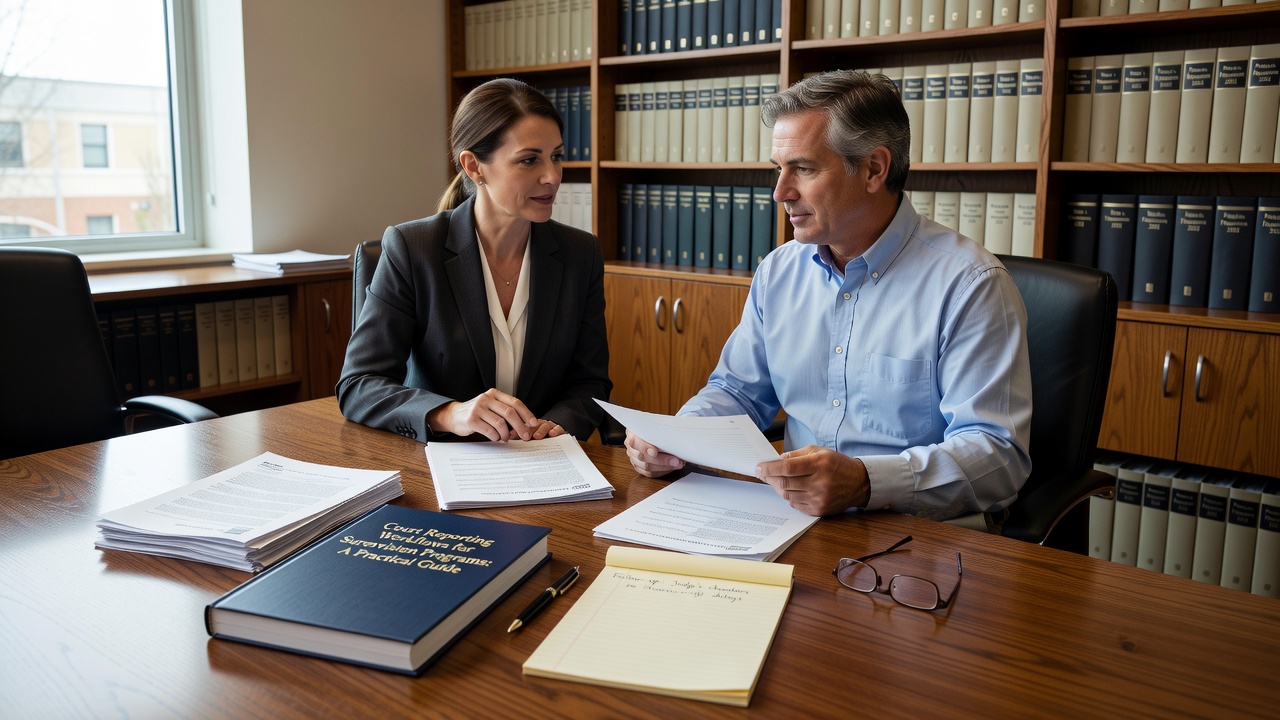
Managing court reporting workflows for supervision programs is one of the most operationally demanding responsibilities an agency can face. Between tracking client attendance, maintaining session documentation, reconciling billing records, and submitting accurate reports to courts and supervising agencies, the margin for error is slim. When workflows are fragmented or inconsistent, the consequences show up quickly — in audit findings, denied claims, or compliance gaps. This guide breaks down the key workflow areas where agencies commonly struggle and offers practical steps to build more reliable, repeatable processes.
Why Documentation Quality Affects Everything Downstream
Poor documentation doesn’t just create paperwork headaches — it creates downstream problems across billing, compliance reporting, and audit readiness. When session notes are incomplete or inconsistently formatted, every process that depends on them becomes unreliable.
Some of the most common documentation mistakes in supervised treatment programs include:
- Missing or undated signatures on session records and consent forms
- Case numbers that don’t match across referral documents, session notes, and billing entries
- Incomplete session notes that omit time logs, interventions used, or client participation
- Poorly documented medical necessity that doesn’t meet payor or court standards
Standardizing case note templates across your team is one of the most effective ways to address this. When every staff member uses the same structured layout — with required fields for attendance, interventions, and progress toward goals — it reduces variability and makes every downstream process more accurate. Standardized note formats directly improve billing accuracy and court reporting reliability.
What Every Session Note Should Include
To protect your agency during audits and simplify reporting, each session note should document:
- Client participation and attendance status
- Interventions used and the client’s response
- Progress toward documented treatment or supervision goals
- Time, location, and provider credentials
- A link to the relevant billing record or service count
This level of detail creates a defensible, complete audit trail — and it doesn’t require more work if the template is designed correctly from the start.
Building a Court Reporting Workflow That Doesn’t Overwhelm Staff
One of the most practical ways to improve court reporting workflows for supervision programs is to create a clear, step-by-step flow from case notes to internal review to external reporting. Without a defined sequence, staff often skip steps or report data before it’s been properly verified.
A workable reporting workflow typically looks like this:
1. Session documentation completed at the point of service 2. Internal review — a designated staff member verifies notes match attendance logs and service counts 3. Data reconciliation — session counts, dates, and client identifiers are confirmed before any report is generated 4. Report preparation — using standardized checklists to reduce preparation time 5. Designated reviewer sign-off before any report goes to the court or supervising agency
Assigning a designated reviewer role for any external report is a simple governance step that significantly reduces errors. This person verifies that client identity data — names, case numbers, referral IDs — is consistent across systems before the report leaves your agency.
Batch vs. Real-Time Reporting: What Works for Busy Agencies
Some programs benefit from batch reporting — consolidating report preparation into a scheduled weekly or monthly process. Others handle reporting in real time as cases are updated. Both approaches have tradeoffs:
- Batch reporting allows for structured review but can create bottlenecks if documentation falls behind
- Real-time reporting keeps records current but requires consistent documentation discipline at the session level
Whichever approach you use, the underlying documentation quality determines whether the process runs smoothly or creates ongoing rework.
Staying Audit-Ready Year-Round
Audit readiness isn’t something that should only happen before a scheduled review. Agencies that maintain compliance year-round treat audit preparation as an ongoing operational practice, not a periodic scramble.
Key practices for year-round audit readiness include:
- Keeping complete client files at every stage — intake, enrollment, active sessions, and discharge
- Ensuring consent forms, releases, and program agreements are signed and current
- Reconciling attendance, billing, and reporting records on a recurring schedule — not just when an audit is announced
- Maintaining current, controlled versions of internal policies and forms with documented review dates
Practical Audit Readiness Checklists
Building simple checklists for both client files and staff files helps agencies identify gaps before auditors do. A basic client file checklist should confirm the presence of:
- Referral data and intake documentation
- Signed consent and program agreement forms
- Risk assessments and progress notes
- Incident records, if applicable
- Discharge summary with clear completion status
A staff file checklist should confirm current credentials, licenses, background checks, and any required registrations.
When gaps are found, corrective action plans should map each finding to a specific action, an owner, and a completion date — with documented evidence that the correction was made and verified before the next review.
Reducing Billing Errors Through Better Pre-Billing Review
Billing problems in supervised treatment programs often trace back to documentation gaps that were never caught before a claim was submitted. The handoff from session notes to billing entries is one of the most common failure points.
Dependencies on prior authorization, eligibility verification, and payor-specific rules make this handoff particularly fragile. Missing or incorrect documentation leads directly to denials and rework — and in regulated programs, it can also raise compliance red flags.
A structured pre-billing review step can prevent most of these issues. Before any claim is submitted, verify:
- Every billed session has a corresponding complete note with required fields
- Authorization and eligibility have been confirmed for the service period
- Service limits haven’t been exceeded for the client
- Time, provider credentials, and service location are accurately documented
Using a defined “case notes → billing” review sequence — rather than automatic posting — gives your team a consistent checkpoint to catch errors before they become denials. Administrative workflow tools for court ordered programs can help agencies build this review step directly into their process, reducing the manual effort required to verify records before submission.
For agencies that also bill behavioral health services, additional requirements apply — including documentation of medical necessity in clear language that both auditors and payors can follow, and accurate capture of multidisciplinary involvement when required.
Takeaway
Strong court reporting workflows for supervision programs depend on getting the foundational work right: consistent documentation, structured review steps, and reconciled records at every stage. These aren’t complicated changes — but they require intentional process design. When agencies standardize their templates, build review checkpoints into their reporting flow, and treat audit readiness as a daily practice rather than a periodic event, they reduce administrative burden, improve billing accuracy, and produce more reliable compliance reports.
Modern software tools built for supervision and treatment providers can support all of these workflows — from structured note templates and attendance tracking to pre-billing review and reporting — in one connected system. Explore how compliance tracking for regulated programs can help your agency reduce manual work and stay consistently audit-ready.