
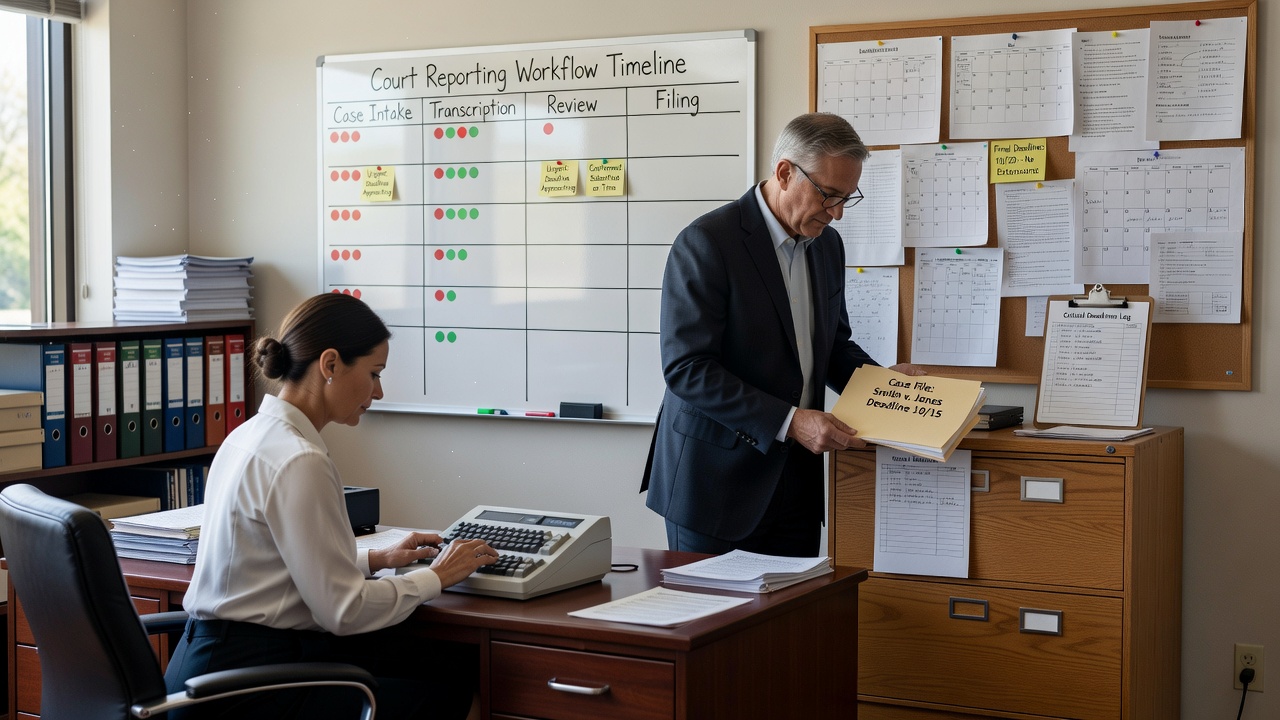
Managing court reporting workflows for supervision programs is one of the most detail-intensive tasks an agency can face. Between tracking status changes, closing out cases correctly, and logging follow-up steps on time, even a well-organized team can fall behind without a consistent process in place. When documentation gaps appear, they rarely stay hidden for long — they surface during audits, billing reconciliations, or court reviews at the worst possible moment.
This article breaks down what a reliable reporting workflow looks like, where agencies most commonly run into problems, and how better process design — supported by the right tools — can reduce missed deadlines and administrative strain.
Why Reporting Deadlines Get Missed in the First Place
Most missed court reporting deadlines aren’t the result of negligence. They happen because documentation responsibilities are spread across staff, statuses aren’t updated in real time, and there’s no clear system for flagging what’s overdue.
Common causes include:
- Status changes that don’t trigger follow-up steps — when a participant’s status changes (missed session, program exit, non-compliance), there’s often no automatic prompt for the next required action
- Batched documentation instead of real-time entry — staff log notes in groups at the end of the day or week, which creates gaps between what happened and when it was recorded
- No centralized deadline tracker — teams rely on email reminders, spreadsheets, or memory instead of a system that surfaces overdue tasks
- Unclear case transition steps — when a case closes or transfers, the documentation steps required before or during that transition are often informal and inconsistently followed
Each of these issues compounds over time. A single missed follow-up note can create a documentation gap that affects a compliance report, a billing claim, or an audit response weeks later.
What a Reliable Court Reporting Workflow Looks Like
A well-designed reporting workflow doesn’t rely on individual staff to remember every step. It uses structure to make the next action clear, regardless of who is handling the case.
Status-Linked Documentation Steps
Every significant status change — a missed appointment, a positive test result, a program completion — should be connected to a defined set of documentation and reporting steps. When staff update a participant’s status, the workflow should surface what’s required next: a supervisor notification, a court report entry, an incident note, or a follow-up contact attempt.
This removes ambiguity. Staff don’t have to remember what a particular status requires — the process tells them.
Milestone Tracking Across the Case Lifecycle
Courtreporting workflows benefit from milestone-based tracking rather than just task lists. Key milestones might include:
- Intake documentation completed — all required consent forms, assessments, and initial notes on file
- Periodic compliance reports submitted — logged with dates, recipient, and method of delivery
- Non-compliance events documented — with timestamps, follow-up steps, and supervisor review recorded
- Case closure checklist completed — exit summary, final report, and court notification steps confirmed
When milestones are visible to supervisors and coordinators, it’s much easier to identify which cases are on track and which need attention — before a deadline passes.
Real-Time Entry Standards
One of the most practical changes an agency can make is shifting from batched documentation to same-day or near-real-time entry standards. Notes entered close to the event they describe are more accurate, more defensible in audits, and more useful for follow-up staff who need to act on them quickly.
This doesn’t mean every entry needs to be done mid-session. It means setting a clear policy — for example, all session notes entered by end of business the same day — and using software that supports that standard rather than working around it.
How to Reduce Administrative Burden Without Losing Accuracy
One concern agencies raise about tighter documentation standards is that more structure means more work. In practice, the opposite tends to be true — when workflows are clearly defined, staff spend less time figuring out what to do next and less time correcting errors later.
Here are several process changes that reduce burden without sacrificing accuracy:
- Use structured note templates — rather than free-form text fields, templates with required fields guide staff to capture everything needed in a consistent format. This reduces re-entry requests and incomplete records.
- Build escalation steps into the workflow — when a task is overdue, the system flags it for a supervisor rather than waiting for someone to notice. This reduces the number of things that fall through the cracks.
- Reconcile documentation with billing regularly — monthly or bi-weekly reviews that match service notes to billing claims catch mismatches early. This protects revenue and prevents compliance issues tied to unsupported claims.
- Standardize case closure steps — a documented checklist for closing a case ensures nothing is skipped: final report submitted, court notified, exit summary completed, records archived per retention policy.
Agencies that use documentation tools for supervision agencies often find that structured workflows reduce the back-and-forth between staff and supervisors, because expectations are built into the process rather than communicated after the fact.
Building Audit Readiness Into Daily Operations
Audit readiness isn’t something to prepare for when an audit is scheduled. It’s the result of consistent documentation practices maintained over time. Agencies that stay audit-ready typically share a few common habits.
They document corrections clearly. When a note needs to be amended, the original entry is preserved and the correction is logged with a date, reason, and the name of the person who made the change. This creates a traceable record rather than a gap.
They maintain a searchable activity trail. Auditors and court administrators need to retrieve records quickly. If documentation is scattered across paper files, email threads, and disconnected spreadsheets, retrieval takes hours and errors become likely. Centralized, searchable records dramatically reduce that risk.
They run internal review cycles. Rather than waiting for an external audit, agencies conduct their own periodic reviews — monthly or quarterly — to spot patterns: recurring late entries, incomplete follow-up notes, billing exceptions, or overdue tasks. Catching these patterns internally allows for corrective action before they become a compliance finding.
For agencies managing higher-volume caseloads or multiple locations, compliance tracking for regulated programs can help standardize these review cycles and surface exceptions without requiring manual review of every record.
Takeaway
Missed court reporting deadlines and documentation gaps don’t usually happen because staff aren’t trying. They happen because the workflow doesn’t make the next step clear, status changes aren’t connected to required actions, and there’s no system for surfacing what’s overdue before it becomes a problem.
The agencies that manage reporting most effectively are the ones that treat documentation as a designed process, not a collection of individual tasks. That means status-linked workflows, real-time entry standards, milestone tracking, and regular internal reviews. When these practices are supported by software that reflects how supervision programs actually operate, the administrative burden decreases — and the accuracy and defensibility of documentation improves.
If your agency is working to tighten up its reporting process, start with the points where documentation most often stalls: status transitions, case closures, and non-compliance events. Fixing those three areas alone will significantly reduce the risk of a missed deadline or an audit finding.
—
Ready to evaluate your current reporting workflow? Talk to a team that works specifically with supervision and compliance programs. We can walk through how structured documentation tools can reduce your administrative workload and keep your records audit-ready year-round.