
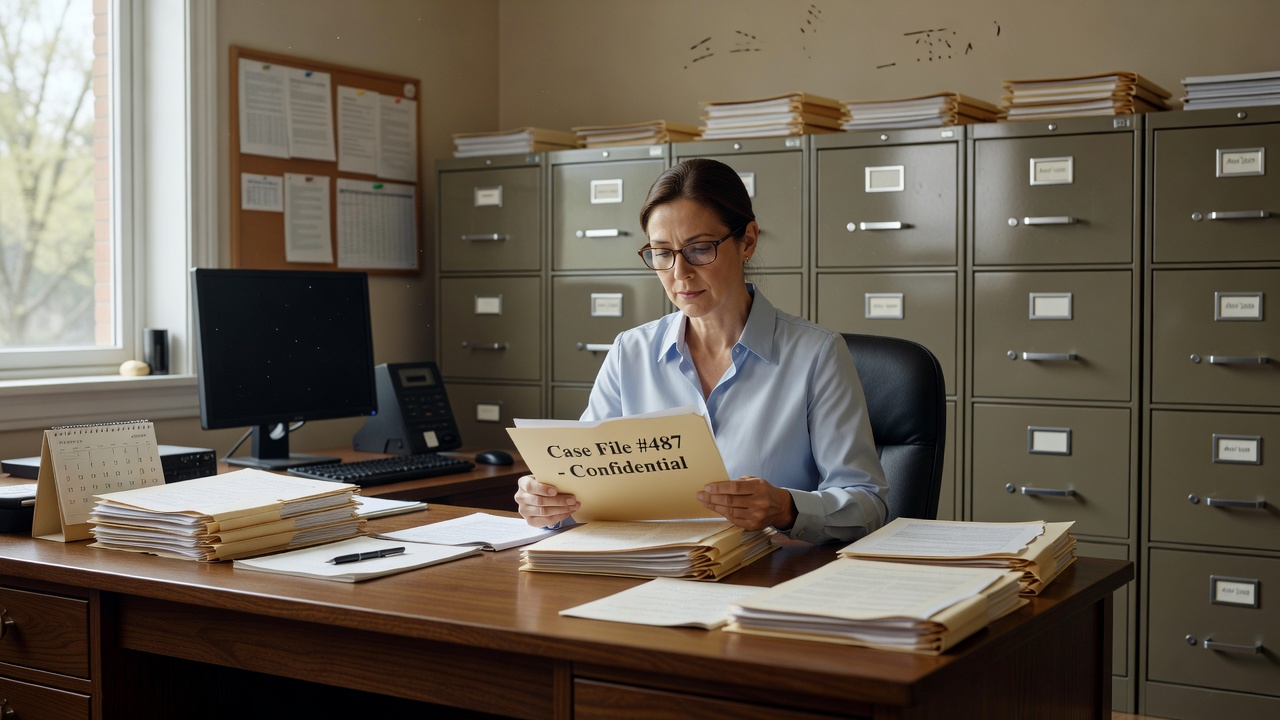
For supervision agencies and treatment programs operating under court oversight, learning how agencies reduce paperwork with case tracking tools is more than a time-saving exercise — it is a compliance strategy. When documentation gaps appear in audit findings, when billing falls behind service delivery, or when court reports go out with outdated information, the root cause is often the same: administrative workflows that rely on manual effort without a consistent structure to support them.
The good news is that practical, systematic improvements — supported by the right tools — can address most of these problems without adding burden to already stretched staff.
Why Paperwork Piles Up in Compliance-Driven Programs
Supervision and treatment agencies operate under unique pressure. They must document every client interaction for courts, maintain attendance records that also serve as billing evidence, produce progress reports on deadline, and stay audit-ready at all times. Most of this work is time-sensitive and detail-dependent.
The problem is that many agencies still manage these requirements across disconnected systems — handwritten logs, spreadsheets, email threads, and physical folders. When information lives in multiple places, staff spend significant time tracking it down rather than working with it.
Common breakdowns include:
- Contact attempts that never make it into the file
- Progress notes that are undated or missing a clear outcome
- Billing records that don’t match service documentation
- Court reports assembled at the last minute from incomplete notes
- Schedule changes documented informally without a record of the rationale
Each of these gaps is a potential finding in an audit. And each one is preventable.
How Case Tracking Tools Reduce Administrative Burden
Case tracking tools give agencies a central place to record, organize, and retrieve client information. Rather than pulling from multiple sources to build a file, staff enter information once — and that entry feeds documentation, reporting, and billing records simultaneously.
Attendance and Contact Logs
One of the most common audit findings involves undocumented or inconsistently documented attendance. A well-designed tracking system captures attendance at the point of service, including no-shows, late arrivals, and contact attempts. This means the record is complete by the time it is ever reviewed — not reconstructed later.
When attendance data is tied to the client file and the billing record from the start, agencies eliminate the need to reconcile three separate sources at the end of the month.
Progress Notes and Case Documentation
Courts and auditors need to follow the arc of a case: what was observed, what decisions were made, and what the next steps are. Agencies that use structured note formats — capturing objective facts, clinical interpretation, and planned actions — produce files that hold up under review.
Case tracking tools support this by providing consistent note templates that prompt staff to include required elements. This is especially valuable in high-volume programs where documentation quality can vary across staff members.
Schedule Changes and Non-Escalation Decisions
One frequently overlooked documentation requirement involves schedule changes. When a client’s session is rescheduled or a violation is not escalated, the reason for that decision needs to be in the file. Without it, an auditor or reviewing court has no way to evaluate whether the decision was appropriate.
Tracking tools that include a field for change rationale ensure this information is captured in the moment — before the context is forgotten.
Connecting Documentation to Billing and Reporting
For many agencies, billing is the step that falls furthest behind. Services are delivered, notes are written, but billing entries get delayed — sometimes by days or weeks. Delayed billing creates a gap between the service record and the financial record, which is a flag in both audits and revenue reconciliation.
The solution is to connect documentation and billing at the point of service. When a staff member records a session, that entry should generate or prompt a corresponding billable record. Agencies that build this connection into their workflow report fewer end-of-month discrepancies and faster billing cycles.
Practical steps to tighten this connection include:
- Establishing a weekly billing cutoff with clear accountability
- Mapping common activities to their billable codes so staff don’t have to guess
- Reconciling billing records against case notes monthly to catch discrepancies before they compound
- Using system prompts that flag sessions documented without a corresponding billing entry
Agencies using supervision reporting software for compliance-driven workflows often find that these connections happen automatically — reducing the manual reconciliation burden significantly.
Building Audit Readiness Into Daily Work
Audit readiness is not something agencies can create in the week before a review. It is the result of consistent documentation habits practiced every day. The agencies that perform best in audits are not the ones that prepare the most — they are the ones that document consistently from the start.
Small habits make a measurable difference:
- Dating every note at the time it is written, not after the fact
- Recording outreach attempts even when contact is not made
- Logging the reason for non-escalation decisions so the file reflects clinical judgment
- Conducting brief weekly or biweekly internal file reviews to catch gaps before an external reviewer does
Internal case reviews are particularly valuable. A short, structured review of open files — checking for missing notes, unsigned forms, and outdated status — surfaces problems early. When issues are caught internally, staff can correct them in the normal course of work. When they are caught by auditors, they become findings.
For DUI and supervision programs managing large caseloads, administrative workflow tools for regulated programs can automate these checks, flagging incomplete files without requiring a manual review of every record.
Standardizing Workflows Across Your Team
One of the less visible paperwork problems is inconsistency. When different staff members document in different ways, files look different — and courts and auditors notice. Inconsistent language, varying levels of detail, and different formats all make a program look less reliable than it may actually be.
Standardization does not require elaborate policy manuals. It requires a few clear decisions:
- What format do progress notes follow? (Objective observation, interpretation, next steps)
- What counts as a completed contact attempt? (Phone call, voicemail, email — and which must be documented)
- What information must appear in a court report? (Attendance record, engagement level, violations, current status)
- Who reviews reports before submission? (And is that review logged?)
Case tracking tools support standardization by making the correct format the default. When staff open a new note or report template, the structure is already there. The goal is to make doing it right easier than doing it differently.
Takeaway
Paperwork will always be part of operating a compliance-driven supervision or treatment program. But the volume of effort it requires — and the risk it carries — depends heavily on how documentation, billing, and reporting workflows are designed. Agencies that invest in consistent processes and case tracking tools spend less time managing paper and more time managing their programs. They enter audits with confidence, submit court reports on schedule, and close billing cycles without scrambles. The shift from reactive to organized starts with small, repeatable habits supported by tools built for how these programs actually operate.
—
Ready to simplify your agency’s documentation and reporting workflows? Explore how purpose-built case tracking tools can help your team stay audit-ready, reduce manual effort, and keep billing aligned with service delivery.