
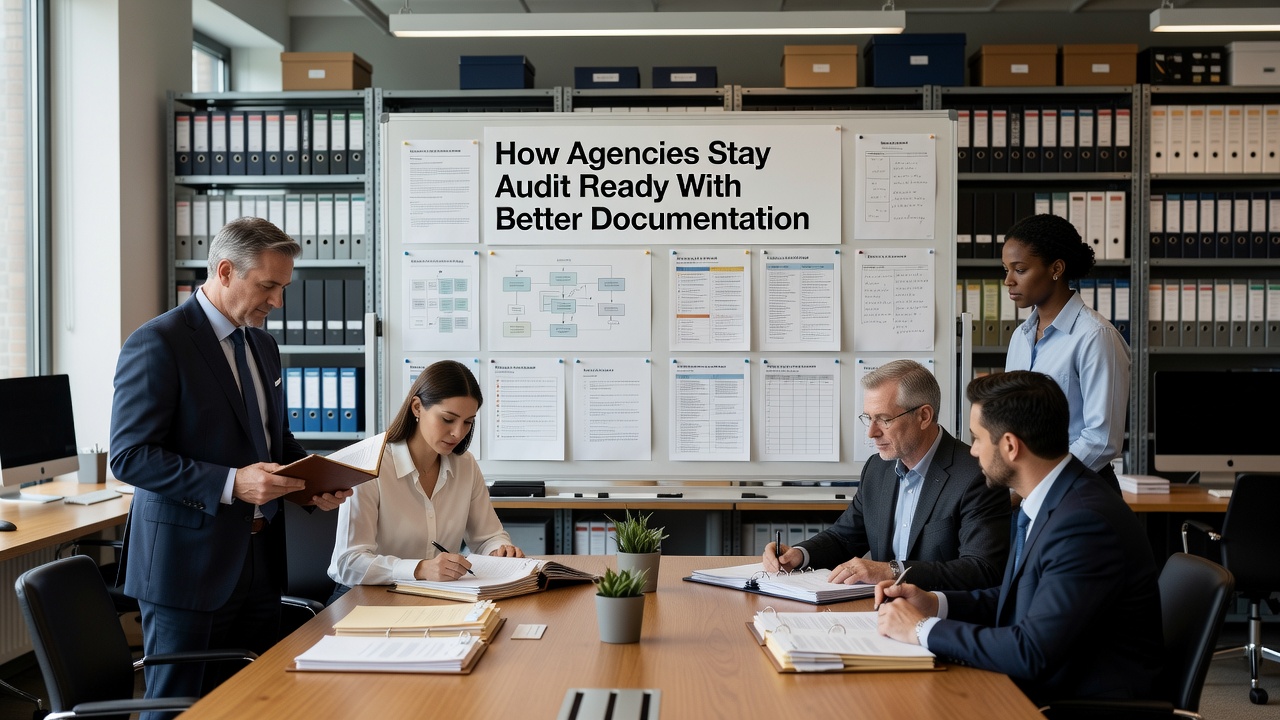
Staying audit ready is one of the most consistent operational challenges facing regulated supervision and compliance agencies. For organizations managing client records, reporting obligations, and billing requirements simultaneously, how agencies stay audit ready with better documentation comes down to building reliable, repeatable workflows — not scrambling before an external review. The good news is that practical process improvements, combined with the right tools, make this achievable year-round without overwhelming your staff.
Why Documentation Gaps Create Audit Risk
Most audit findings in regulated programs don’t come from deliberate errors. They come from inconsistent workflows. When documentation practices vary by staff member, case notes miss required elements, or billing codes don’t align with what’s written in the record, you’re creating gaps that reviewers will flag.
Common documentation problems that create audit exposure include:
- Missing required note elements such as session date, duration, presenting issue, intervention used, client response, and next steps
- Inconsistent templates across staff, making records difficult to review at scale
- Weak or vague language that doesn’t support medical necessity or program requirements
- Unsigned or late notes that break the chain of documentation timeliness
- Billing codes that don’t match what’s described in the progress note
Each of these issues can be addressed through structured workflows and clear documentation standards — but only if they’re built into how your team operates every day.
Building an Audit-Ready Documentation Cadence
One of the most practical approaches agencies can take is shifting from reactive documentation reviews to a consistent internal audit cadence. Rather than waiting for an external audit to surface problems, agencies that stay audit ready conduct their own regular self-checks.
A straightforward internal audit schedule might look like this:
Weekly
- Spot-check a small sample of notes for completeness and timeliness
- Confirm that all session notes from the prior week are signed and finalized
Monthly
- Review a broader sample for billing code alignment and treatment plan consistency
- Flag any patterns of missing elements or unsigned documentation
Quarterly
- Analyze trends across cases: Are certain staff members missing the same elements? Are specific program types generating more corrections?
- Review whether documentation templates still reflect current regulatory requirements
Annually
- Conduct a full template review and update standard language as needed
- Close out and verify all inactive or terminated cases are properly documented
This kind of cadence turns audit readiness into a routine practice rather than a crisis response. Small agencies benefit especially from this approach because it catches problems before they compound across hundreds of records.
Aligning Documentation With Billing and Reporting Requirements
For many agencies, documentation problems don’t just create compliance risk — they directly affect revenue. When a progress note doesn’t clearly describe the intervention or the client’s response, the corresponding billing code becomes difficult to defend. This leads to claim denials, delayed payments, and additional administrative work to correct and resubmit.
The fix isn’t complicated, but it requires intentional workflow design:
- Use structured note templates that prompt staff to capture every required element before closing a record
- Map your most common services to their billing codes and make that mapping visible to clinical and administrative staff
- Build a review step into the billing workflow so that notes are checked for completeness before claims are submitted
- Document court reporting and compliance milestones in the same system where clinical notes are stored, so nothing lives in a separate spreadsheet or email thread
When documentation, billing, and reporting workflows are aligned rather than siloed, agencies reduce errors and make it much easier to respond to any external review. Compliance tracking for regulated programs becomes significantly more manageable when all the relevant data is organized in one place.
Turning Audit Findings Into Corrective Action — and Tracking It
Even well-run agencies get findings. What separates high-performing organizations is what happens next. Remediation tracking — the process of documenting corrective actions, assigning responsibility, and following up until issues are resolved — is a critical but often overlooked part of compliance management.
Without a structured approach, audit findings tend to get acknowledged and then forgotten. Staff get busy, emails get buried, and the same problem resurfaces in the next review.
Effective remediation tracking includes:
- Logging each finding with a clear description of what was wrong and why it matters
- Assigning a responsible staff member and a resolution deadline
- Documenting what corrective action was taken and when
- Conducting a follow-up review to confirm the issue was actually resolved
This doesn’t have to be complex. Even a shared internal log with consistent fields can work for smaller agencies. The goal is to make sure nothing disappears into an email thread and that every finding has a documented resolution.
How Software Tools Support Better Documentation Workflows
Manual documentation systems — whether that’s paper files, shared drives, or disconnected spreadsheets — make it hard to maintain consistency at scale. As caseloads grow and reporting requirements increase, agencies that rely on manual processes tend to see more errors, more delays, and more administrative burden.
Purpose-built administrative workflow tools address these challenges by:
- Standardizing note templates so every staff member captures the same required elements
- Automating billing alignment checks to flag notes that don’t match billing codes before claims are submitted
- Tracking compliance milestones and reporting deadlines in one centralized system
- Generating reports that can be pulled quickly for court submissions, regulatory reviews, or internal audits
- Maintaining a clear audit trail of who documented what and when
For agencies working in regulated supervision environments, administrative workflow tools for court ordered programs can reduce the manual coordination that currently consumes staff time and introduce consistent processes that hold up under review.
Takeaway
Audit readiness isn’t a one-time project — it’s the result of consistent documentation practices, structured internal reviews, and aligned billing and reporting workflows. Agencies that build these habits into their daily operations are better positioned to respond quickly to external audits, reduce billing errors, and maintain accurate records across their entire caseload. Modern software tools make this easier by standardizing workflows, centralizing documentation, and reducing the manual work that creates errors and delays. If your agency is still managing compliance through disconnected spreadsheets or inconsistent note practices, investing in a more structured approach — whether through process changes or better tools — is one of the highest-impact steps you can take.
—
Ready to strengthen your agency’s documentation and compliance workflows? Explore how purpose-built tools can help your team stay organized, reduce administrative burden, and maintain audit-ready records year-round. Contact our team to learn more.