
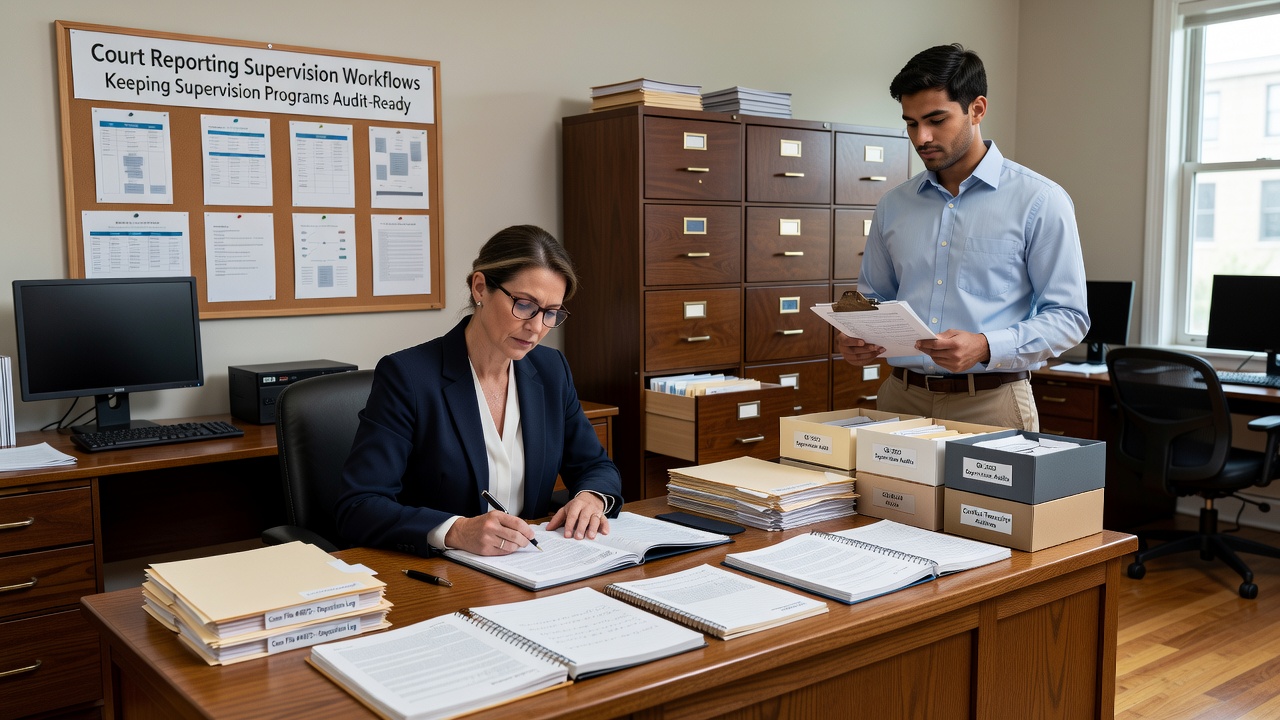
For agencies managing supervised treatment programs, court reporting workflows are the backbone of daily operations. When those workflows are inconsistent or poorly structured, the consequences show up quickly — missed deadlines, incomplete case notes, billing delays, and compliance gaps that put your program at risk during audits. Building reliable, repeatable documentation processes is not a luxury; it is a fundamental part of running a regulated program effectively.
Why Documentation Gaps Create Compliance Risk
Most compliance problems do not start with bad intentions. They start with inconsistent processes. Staff members document sessions differently. Notes get written days after the fact. Signatures get missed. Forms are filed in the wrong place or not at all.
Over time, these small gaps accumulate into a pattern that becomes difficult to defend during an external review. Auditors and courts are not just looking at whether services were delivered — they are looking at whether your records prove it clearly and consistently.
Common recordkeeping gaps that create compliance risk include:
- Late or missing session notes
- Inconsistent intake documentation across staff or locations
- Attendance records that do not match billing entries
- Progress notes that lack required clinical or compliance language
- Missing client signatures on required acknowledgment forms
- Incomplete court reports submitted without supporting documentation
Identifying these gaps before a reviewer does is the goal of a strong documentation workflow.
Building a Reliable Court Reporting Workflow
A well-designed reporting workflow does not rely on individual staff members remembering what to do. It builds reminders, checkpoints, and review steps directly into the process so that nothing falls through the cracks.
Standardize Note-Taking Across Staff and Shifts
One of the most common sources of documentation inconsistency is the absence of clear note-writing standards. When each staff member formats session notes differently, supervisors spend extra time cleaning up records before submission — and inconsistencies can raise questions during a compliance review.
Standardization means defining:
- What information must appear in every note (date, duration, attendees, content summary, staff signature)
- When notes must be completed relative to the session (same day, within 24 hours)
- Which forms or templates apply to each type of session or client interaction
When documentation templates are built directly into your case management or reporting system, staff do not need to remember the format — the system prompts them through it.
Track Deadlines, Attendance, and Program Milestones in One Place
Supervision programs often manage multiple reporting obligations at once: court-mandated check-ins, attendance requirements, treatment progress benchmarks, and billing cycles. When these are tracked in separate spreadsheets, paper files, or disconnected systems, the risk of missing a deadline increases significantly.
Centralized tracking gives supervisors a clear view of:
- Which clients are approaching attendance thresholds
- Which court reports are due and when
- Which cases have incomplete or overdue documentation
- Which billing records are missing supporting session notes
This kind of visibility makes it easier to catch problems before they become violations.
Prepare for Audits Before They Are Scheduled
Audit readiness should not be something agencies scramble toward when a review is announced. Programs that maintain consistent documentation year-round rarely find audits disruptive because their records are already in order.
A practical approach to staying audit-ready includes:
- Conducting regular internal chart reviews — monthly or quarterly — to catch missing signatures, incomplete forms, or late notes before an external reviewer does
- Maintaining a compliance documentation checklist that staff can reference before closing out a case or submitting a report
- Assigning a designated reviewer to check reports before they go to the court or oversight body
- Flagging documentation exceptions in real time rather than discovering them at the end of a billing cycle
When these steps are embedded in your workflow, compliance becomes a daily habit rather than a reactive scramble.
How Better Workflows Improve Billing Readiness
Documentation quality and billing accuracy are directly connected. Incomplete or inconsistent session records create billing delays, denied claims, and time-consuming corrections. For regulated programs, this is especially problematic because billing errors can also trigger compliance questions.
Billing readiness improves when:
- Attendance records are captured accurately at the point of service
- Session notes are completed before billing entries are submitted
- Staff complete required documentation fields before a record can be marked complete
- Supervisors can run a quick pre-billing review to confirm all required notes are present
Software that connects documentation and billing workflows — rather than treating them as separate processes — reduces the back-and-forth that slows down reimbursement and creates administrative bottlenecks. Purpose-built documentation tools for supervision agencies are designed specifically to address these gaps by keeping attendance, notes, and reporting in one connected system.
Managing Documentation Across Multiple Sites or Staff
For agencies operating across more than one location, documentation consistency becomes even more challenging. Different site managers may have different habits. Staff turnover introduces new variability. Without a shared system and clear standards, records across sites can look like they came from different organizations.
Practical steps for multi-site documentation management include:
- Using a single shared platform that all sites access, rather than location-specific tools or paper systems
- Building role-based access so supervisors can review records across locations without staff needing to transfer files manually
- Running cross-site documentation audits periodically to ensure all locations are meeting the same standards
- Providing consistent onboarding for new staff regardless of location, including documentation expectations and system training
For offender treatment providers managing clients across multiple programs or jurisdictions, centralized documentation reduces the risk of records falling out of sync and supports more accurate court and compliance reporting overall.
Takeaway
Strong court reporting workflows are built from consistent, well-structured documentation habits — not from last-minute corrections before an audit. Agencies that invest in standardized note-taking, centralized deadline tracking, and regular internal reviews are better positioned to meet compliance requirements, reduce billing errors, and submit accurate reports without the administrative burden that comes from fragmented processes.
Modern software tools designed for regulated supervision environments can automate much of this structure — embedding compliance checkpoints, flagging incomplete records, and connecting documentation to billing — so that staff spend less time on paperwork and more time delivering services.
If your agency is looking to tighten up its reporting and documentation workflows, explore how purpose-built court reporting workflow tools can help your team stay organized, compliant, and audit-ready year-round.