
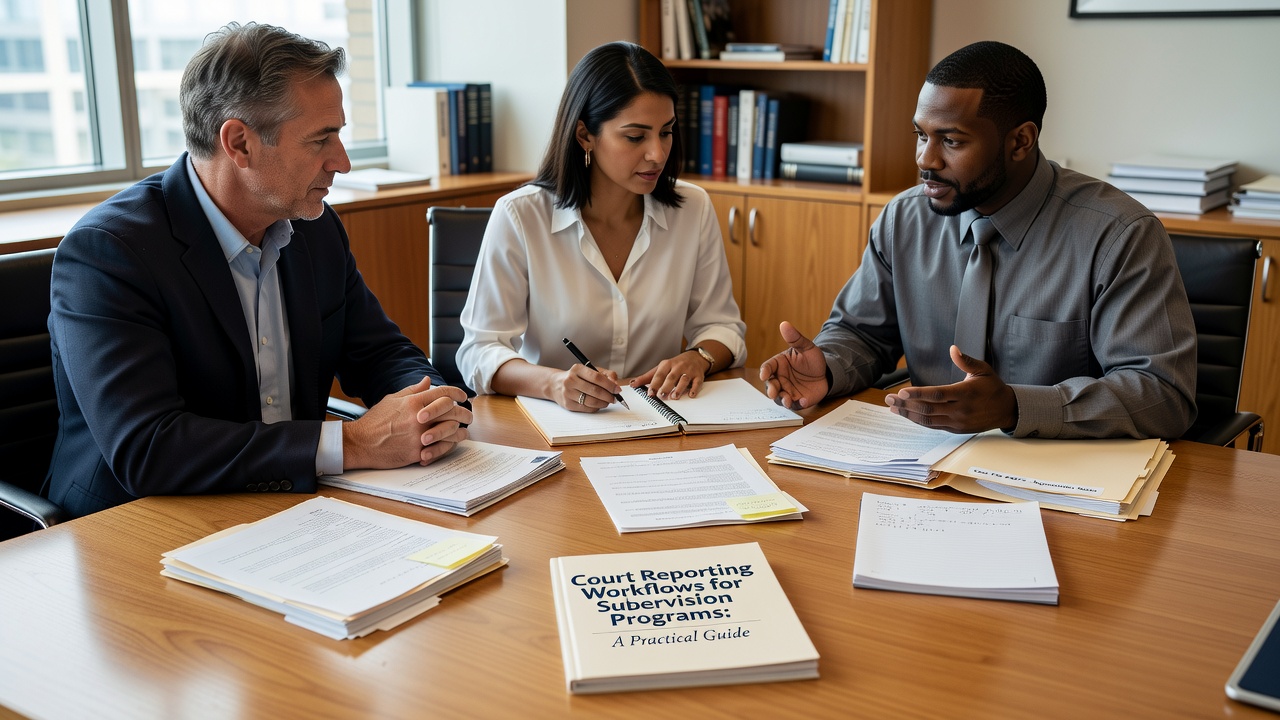
Improving court reporting workflows for supervision programs is one of the most practical steps an agency can take to reduce administrative burden, stay audit-ready, and maintain accurate records. For organizations operating in regulated supervision environments, the gap between good clinical work and good documentation can create real compliance risk. The good news is that most workflow problems are fixable with clear processes and the right tools.
Why Reporting Workflows Break Down
Most reporting failures in supervision programs are not the result of careless staff. They stem from unclear ownership, inconsistent templates, and no structured internal timeline to guide the work.
Common problems include:
- No internal deadlines set ahead of court or agency submission dates
- No clear ownership of drafting, review, approval, and submission steps
- No submission log to confirm what was sent, when, and to whom
- Session notes completed late, with missing signatures or incomplete details
- Attendance records that do not match billed units
When these gaps compound over time, agencies find themselves scrambling before audits or struggling to respond to disputes. Building a structured workflow is the most direct way to prevent these issues.
Building a Structured Court Reporting Workflow
A reliable court reporting workflow does not need to be complicated. It needs to be consistent. The core principle is that every report should follow a defined path from data collection to submission, with accountability at each stage.
Define Internal Deadlines Before External Due Dates
External deadlines from courts or probation agencies are fixed. Internal deadlines should be set several days earlier to allow time for review and corrections.
- Assign a draft completion deadline to the staff member responsible
- Set a supervisor review window before final approval
- Confirm a submission deadline with buffer time before the external due date
This three-step internal timeline prevents last-minute rushes and gives supervisors time to catch errors before reports leave the agency.
Use Structured Report Checklists
A checklist ensures required elements are present in every report before submission. For court and probation reporting, this typically includes:
- Client attendance record and participation level
- Documentation of any non-compliance episodes or sanctions applied
- Risk level changes since the last reporting period
- Progress toward treatment goals and program objectives
- Any program modifications or schedule changes
Staff working from a consistent checklist produce more complete reports and spend less time revising them.
Maintain a Submission Log
Every submitted report should be logged with the date of submission, the method used (email, portal, fax), the recipient, and any confirmation received. This log serves two purposes: it protects the agency in disputes about whether a report was filed, and it supports audit traceability.
A simple submission log, even in a spreadsheet, is far better than no log at all. Purpose-built compliance tracking for regulated programs typically includes submission history as a built-in feature.
Documentation Standards That Support Compliance
Court and probation reports are only as reliable as the underlying session documentation. Weak session notes lead to weak reports.
A complete session note should include:
- Date, time, and duration of the session
- Objectives addressed and interventions used
- Client participation and response
- Any risk flags, sanctions, or incentives applied
- Next steps and follow-up plans
- Billable versus non-billable time, if applicable
When session notes are incomplete, staff often have to reconstruct information at reporting time. This introduces errors and delays. Standardized documentation templates reduce this problem by prompting staff to capture required information at the point of service.
Aligning Documentation with Billing Records
In supervised treatment settings, attendance records must match billed units. Discrepancies between clinical documentation and billing are a common audit finding and can trigger broader reviews.
Key practices to prevent mismatches:
- Reconcile attendance logs with billing weekly, not at month end
- Document partial attendance and makeup sessions accurately
- Flag non-attendance before billing is finalized, not after
- Ensure that “phantom” sessions—billed sessions with no clinical record—cannot occur
Software tools designed for documentation workflows in supervision agencies can enforce these checks automatically, catching discrepancies before they become billing problems.
Staying Audit-Ready Year-Round
Audit readiness should be an ongoing operational practice, not a one-time preparation event. Agencies that conduct regular internal file reviews are far better positioned than those that only review records when an audit is announced.
A monthly internal file review checklist should cover:
- Timely completion and signatures on all session notes
- Attendance documentation that matches billing records
- Documentation of missed sessions, sanctions, or program changes
- Current progress reports with supervisor approval
- Corrections logs that capture what was changed, when, by whom, and why
A corrections log is particularly important. Auditors distinguish between legitimate clinical addenda and after-the-fact error corrections. Agencies that maintain a clear, timestamped corrections log demonstrate transparency and accountability.
Handling Multi-Agency Reporting Requirements
Some clients are under overlapping jurisdictions, meaning the agency may be reporting to a court, a probation office, and a licensing or accreditation body simultaneously. Each may have different requirements for retention periods, report formats, and data elements.
Organizations in this situation benefit from:
- A centralized record system that can generate reports in different formats
- Clear documentation of which requirements apply to which client population
- A calendar-based compliance tracker that flags upcoming reporting deadlines across all agencies
Takeaway
Strong court reporting workflows for supervision programs are built on three foundations: consistent documentation practices, structured internal processes, and reliable record-keeping. When agencies invest in these areas, they reduce administrative burden, improve report quality, and stay prepared for audits without emergency effort.
Modern software tools designed for regulated supervision environments can support all three areas. They standardize templates, enforce documentation completeness, track submission histories, and flag billing discrepancies before they become compliance problems. For agencies managing high caseloads and multiple reporting obligations, these tools translate directly into time saved and risk reduced.
Ready to improve how your agency manages reporting and compliance workflows? Explore purpose-built tools designed for regulated supervision programs and see how structured workflows can reduce administrative workload across your team.