
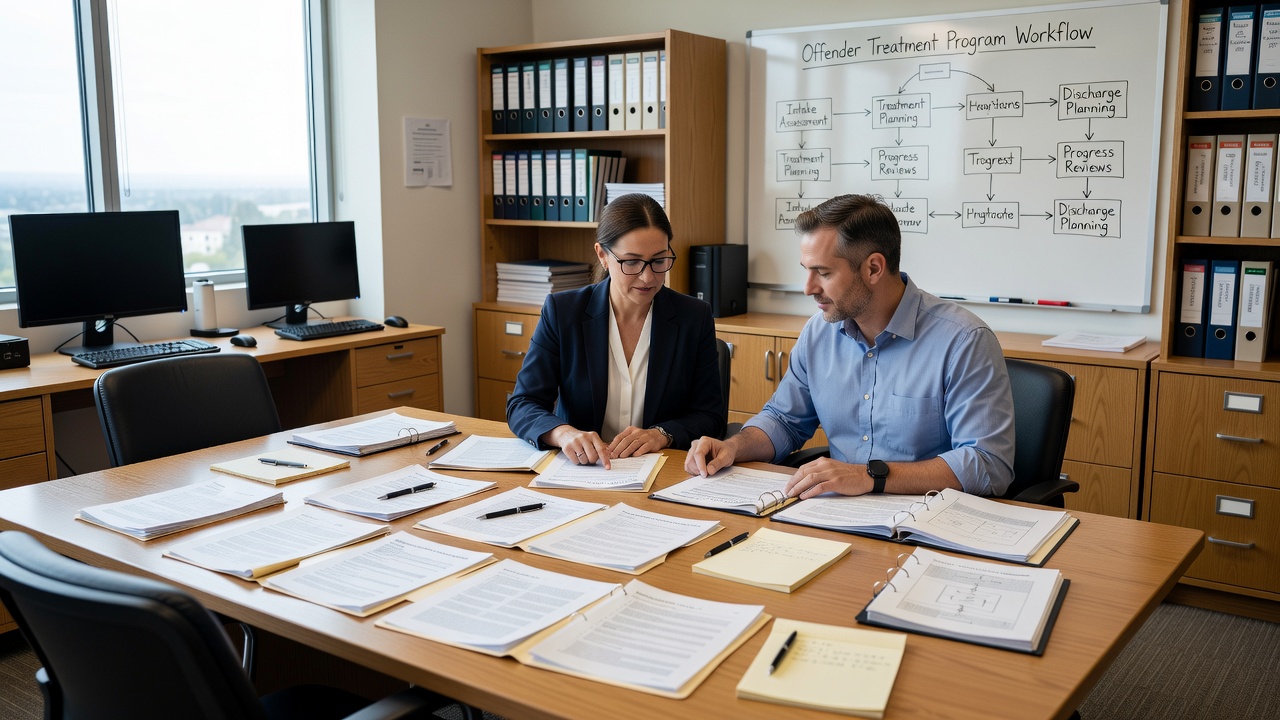
Managing administrative workflows for offender treatment programs is one of the most consistent operational challenges facing supervision agencies today. Between tracking attendance, maintaining client files, preparing court reports, and reconciling billing, the administrative load can quietly overwhelm even experienced staff. The good news is that most workflow breakdowns are predictable — and preventable with the right structure in place.
This guide covers practical best practices for documentation, compliance tracking, and reporting workflows that help regulated programs stay organized, audit-ready, and operationally efficient.
—
Why Documentation Workflows Break Down in Regulated Programs
Most compliance gaps in supervised programs don’t come from policy failures — they come from inconsistent documentation habits. When intake forms are completed differently by different staff members, when session notes don’t follow a standard format, or when attendance records are updated days after the fact, small errors accumulate quickly.
Common documentation mistakes that create compliance risk include:
- Missing or outdated signatures on intake forms and consent documents
- Incomplete attendance records that don’t reflect missed sessions or make-ups
- Session notes that lack the detail needed to support court reports or audits
- No clear corrections log when records are amended after the fact
- Client contact information that hasn’t been verified or updated at regular intervals
The underlying issue is usually a lack of standardization. When staff members make independent judgment calls about what to document and when, the result is inconsistency across client files — which becomes a serious problem during audits or court reporting cycles.
—
How to Standardize Before You Automate
Before investing in software or automation, agencies should first define what a complete client file looks like from intake through case closure. This matters because tools can only reinforce workflows that are already clearly defined.
What a Complete Supervised Program File Should Include
A well-structured client file for a court-mandated or regulated supervision program typically contains:
- Intake documentation: signed consent forms, ID verification, referral source, program requirements
- Attendance records: session-by-session log with timestamps, absences, and any makeup sessions
- Session notes: structured notes that capture participant engagement, progress, and any incidents
- Communication logs: contacts with referring agencies, probation officers, or courts
- Sanctions and compliance events: documented responses to missed sessions or violations
- Court reports: dated reports with supervisor review and sign-off
- Billing records: tied to documented services with supporting attendance data
Once your agency agrees on this standard, it becomes much easier to build workflows — and software systems — around it.
—
Building an Audit-Ready Compliance Tracking Workflow
Audit readiness isn’t something you prepare for right before a review. It’s the result of consistent daily and weekly documentation habits that keep files complete at all times.
Here are practical steps to build compliance tracking workflows that hold up under scrutiny:
Assign Clear Ownership
Every documentation task should have an assigned owner. Who is responsible for completing session notes by end of day? Who handles the billing handoff after a session is logged? Who reviews files for completeness before a court report goes out? Without clear ownership, tasks fall through the cracks.
Use Internal Deadlines, Not Just External Ones
Court reporting deadlines are external and fixed. Internal deadlines — like completing session notes within 24 hours or flagging missing attendance within 48 hours — give your team enough lead time to catch and correct errors before they become compliance issues. Agencies that rely only on external deadlines are always working reactively.
Conduct Monthly File Reviews
A short monthly file review checklist helps agencies catch common gaps before they compound. A basic version might include:
- Are all attendance records current and signed?
- Are session notes complete and formatted consistently?
- Is contact information verified and up to date?
- Are any required court reports coming due within 30 days?
- Is there a corrections log entry for any amended records?
This kind of routine review doesn’t require significant time — but it dramatically reduces last-minute court reporting pressure and audit surprises.
—
Structuring Session Notes to Support Reporting and Billing
Session notes are one of the most underutilized compliance assets in supervised programs. When written well, a session note does more than document what happened in a group or individual session — it supports court reports, justifies billing, and provides evidence of program participation if a case is ever reviewed.
Effective session notes for regulated programs should include:
- The date, time, duration, and format of the session
- Client attendance status and any late arrivals or early departures
- A brief summary of topics covered or therapeutic activities completed
- Any notable participant behavior, incidents, or disclosures
- Progress notes tied to program goals or treatment requirements
- Staff signature and credentials
When session notes are structured consistently, billing staff can process claims with confidence, and supervisors can pull accurate data for court reports without reconstructing information from memory or multiple disconnected sources.
—
How Software Tools Support Better Administrative Workflows
For agencies managing high caseloads, software built for compliance-sensitive environments can make a meaningful difference in how efficiently administrative work gets done. Administrative workflow tools for court ordered programs help agencies centralize documentation, automate reminders for missing records, and generate reports that are already formatted for court or agency review.
The operational benefits aren’t about eliminating staff — they’re about freeing staff from repetitive manual tasks so they can focus on higher-value work. Specific areas where software tools provide clear value include:
- Attendance tracking: automated logs that flag absences in real time
- Session note templates: structured formats that ensure consistent documentation
- Compliance dashboards: visibility into which files are complete and which have gaps
- Court report generation: pulling from existing records rather than rebuilding data manually
- Billing integration: connecting documented services directly to billing workflows
For smaller agencies in particular, software for offender treatment providers can close the gap between compliance expectations and what a lean administrative team can realistically manage.
—
Takeaway
Strong administrative workflows don’t require large teams or complex technology — they require clear standards, assigned ownership, and consistent habits. Agencies that define what complete documentation looks like, build internal review cycles, and use software tools that match their compliance environment are better positioned to meet reporting requirements, support audits, and reduce the daily pressure that comes with managing regulated programs.
If your agency is spending too much time chasing down missing files or scrambling before court deadlines, the problem is almost always a workflow problem — and workflow problems are solvable.
Ready to improve your program’s administrative workflows? Explore how purpose-built tools can help your team stay organized, compliant, and audit-ready without adding headcount.