
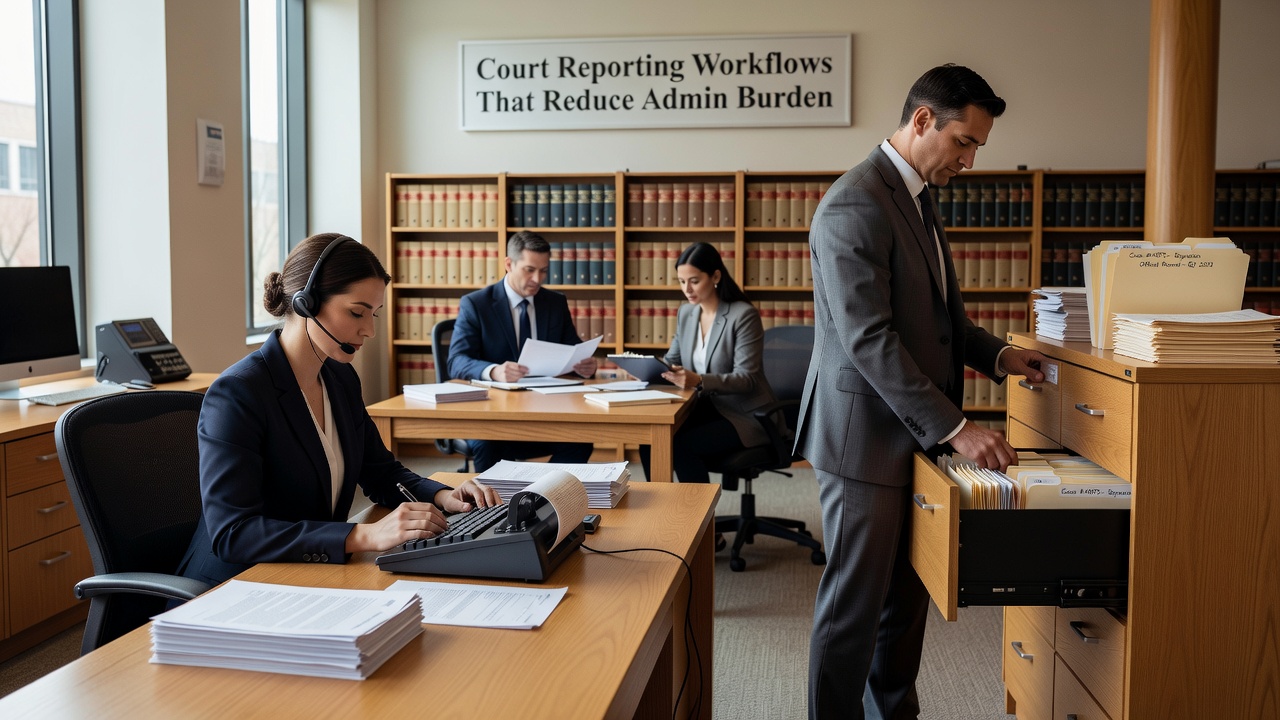
Improving court reporting workflows for supervision programs is one of the most practical steps an agency can take to reduce staff workload, improve documentation accuracy, and stay consistently audit-ready. For many supervision and treatment providers, reporting feels like a separate task layered on top of everything else. It does not have to be. With the right structure in place, the work your staff already does can flow directly into the reports you need.
Why Reporting Workflows Break Down
Most reporting problems do not start at the reporting stage. They start earlier, in how documentation is collected, stored, and organized during day-to-day case management.
Common breakdowns include:
- Attendance data tracked in one place, compliance status in another — staff must manually reconcile both before generating a report
- Progress notes written without court or oversight audiences in mind — clinical language has to be rewritten before it can be submitted
- Missing documentation flagged only at report time — too late to fix without delaying submission
- No standardized template for recurring reports — every staff member builds their version from scratch
The result is a process that takes far more time than it should, introduces errors, and creates unnecessary stress around deadlines.
Structuring Documentation to Feed Reporting Directly
The most effective improvement agencies can make is connecting documentation practices to reporting requirements from the beginning, not after the fact.
This means deciding upfront what data points every report will need and ensuring those data points are captured consistently in session notes, attendance records, and case updates.
Build templates with reporting in mind
A well-designed session note template should prompt staff to record the specific information that will appear in compliance summaries. This includes:
- Goals targeted during the session
- Client participation and response to interventions
- Progress against measurable objectives
- Attendance status and any absences or tardiness
- Next steps or homework agreed upon
When notes consistently include these elements, generating a court or oversight report becomes a matter of pulling and summarizing, not rewriting from scratch.
Use standardized status labels
Vague or inconsistent terminology creates confusion when compiling reports across multiple clients or staff members. Defining a clear set of status labels — such as *compliant*, *non-compliant*, *pending review*, or *at risk* — gives your team a shared vocabulary and makes reports easier to produce and read.
From Case Notes to Compliance Summaries
One of the most common frustrations in supervision work is translating clinical documentation into plain-language summaries suitable for courts, oversight bodies, or funding agencies.
Clinical language serves an important purpose internally, but external audiences need clear, objective statements about participation, progress, and current status.
Best practices for this translation include:
- Summarize behavior, not interpretation — describe what the client did or did not do, rather than offering clinical analysis
- Reference specific goals and whether they were met — this gives oversight audiences concrete evidence of progress or concern
- Document escalations and decisions clearly — any change in treatment plan, level of supervision, or compliance status should be noted with the date, reason, and who approved it
- Keep language consistent across all reports for the same client — inconsistent framing raises questions and slows reviews
Agencies that use documentation tools for supervision agencies often find that having structured note formats built into their workflow makes this translation significantly faster.
Batching Tasks and Reducing Duplicate Work
Another major source of administrative burden is duplicate data entry. Staff record the same information in multiple places — a session log, a billing system, a compliance tracker, and a report template — because these systems do not talk to each other.
Batching and integration are two practical ways to address this.
- Batching means grouping similar tasks together rather than switching between them constantly. For example, reviewing all documentation for completeness at the end of each day rather than before each report is generated. This reduces the cognitive load of context-switching and makes gaps easier to catch early.
- Integration means ensuring that the information entered once flows into the other places it is needed. When attendance is logged in the same system that generates compliance summaries, staff do not re-enter it manually.
Software designed for compliance tracking for regulated programs typically supports this kind of connected workflow, reducing the risk of errors that come from moving information between disconnected tools.
Staying Audit-Ready Between Reporting Cycles
Audit readiness is not just a reporting concern. It is a documentation culture. Agencies that are consistently audit-ready do not scramble to prepare when a review is announced because their records are already complete, organized, and retrievable.
Practical habits that support ongoing audit readiness include:
- Conduct brief internal documentation reviews monthly or quarterly — spot-check a sample of case files for completeness before an auditor does
- Ensure every decision is documented at the time it is made — risk assessments, treatment changes, and escalations should never be reconstructed from memory
- Confirm that consent forms, staff credentials, and written protocols are current — these are among the first things regulators and payers check
- Flag missing documentation automatically where possible — whether through software alerts or a manual checklist review at the end of each week
The agencies that handle audits most smoothly are those where documentation quality is a routine expectation, not a last-minute preparation.
Takeaway
Court reporting workflows for supervision programs do not need to be a separate, time-consuming process. When agencies design their documentation practices with reporting requirements in mind from the start, the day-to-day work of recording sessions, tracking compliance, and managing cases feeds naturally into the reports they need to produce. Standardized templates, consistent terminology, and connected systems all reduce the manual effort involved — and the errors that come with it. Modern administrative workflow tools make this kind of connected, efficient process achievable for agencies of any size, without adding complexity for staff.
Ready to improve your agency’s reporting workflow? Explore how purpose-built tools can help your team document, track, and report more efficiently — visit develoapps.com to learn more.