
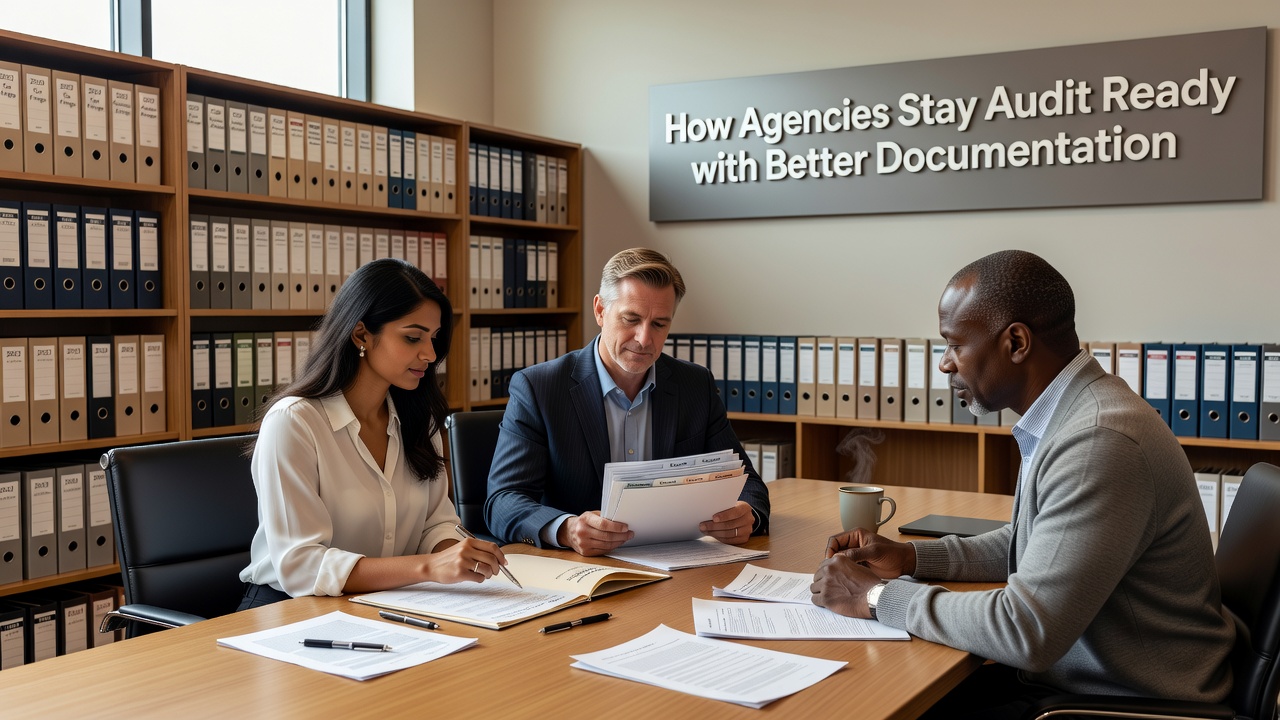
Supervision agencies know the stress of preparing for monitoring visits and compliance reviews. The scramble to organize files, locate missing signatures, and verify documentation standards can consume weeks of staff time. Smart agencies have learned that staying prepared year-round is far more efficient than crisis-mode preparation when auditors arrive.
Effective documentation practices and systematic workflows help agencies maintain compliance without overwhelming their teams. By building audit readiness into daily operations, organizations can focus on serving clients rather than frantically preparing for reviews.
Build Documentation Habits That Work Year-Round
The most successful agencies treat audit readiness as an ongoing operational practice, not a periodic emergency. This means establishing consistent documentation standards and making compliance part of regular workflow.
Create standardized file structures for both electronic and paper records. Every client file should follow the same organization pattern, making it easy for staff to locate required documents and for reviewers to navigate records efficiently.
Implement routine internal reviews using the same checklists that external auditors will use. Many agencies conduct monthly spot-checks of client files, focusing on common problem areas like incomplete signatures, missing dates, or template notes that don’t reflect actual services provided.
Centralize policy updates so that documentation templates and workflows stay current with changing regulations. When new requirements emerge, update forms and training materials immediately rather than waiting for the next audit cycle.
Avoid Common Documentation Mistakes That Trigger Findings
Auditors consistently identify the same documentation errors across different agencies. Understanding these patterns helps organizations focus their quality improvement efforts where they matter most.
Missing or incomplete signatures and dates on treatment plans, consent forms, and progress notes remain one of the most frequent audit findings. Establish clear protocols for when signatures are required and build verification steps into your workflow.
Generic or copy-paste progress notes that don’t reflect individualized services raise red flags for reviewers. Notes should demonstrate that services were actually provided and tailored to each client’s specific needs and circumstances.
Inconsistent attendance tracking creates problems when agencies need to demonstrate service dosage or justify billing. Develop standardized methods for recording attendance, no-shows, and any sanctions or interventions provided in response.
Poor coordination documentation often surfaces during reviews, even though many programs are required to demonstrate communication with courts, probation officers, and other treatment providers. Document these interactions clearly, including dates, participants, and outcomes.
Design Reporting Workflows That Reduce Administrative Burden
Many agencies struggle with duplicative data entry, where the same information gets recorded multiple times as it moves from session notes to progress summaries to formal court reports. Streamlined workflows can eliminate this inefficiency.
Map your reporting pathway from initial documentation through final reports. Identify where information gets re-entered manually and look for opportunities to reuse data already captured in your systems.
Standardize key data elements across all documentation. When everyone uses the same terminology and categories for attendance, participation levels, violations, and interventions, information flows more smoothly between different reports and systems.
Set clear timelines and responsibilities tied to court hearing dates or review cycles. Staff should know exactly when different types of reports are due and who is responsible for preparing each component.
Track Compliance Without Creating Extra Work
Effective compliance tracking focuses on practical status categories that help staff prioritize their attention and intervention efforts.
Use simple status frameworks like compliant, at-risk, non-compliant, and pending review. These categories should align with your funding source requirements and help staff quickly identify clients who need additional support or intervention.
Connect compliance definitions to contract language from grants or oversight agencies. What constitutes “program completion” or “satisfactory participation” should be clearly defined and consistently applied across all documentation.
Balance accountability with therapeutic goals, especially in substance use and mental health programs where engagement strategies may need to account for the nature of behavioral health conditions.
Maintain Grant-Funded Program Requirements
Agencies receiving state or federal grants face additional documentation requirements that must be woven into their regular operations.
Link performance measures to specific data points in your documentation system. Every required outcome measure should have a clear source in your client records, eliminating guesswork during reporting periods.
Document evidence-based practices and criminogenic needs assessment as many justice grants now expect treatment programs to demonstrate these connections clearly in their service delivery model.
Keep required administrative documents like W-9 forms, budgets, and narrative responses organized and easily accessible for monitoring visits.
Modern documentation tools for supervision agencies can automate much of this organization and tracking, reducing the manual effort required to maintain compliance.
Create Quality Assurance Systems That Actually Work
Sustainable quality assurance goes beyond periodic file reviews to create systematic feedback loops that improve documentation over time.
Conduct structured file reviews with specific feedback criteria. Rather than general comments, provide staff with concrete guidance about what needs improvement and how to make those changes.
Track corrective actions and follow up to ensure improvements actually occur. Make quality assurance findings part of regular team meetings and supervision discussions.
Use audit findings as learning opportunities to refine policies and training. When external reviewers identify issues, analyze whether these represent isolated problems or systematic gaps that need broader attention.
Takeaway
Agencies that stay audit-ready year-round avoid the stress and resource drain of last-minute compliance preparation. By building documentation standards into daily workflows, creating systematic quality assurance processes, and designing efficient reporting systems, organizations can maintain high compliance standards without overwhelming their staff. Modern software tools can automate much of the tracking and organization work, allowing teams to focus on client services while maintaining the documentation integrity that regulators expect.