
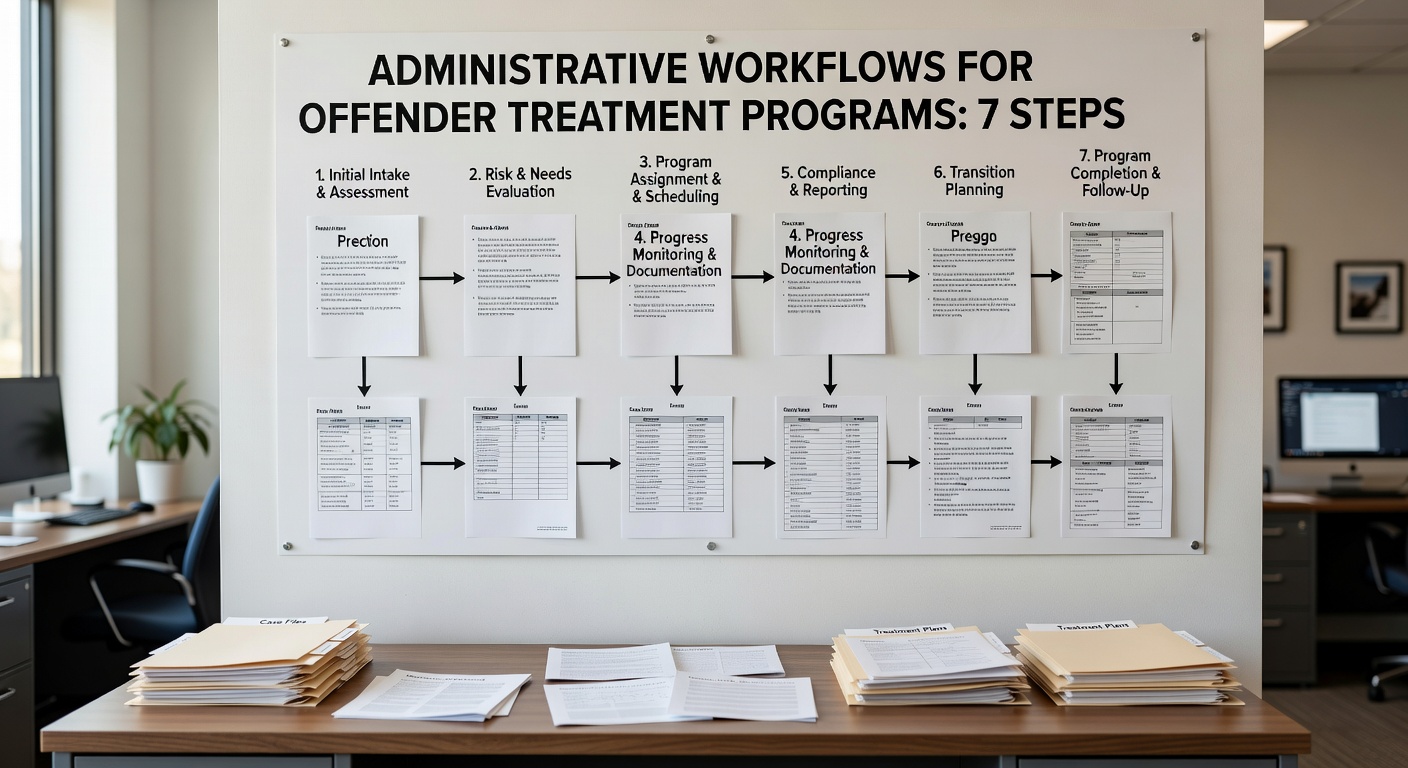
Managing administrative workflows for offender treatment programs requires balancing complex documentation requirements, privacy compliance, and coordination with multiple agencies. Treatment providers face mounting pressure to maintain audit-ready records while delivering quality care and managing operational efficiency.
Successful programs build standardized processes that reduce administrative burden on staff while ensuring compliance with court orders, funding requirements, and privacy regulations. Here’s how to design workflows that protect your organization and support better outcomes.
Establish Standard Documentation Templates and Role Assignments
Consistent documentation starts with standardized templates and clear role definitions. Programs that use uniform formats for intake, treatment plans, progress notes, and court reporting reduce errors and speed up administrative tasks.
Create structured templates for core documents:
- Intake assessments with required data fields that cannot be skipped
- Treatment plans with standardized goal categories and review dates
- Progress notes with consistent format and required elements
- Court reporting templates that meet multiple agency requirements
- Incident reports with objective, factual language
Define documentation responsibilities by role:
- Front office staff handle demographics, insurance verification, and initial consent forms
- Clinical staff document assessments, treatment plans, and therapeutic progress
- Case managers coordinate with external agencies and maintain compliance tracking
- Testing technicians document collection procedures and results
Clear role assignments prevent documentation gaps and reduce duplication of effort. Staff should know exactly what they’re responsible for documenting, where it goes, and by when it must be completed.
Build Privacy Compliance Into Daily Operations
Substance use disorder treatment records require special protection under 42 CFR Part 2, which has updated requirements as of 2024. Administrative workflows must incorporate these privacy safeguards without creating operational bottlenecks.
Key privacy workflow elements:
- Consent management systems that track authorization scope and expiration dates
- Minimum necessary protocols for sharing information with courts and probation
- Secure communication channels for coordination with external agencies
- Audit trails that log all access to sensitive records
- Staff training documentation on confidentiality requirements and redisclosure limits
Managing Information Sharing With Justice Partners
Treatment programs must coordinate with courts, probation officers, and other agencies while protecting client privacy. Establish standard procedures for:
- Weekly or bi-weekly reports using templates that meet multiple agency needs
- Emergency notifications for safety concerns or significant non-compliance
- Consent verification before sharing any protected information
- Documentation of all external communications including date, method, and content shared
Implement Quality Assurance Processes
Regular quality checks catch documentation problems before they become audit findings. Programs should build QA activities into weekly and monthly workflows rather than waiting for external reviews.
Weekly QA activities:
- Supervisor chart reviews for completeness and accuracy
- Missing documentation reports and follow-up assignments
- Review of attendance patterns and testing results for compliance concerns
- Verification of billing documentation against service records
Monthly QA processes:
- Sample chart audits using the same criteria external reviewers will use
- Error trend analysis to identify training needs
- Policy and procedure reviews to ensure alignment with current practice
- Staff feedback sessions on documentation challenges and workflow improvements
Streamline Attendance and Compliance Tracking
Accurate attendance and compliance documentation protects both clients and programs. Many audit findings stem from inconsistent or incomplete tracking of program participation and response to non-compliance.
Attendance workflow best practices:
- Use multiple verification methods (sign-in sheets, digital check-ins, telehealth logs)
- Document no-shows, late arrivals, and early departures consistently
- Establish clear timeframes for notifying probation of non-compliance
- Record makeup sessions and alternative programming when authorized
- Weekly pattern analysis to identify concerning trends
Testing and monitoring procedures:
- Complete chain-of-custody documentation for all drug and alcohol tests
- Document collection procedures, results, and any irregularities
- Maintain logs of equipment calibration and maintenance
- Record dispute procedures and resolution outcomes
- Track testing patterns and document clinical responses to results
Optimize Billing and Financial Workflows
Financial documentation problems can trigger both payment delays and compliance findings. Programs should maintain clear audit trails connecting billed services to actual treatment provided.
Essential financial workflows:
- Client-specific ledgers tracking all obligations and payments against court orders
- Daily reconciliation of payments with service records and attendance
- Monthly billing audits to verify proper documentation supports all claims
- Clear procedures for handling partial payments and payment plan modifications
- Documentation standards that connect each billed service to corresponding treatment notes
Maintaining separate tracking for different funding sources (Medicaid, grants, court fees) helps prevent cross-contamination of requirements and ensures each payer’s documentation needs are met.
Develop Crisis and Incident Response Procedures
Critical incidents require immediate documentation that protects everyone involved while meeting reporting obligations. Standard procedures help staff respond appropriately under pressure.
Incident documentation should include:
- Objective, factual description of events without speculation
- Immediate safety measures taken
- Notifications made and to whom
- Clinical or administrative follow-up planned
- Privacy considerations for any external reporting required
Establish clear timelines for initial incident reports, follow-up documentation, and any required external notifications. Staff should understand the difference between clinical notes, internal incident reports, and external reporting obligations.
Use Technology to Support, Not Complicate, Workflows
Technology should simplify administrative tasks while maintaining compliance. Focus on solutions that integrate with existing workflows rather than creating additional steps.
Effective technology features:
- Automated reminders for documentation deadlines and required follow-ups
- Role-based access controls that prevent unauthorized access to sensitive records
- Template libraries that ensure consistent documentation across staff
- Reporting tools that generate court reports and compliance summaries automatically
- Audit trails that track all system access and changes to records
When evaluating new systems, prioritize tools designed specifically for compliance tracking for regulated programs that understand the unique requirements of justice-involved treatment.
Takeaway
Effective administrative workflows for offender treatment programs balance compliance requirements with operational efficiency. Success depends on standardized processes, clear role definitions, regular quality assurance, and technology that supports rather than complicates daily operations. Programs that invest time in designing these workflows upfront save significant effort during audits and reviews while providing better support for both staff and clients. Modern workflow management tools can automate routine tasks and ensure consistent documentation, allowing clinical staff to focus on treatment rather than paperwork.