
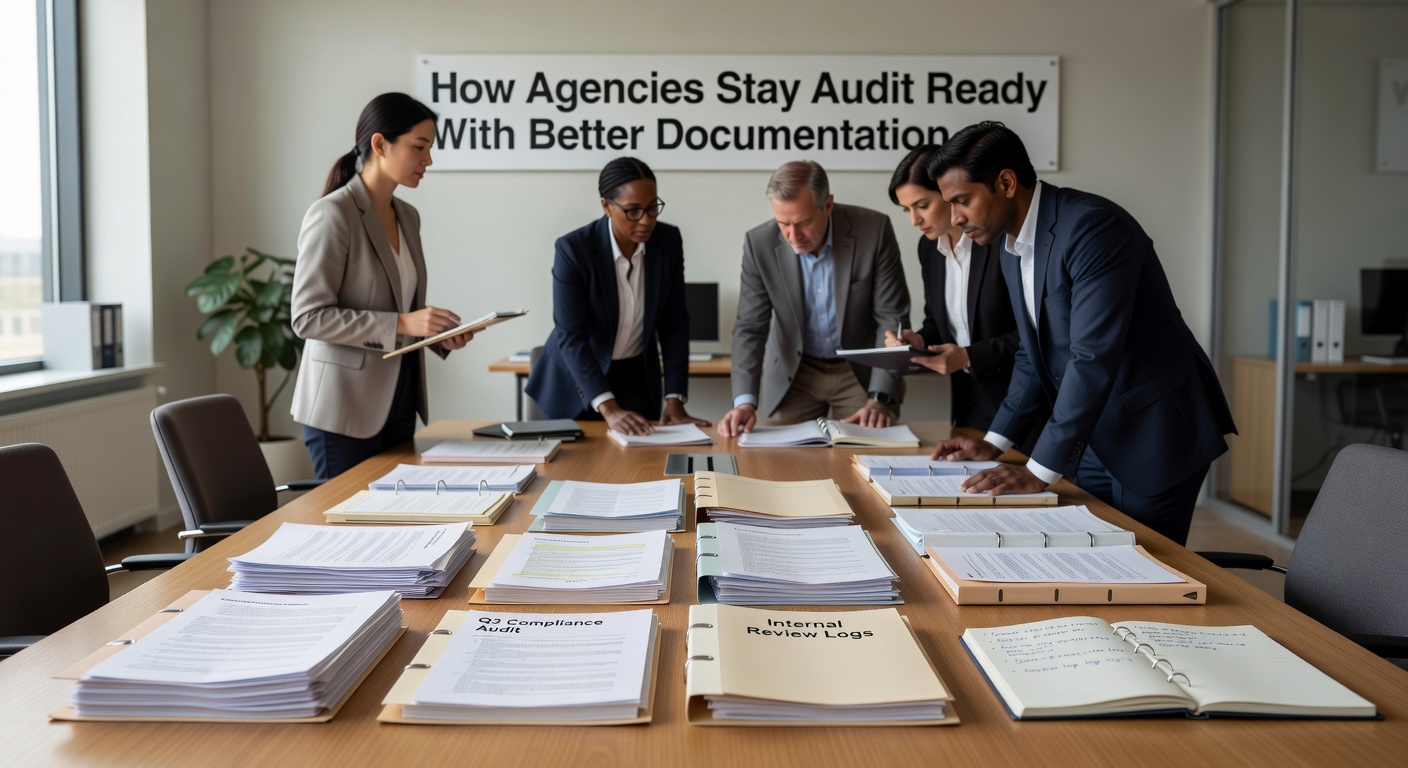
Supervision agencies handling hundreds of cases need streamlined documentation systems to maintain compliance and pass audits without overwhelming their staff. How agencies stay audit ready with better documentation starts with implementing risk-based client categorization and standardized workflows that prioritize resources where they’re needed most.
Modern supervision agencies manage 200-400 cases over 12-30 month periods, making efficient documentation practices essential for operational success. The key lies in creating systematic approaches that maintain audit readiness while reducing administrative burden on frontline staff.
Risk-Based Documentation Framework
Effective documentation begins with risk-based client categorization that divides clients into high-risk, moderate-risk, and low-risk tracks. This approach ensures intensive documentation for clients requiring intervention while streamlining oversight for compliant participants.
High-risk clients with recent violations or active substance abuse issues require:
- Weekly check-ins with detailed interaction notes
- Comprehensive documentation of all contacts
- Frequent testing records with timestamps
- Court and treatment coordination logs
Moderate-risk clients such as first-time offenders with stable circumstances need:
- Bi-weekly or monthly check-ins using standardized templates
- Automated reminder systems for appointments
- Exception-based detailed notes for significant events
Low-risk clients nearing program completion can shift to:
- Monthly or quarterly self-reporting requirements
- Exception-based monitoring with minimal documentation
- Streamlined completion tracking
This tiered approach prevents documentation overload while ensuring adequate oversight where compliance risks are highest.
Standardized Templates and Workflows
Centralized record management creates a single source of truth for policies, procedures, and client information. Standardized templates eliminate documentation inconsistencies by including:
- Client identification numbers for easy tracking
- Interaction checkboxes for common activities
- Compliance indicators with clear status markers
- Action item fields for follow-up requirements
- Automatic timestamps for all entries
These templates eliminate guesswork and speed audit preparation by ensuring all required information appears in consistent formats that auditors expect to see.
Supporting Administrative Workflows
Efficient agencies implement supporting workflows that reduce repetitive tasks:
- Shared calendars for appointment scheduling across staff
- Exception-based reporting requiring detailed notes only for violations or program milestones
- Task batching such as weekly case reviews and monthly billing cycles
- Automated reminders for upcoming deadlines and requirements
These workflow improvements cut administrative time while maintaining documentation quality.
Multi-Agency Coordination Requirements
Standardized forms and shared data protocols prevent documentation duplicates when multiple agencies oversee the same clients. This coordination ensures:
- Consistent reporting formats across agencies
- Shared compliance tracking to avoid conflicting requirements
- Streamlined court reporting processes
- Coordinated treatment provider interactions
Proper inter-agency documentation prevents compliance gaps that create audit risks.
Essential Record Types for Audit Readiness
Supervision agencies must maintain comprehensive documentation across several key areas:
Compliance tracking records including violation logs, sanctions imposed, and corrective actions taken with clear timestamps demonstrate program oversight effectiveness.
Treatment documentation covers session attendance, progress notes, and specialized program records that show client engagement and outcomes.
Staff records include training completion certificates, professional certifications, background check documentation, and current licenses that prove staff qualifications.
Financial records encompass billing documentation, fee collection records, and complete audit trails for all financial transactions.
Quality Assurance and Training
Documentation training ensures all staff understand what information must be recorded, when records must be completed, and how to maintain consistency across different documentation types.
Regular quality assurance reviews examine case files systematically to ensure compliance with agency standards and regulatory requirements before audits occur.
Performance metrics tracking helps identify documentation areas needing improvement by monitoring completion rates, accuracy measures, and timeliness indicators.
Technology Tools for Documentation Management
Modern documentation tools for supervision agencies streamline record-keeping through:
- Automated data entry reducing manual documentation errors
- Template standardization ensuring consistent information capture
- Centralized storage providing single-source access to all records
- Audit trail capabilities tracking all changes and access to sensitive information
- Reporting automation generating compliance reports for auditors
These tools maintain audit readiness without increasing staff workload.
Ongoing Compliance Maintenance
Proactive compliance monitoring prevents the accumulation of documentation gaps that become major audit issues. Regular file reviews and systematic quality checks maintain standards consistently throughout audit periods.
Policy updates must be documented and communicated effectively with version control and training records demonstrating compliance with evolving regulatory requirements.
Corrective action documentation shows how agencies address identified issues and implement improvements, demonstrating continuous program enhancement to auditors.
Takeaway
Effective documentation for audit readiness combines risk-based client categorization with standardized workflows and proper technology tools. This approach maintains comprehensive records without overwhelming staff through strategic resource allocation and streamlined processes. Modern software solutions enable agencies to automate routine documentation tasks while ensuring compliance requirements are consistently met across all program areas.