
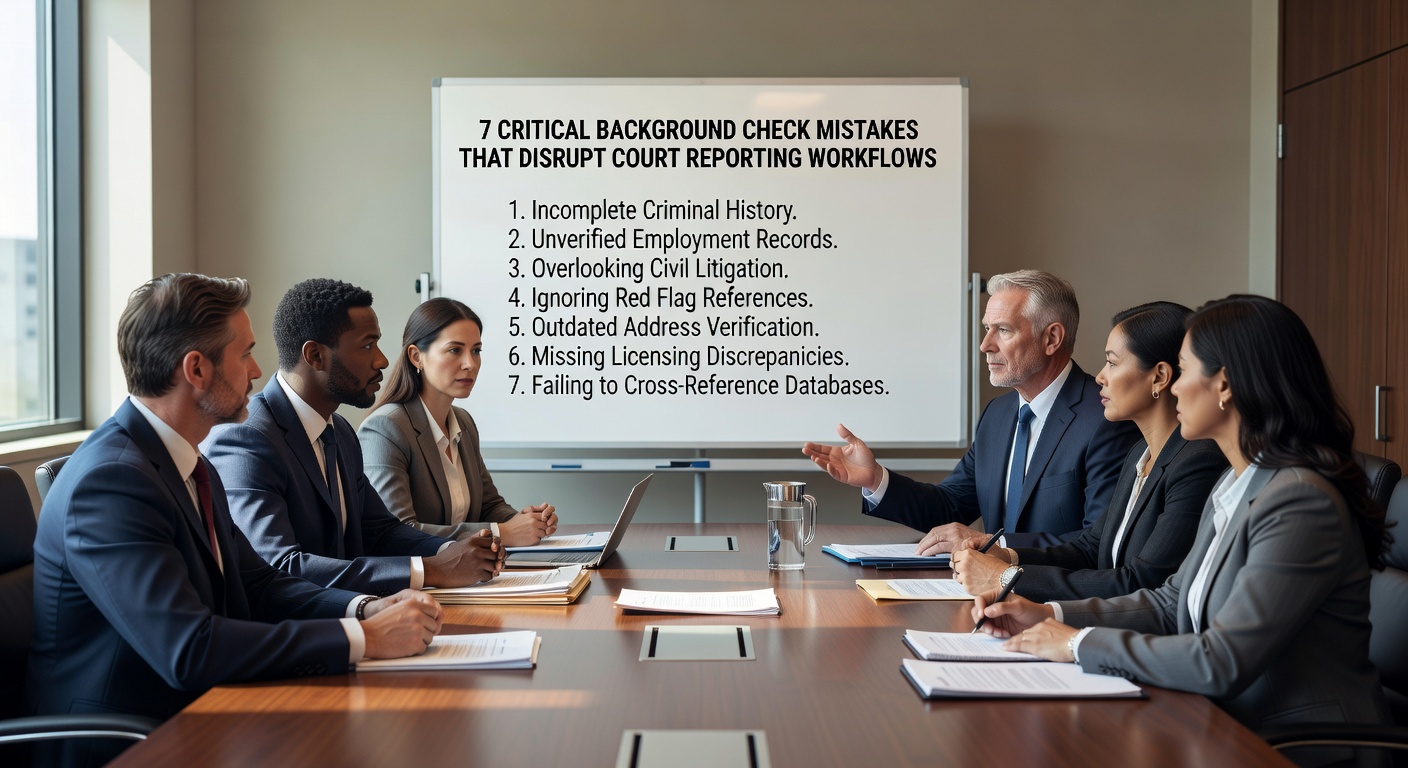
Effective court reporting workflows for supervision programs depend on accurate, compliant background check processes. When agencies make common documentation and monitoring mistakes, they create administrative burdens, audit vulnerabilities, and reporting delays that can compromise their ability to meet court requirements.
Regulated supervision environments face unique challenges because they must maintain continuous oversight while ensuring all documentation meets legal standards. A single mistake in background verification can cascade through the entire reporting workflow, creating problems that surface during audits or court proceedings.
Missing or Invalid Consent Documentation
One of the most frequent mistakes occurs when agencies fail to obtain proper written authorization before conducting background checks. Organizations often bury consent forms within general intake paperwork rather than presenting them as standalone documents, which can invalidate the entire screening process.
This creates immediate problems for court reporting workflows:
- Invalid background check results that cannot be used as evidence
- Potential legal challenges from supervisees or their attorneys
- Missing documentation that auditors flag as non-compliant
- Administrative time spent re-obtaining proper consent and re-running checks
Best practice: Use separate, clearly labeled consent forms that explicitly authorize background checks. Ensure forms include specific language about ongoing monitoring if your program requires periodic re-screening.
Inconsistent Screening Policies Across Cases
Many supervision programs lack standardized policies for when and how to conduct background checks. Some staff members may run comprehensive screenings while others perform minimal checks, creating gaps in documentation that become apparent during court reporting.
Common inconsistencies include:
- Using national databases for some cases but county-level searches for others
- Skipping employment or education verification for certain supervisees
- Applying different standards based on offense type without documented justification
- Failing to conduct motor vehicle record checks when driving restrictions are relevant
These inconsistencies make it difficult to defend decisions during hearings and create administrative overhead as staff try to determine which procedures to follow for each case.
Developing Standardized Procedures
Create written policies that specify:
- Which types of background checks are required for different supervision levels
- When to use national versus local database searches
- How to handle multi-jurisdictional cases
- Documentation requirements for each type of screening
Inadequate Ongoing Monitoring Systems
Many agencies conduct background checks at intake but fail to implement systematic ongoing monitoring throughout the supervision period. This creates significant gaps in court reporting workflows because supervisees’ circumstances can change substantially over time.
Effective ongoing monitoring requires:
- Regular re-screening schedules based on supervision length and risk level
- Alert systems for new arrests or violations
- Procedures for updating case files when new information emerges
- Documentation of why and when additional screening was conducted
Without systematic monitoring, agencies miss critical information that could affect supervision conditions or court recommendations.
Poor Documentation of Individualized Assessments
Agencies sometimes make automatic decisions based on background check findings without documenting the individualized assessment process. This creates legal vulnerabilities and makes it difficult to justify decisions during court proceedings.
Proper documentation should include:
- Analysis of how findings relate to supervision requirements
- Consideration of factors like time elapsed since incidents
- Review of rehabilitation efforts or changed circumstances
- Clear rationale for any restrictions or modifications to supervision terms
Automatic disqualifications without documented analysis violate fair process requirements and create audit findings that disrupt reporting workflows.
Incomplete Record-Keeping for Audit Readiness
Supervision agencies must maintain detailed records that can withstand audit scrutiny and support court reporting requirements. Common record-keeping mistakes include:
- Missing dates for when disclosures were made to supervisees
- Incomplete documentation of adverse action procedures
- Failure to maintain copies of all background check reports
- No tracking of when and why additional screenings were ordered
These documentation gaps create significant administrative burden when agencies need to compile reports for courts or respond to audit requests.
Implementing Systematic Record-Keeping
Develop checklists that ensure:
- All required documents are collected and dated
- Adverse action timelines are properly documented
- Background check reports are filed with complete metadata
- Decision-making processes are clearly recorded
Technology Integration Gaps
Many supervision programs still rely on manual processes for tracking background check requirements and results. This creates opportunities for human error and makes it difficult to maintain accurate, up-to-date records.
Manual systems often result in:
- Missed re-screening deadlines
- Inconsistent data entry across staff members
- Difficulty generating comprehensive reports for court requirements
- Time-consuming searches when specific information is needed quickly
Modern workflow automation tools can help agencies maintain consistent documentation, set automatic reminders for re-screening, and generate accurate reports more efficiently.
Failure to Stay Current with Regulatory Changes
Background check requirements and fair hiring regulations continue to evolve. Agencies that don’t stay current with changes may unknowingly use outdated procedures that create compliance risks.
Key areas where requirements frequently change:
- State-specific regulations about what can be considered in decision-making
- “Ban the box” laws that affect timing of background check disclosures
- Updates to federal exclusion lists and database access requirements
- Changes in consent and notification requirements
Staying current requires systematic monitoring of regulatory updates and regular review of internal procedures to ensure they remain compliant.
Takeaway
Effective court reporting workflows for supervision programs require systematic, compliant background check processes that maintain accurate documentation throughout the supervision period. The most common mistakes—inadequate consent procedures, inconsistent policies, poor ongoing monitoring, and incomplete record-keeping—create administrative burdens and audit vulnerabilities that can compromise an agency’s ability to meet court requirements.
Modern software solutions can help agencies standardize procedures, automate routine monitoring tasks, and maintain comprehensive documentation that supports both daily operations and audit readiness. By implementing consistent workflows and leveraging compliance tracking for regulated programs, supervision agencies can reduce administrative overhead while improving their ability to provide accurate, timely reporting to courts.