
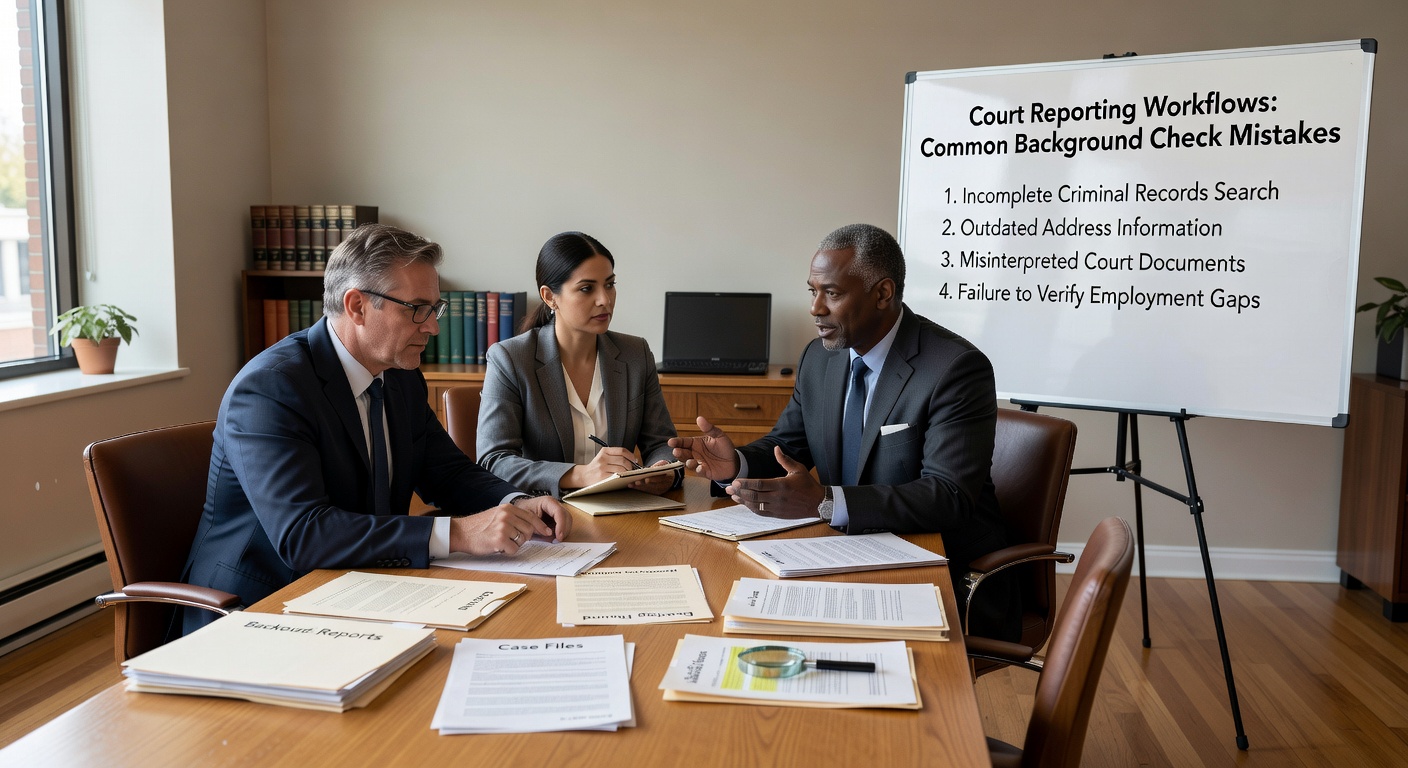
Effective court reporting workflows for supervision programs depend heavily on accurate documentation and compliance tracking. One of the most critical—and frequently mismanaged—aspects involves background check processes for staff and service providers. When agencies make mistakes in these verification procedures, they create compliance gaps that can derail reporting accuracy and put programs at risk during audits.
Regulated supervision agencies often struggle with background check protocols because they treat them as one-time events rather than ongoing compliance requirements. This approach creates blind spots in documentation that can surface during court reporting or audit reviews.
Moving Beyond Point-in-Time Verification
Many agencies conduct thorough initial background checks but fail to maintain ongoing monitoring systems. This creates significant vulnerabilities in compliance documentation.
The problem with one-time checks becomes evident when staff members or contractors experience changes after hiring:
- Professional license suspensions or revocations
- New criminal charges or convictions
- Addition to federal exclusion lists
- Changes in abuse registry status
Implementing continuous monitoring requires automated systems that provide regular updates without overwhelming administrative staff. Monthly federal exclusion screening through databases like OIG LEIE and GSA SAM helps catch fraud or abuse determinations promptly. Quarterly license verification ensures professional credentials remain valid.
This systematic approach improves court reporting workflows for supervision programs by ensuring documentation remains current and accurate throughout employment relationships.
Risk-Stratified Screening Protocols
Applying uniform background check procedures across all positions wastes resources and creates compliance gaps. Different roles require different levels of scrutiny based on their interaction with participants and access to sensitive information.
High-risk positions requiring comprehensive screening include:
- Direct supervision staff working with participants
- Treatment providers and counselors
- Case managers with access to personal information
- Staff handling financial transactions or billing
These roles typically require multi-state criminal searches, abuse registry verifications, and enhanced reference checks.
Lower-risk positions such as administrative support or maintenance staff may require basic criminal background checks and employment verification, but extensive abuse registry searches may not be necessary.
Creating role-based protocols helps agencies allocate resources effectively while maintaining appropriate oversight. This targeted approach also strengthens audit documentation by demonstrating thoughtful risk assessment procedures.
State-Specific Requirements and Registry Compliance
Compliance failures often occur when agencies overlook state-specific registry requirements or apply generic screening templates across different jurisdictions.
Critical state-level verifications include:
- State abuse and neglect registries
- Sex offender registries
- Professional licensing boards
- State-specific exclusion lists
Many states have unique policies regarding certain offenses. For example, cannabis-related convictions may be handled differently across jurisdictions, requiring individualized assessment protocols rather than blanket disqualifications.
FACIS® integration provides access to fraud and abuse records that may not appear in standard criminal background checks. This additional layer helps agencies identify potential compliance risks before they impact program operations.
Individualized Assessment Procedures
Rather than automatic disqualifications, effective screening protocols include structured assessment procedures that consider:
- Nature and severity of any identified issues
- Time elapsed since incidents
- Evidence of rehabilitation or remediation
- Relevance to specific job responsibilities
This approach helps agencies make defensible decisions while maintaining compliance with employment law requirements.
Vendor Management and Service Agreements
Poor vendor oversight creates compliance vulnerabilities that can affect the entire reporting workflow. Many agencies fail to verify their background check providers’ capabilities and compliance procedures.
Essential vendor qualifications include:
- Access to appropriate databases and court networks
- FCRA compliance and proper certification
- Clear turnaround time commitments
- Error resolution and dispute procedures
- Audit rights and documentation access
Service agreement specifications should address data security, reporting formats, and compliance support. Vendors should provide documentation that supports audit requirements and court reporting needs.
Regular vendor performance reviews help identify issues before they impact compliance deadlines or reporting accuracy.
Ongoing Verification and Monitoring Frequencies
Inconsistent re-screening schedules create documentation gaps that become apparent during audits or court reviews. Establishing clear frequencies for different types of verification helps maintain continuous compliance.
Recommended monitoring schedule:
| Verification Type | Frequency | Purpose | |——————|———–|———-| | Federal Exclusions | Monthly | Detect fraud/abuse additions | | License Status | Quarterly | Alert to suspensions/revocations | | Criminal Records | Every 2-3 years | Ongoing eligibility verification | | Abuse Registries | Every 2-3 years | Maintain participant safety |
This systematic approach ensures compliance tracking for regulated programs remains current without overwhelming administrative staff.
Alert Triage and Response Procedures
When monitoring systems identify potential issues, agencies need clear procedures for investigating and responding appropriately. This includes:
- Initial alert verification and documentation
- Timelines for investigation and resolution
- Decision-making protocols and approval processes
- Documentation requirements for audit purposes
Documentation and Audit Readiness
Background check mistakes often become apparent during audit reviews when agencies cannot produce adequate documentation or demonstrate ongoing compliance.
Maintaining audit-ready documentation requires:
- Complete records of all screening activities
- Evidence of ongoing monitoring procedures
- Documentation of decision-making processes
- Regular review and update procedures
Digital documentation systems help ensure records remain organized and accessible when needed for reporting or audit purposes.
Outcome tracking demonstrates the effectiveness of screening procedures and helps agencies identify areas for improvement. This data supports budget requests and policy updates while strengthening compliance documentation.
Takeaway
Effective background check procedures require ongoing attention and systematic approaches rather than one-time verification events. By implementing continuous monitoring, risk-stratified protocols, and proper vendor management, agencies can maintain compliance while reducing administrative burden. Modern software tools automate much of this monitoring, providing alerts and maintaining documentation that supports accurate court reporting and audit readiness. These improvements help supervision agencies focus on their core mission while maintaining the compliance standards required in regulated environments.