
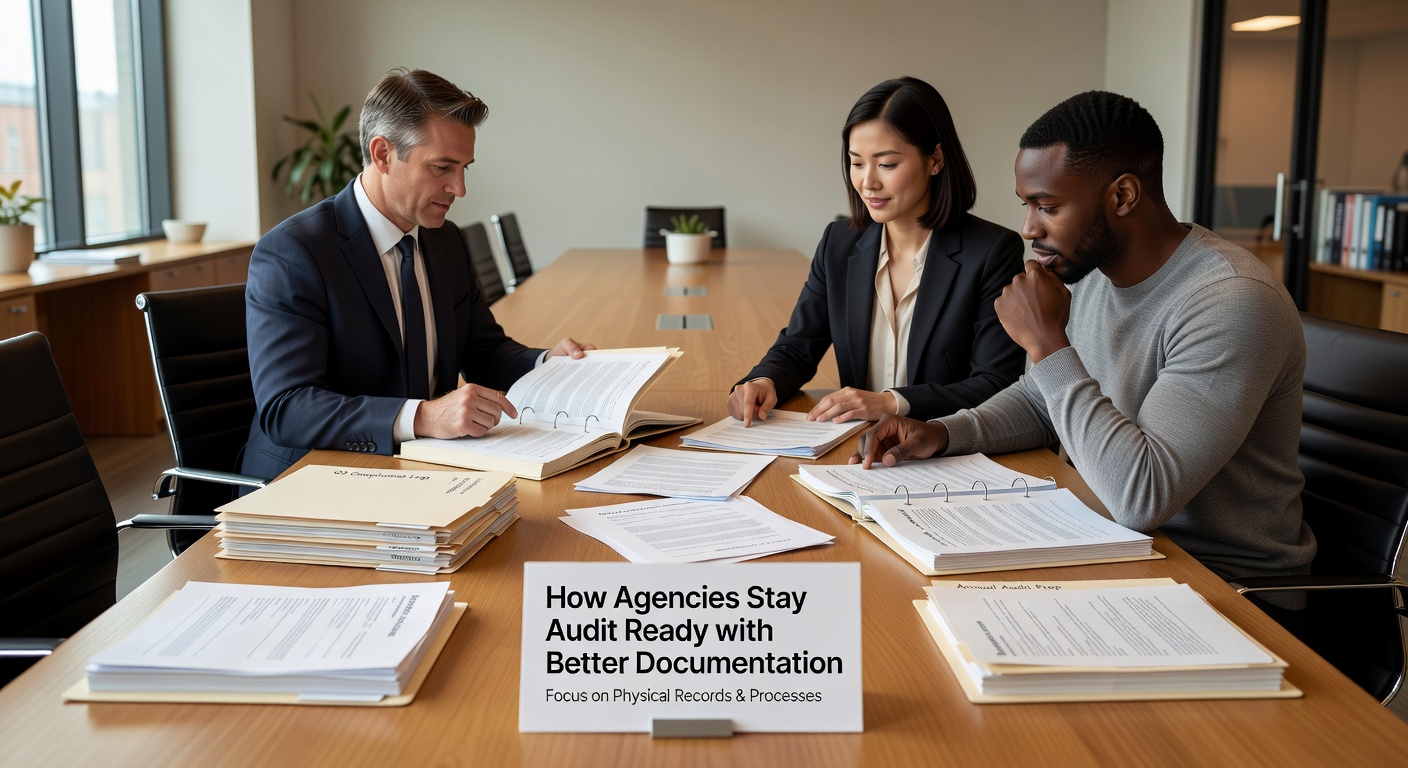
Staying prepared for regulatory audits requires more than good intentions—it demands systematic documentation practices that capture compliance activities in real-time. Many supervision agencies struggle with scattered records, incomplete documentation trails, and manual processes that leave gaps when auditors arrive.
Building a Comprehensive Documentation Framework
Effective audit preparation starts with understanding what auditors need to see. Documentation must demonstrate compliance with applicable standards, support conclusions about program effectiveness, and maintain clear audit trails through organized storage systems.
Successful agencies implement structured approaches that include:
• Standardized record formats for consistent data capture across all programs • Clear naming conventions and indexing systems for quick document retrieval • Version control processes that track policy updates and approval dates • Complete transaction records with supporting invoices, contracts, and authorization evidence
The key is ensuring that every compliance activity generates appropriate documentation automatically, rather than trying to reconstruct records after the fact.
Essential Record Categories for Audit Readiness
Regulated supervision agencies must maintain several critical documentation types to satisfy audit requirements. Financial records form the foundation, including reconciled statements, transaction histories, and supporting documentation for all expenditures.
Compliance monitoring records prove ongoing adherence to regulatory standards. These include:
• Participant enrollment and eligibility verification documents • Service delivery records with dates, providers, and outcomes • Staff qualification and training documentation • Quality assurance reports and corrective action plans • Incident reports and resolution documentation
Operational documentation demonstrates effective internal controls through policy manuals, procedure guides, staff training records, and evidence of supervisory reviews. This documentation shows auditors that the agency operates systematically rather than reactively.
Risk Assessment and Response Documentation
Auditors specifically look for evidence that agencies identify and respond to compliance risks appropriately. Risk assessment documentation should include summaries of identified risks, evaluation methods used, and specific responses implemented to address each risk area.
When conflicts or discrepancies arise, agencies must document both the original findings and the investigation process used to resolve inconsistencies. This transparency helps auditors understand how the agency handles challenging situations and maintains integrity in its operations.
Automated Systems for Continuous Compliance
Modern supervision agencies increasingly rely on automated systems to maintain audit-ready documentation without overwhelming administrative staff. These systems capture compliance activities as they occur, reducing the manual effort required to prepare for audits.
Automated monitoring tools track participant progress, staff activities, and program outcomes in real-time. They generate alerts for potential compliance issues and maintain detailed logs of all system activities. This continuous monitoring approach helps agencies identify and address problems before they become audit findings.
Integration capabilities allow different systems to share information automatically, reducing duplicate data entry and ensuring consistency across all records. When billing systems connect with case management platforms, for example, service delivery records automatically align with invoicing documentation.
Document Management Best Practices
Effective document management requires both technology solutions and operational procedures. Digital storage systems should include encryption, access controls, and backup procedures to protect sensitive information while maintaining availability for authorized users.
Retention schedules must align with regulatory requirements—typically three years for financial records or longer for certain compliance documentation. Agencies should maintain clear policies about what records to keep, where to store them, and when disposal is appropriate.
Regular system maintenance includes updating user permissions, verifying backup integrity, and testing document retrieval processes. These activities ensure that audit-ready documentation remains accessible when needed.
Staff Training and Accountability Measures
Sustaining audit readiness requires ongoing staff training about documentation requirements and accountability measures that ensure consistent compliance. Training programs should cover proper record-keeping procedures, system usage guidelines, and escalation processes for compliance concerns.
Quality assurance reviews help identify documentation gaps before audits occur. Regular internal audits allow agencies to test their preparation processes and address weaknesses proactively. These reviews also provide opportunities to refine procedures based on operational experience.
Supervisory oversight includes regular reviews of staff documentation practices and feedback about areas for improvement. When staff understand both the requirements and the reasons behind documentation standards, they are more likely to maintain consistent practices over time.
Common Documentation Pitfalls to Avoid
Many agencies struggle with documentation challenges that create audit risks. Incomplete records often result from rushed data entry or unclear procedural guidelines. Establishing required field validations and approval workflows helps ensure completeness before records are finalized.
Inconsistent naming conventions make document retrieval difficult during audits. Standardized file naming protocols and regular system organization help maintain order as document volumes grow.
Delayed documentation creates accuracy problems when staff try to reconstruct activities from memory. Real-time data capture through mobile applications and integrated systems reduces these delays and improves record quality.
Technology Solutions for Enhanced Efficiency
Comprehensive compliance tracking for regulated programs can significantly reduce administrative workload while improving documentation quality. These platforms integrate multiple compliance functions into unified systems that capture, organize, and maintain audit-ready records automatically.
Workflow automation ensures that required documentation steps occur consistently without relying on staff memory or manual checklists. When participant enrollment triggers automatic eligibility verification and documentation requirements, agencies reduce both errors and administrative burden.
Reporting capabilities allow agencies to generate audit-ready summaries quickly, demonstrating compliance across multiple regulatory areas. These reports can show participation rates, outcome metrics, staff qualifications, and financial performance through standardized formats that auditors expect.
Takeaway
Staying audit ready requires systematic documentation practices supported by appropriate technology solutions. Agencies that invest in comprehensive record-keeping systems, staff training, and automated compliance monitoring find themselves better prepared for regulatory reviews while reducing day-to-day administrative stress.
Modern software tools can transform compliance documentation from a burdensome manual process into an integrated component of daily operations. By capturing required information automatically and maintaining organized, accessible records, agencies can focus more time on program delivery and participant outcomes rather than scrambling to prepare for audits.